


Wei Ming collected his BTO keys in Punggol last October. He had a colour scheme mapped out, a mood board saved, and a contractor name from a colleague. Three weeks later, the contractor told him he needed HDB approval for the hacking works he’d planned. Approval takes two to four weeks. His renovation start date was already booked.
He lost the booking deposit. He rescheduled the movers. He pushed back the renovation start by a month. None of that was expensive on its own. Together, it cost him around $2,000 in wasted deposits and temporary accommodation. The mistake wasn’t the plan. It was the sequence.
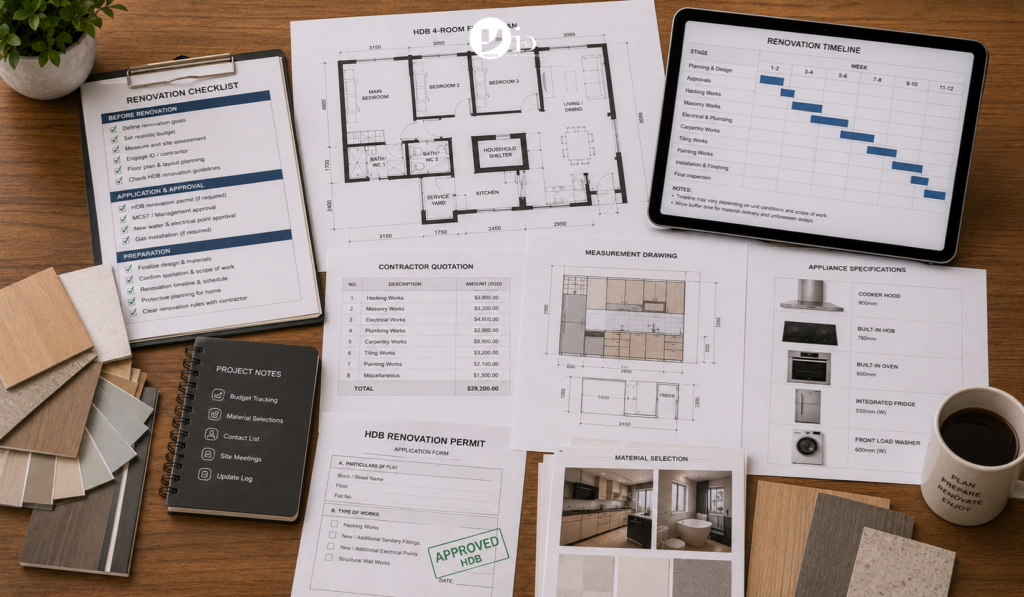
In HDB renovations, the order in which you do things matters as much as what you do. Get the sequence wrong and even a well-budgeted renovation with good contractors will create delays that compound into real costs. This checklist works through the full process, from before key collection to the final sign-off after the work is done.
Before You Even Pick a Contractor: What HDB Requires First
Most homeowners start by calling contractors. The actual starting point is HDB’s own requirements. Know those first. Then find your contractor. Not the other way around.
HDB classifies renovation works into permitted and non-permitted categories. Permitted works can proceed once you inform HDB through the HDB e-Service portal. Non-permitted works require formal approval before any work begins. The approval process typically takes two to four weeks. Some structural or waterproofing works take longer.
Works that commonly require approval: hacking of walls, bay window installation, structural changes, corridor-related works, and certain electrical upgrades. A complete breakdown is in the HDB renovation permit guide. Read it before you brief any contractor. Otherwise you’ll be quoting scope that may not be permissible, then revisiting after approval comes back with conditions.
BTO flats have additional rules around the Minimum Occupation Period and pre-occupation works. Check those BTO renovation rules separately. They differ from resale flat requirements in important ways.
One practical step most people skip: download the as-built plan for your flat from the HDB e-Service portal. It shows the exact wall types (structural vs non-structural), wet area boundaries, and approved floor plan. Your contractor needs this. Most good ones will ask for it. If yours doesn’t, that’s a signal worth noting.
The Contractor Selection Problem Nobody Warns You About
The most common piece of advice is to get three quotes and pick the middle one. That approach works for price comparison. It doesn’t tell you anything about what you’re actually buying.
Three quotes for a 4-room HDB renovation can range from $35,000 to $80,000. The gap isn’t just margin. It reflects different scope assumptions, different material grades, and different interpretations of what you described. Comparing those quotes directly is like comparing three different products at different prices. They’re not equivalent.
A better approach: define your scope clearly before approaching any contractor. Know which rooms you’re renovating, which surfaces you’re replacing, what carpentry items you need, and what finishes you want. Then ask each contractor to quote against the same defined scope. Now you can compare meaningfully. The five key considerations when choosing an ID firm in Singapore expand on this, including what to look for beyond price.
Check that your contractor is registered with HDB as an approved renovation contractor. Only registered contractors can carry out renovation works in HDB flats. Yet many homeowners skip this check and only find out during enforcement. An unregistered contractor doing your hacking or structural works puts you at risk of HDB enforcement action. The HDB renovation contractor guide covers what registration means and how to verify it.
References matter more than portfolios. A portfolio shows photos. References tell you how the contractor handled problems. Every renovation has problems. The question is whether they were handled professionally or left for the homeowner to discover later.
Budget Planning That Accounts for What Actually Costs Money
Most homeowners plan a budget based on their renovation quote. That covers roughly 80 to 85 percent of the actual spend. The rest shows up as variations during work, items discovered during demolition, and upgrade decisions made mid-renovation.
Variations are additional charges for work not in the original quote. Hacking reveals a different wall construction than expected. The existing plumbing requires rerouting. The electrical load doesn’t support the planned appliances without an upgrade. These aren’t contractor errors. They’re unknowns that become knowns during the work. Budget 10 to 15 percent above your quoted price for variations. Not as a pessimistic assumption. As a realistic one.
The HDB renovation package breakdown is a useful reference for what a standard package typically includes and what gets added as extras. Know that distinction before you sign any contract. “Package price” and “final price” are rarely the same number.
Financing is a separate decision from budgeting. A HDB renovation loan covers a broad range of works and is available through HDB directly. Bank renovation loans often offer higher limits and more flexible terms. The renovation loan Singapore guide compares both options, including interest rates and eligible works. Settle financing before you sign contracts. Not after.
One cost most homeowners underestimate: furniture and appliances. A full HDB renovation might cost $60,000 in contractor fees. The furniture, lighting, and appliances to furnish the completed flat can easily add another $20,000 to $40,000. Budget for the whole project, not just the renovation portion.
Timeline Planning: The Sequence That Saves the Most Money
A standard 4-room HDB renovation takes eight to fourteen weeks from start to handover. That’s the actual work period. The preparation period before work starts typically takes four to eight weeks on top of that. Most homeowners underestimate the preparation phase.
The right sequence: submit HDB approval first, then engage your contractor, then finalise materials and finishes, then begin work. Each step should be completed before the next begins. Yet many homeowners run these steps in parallel and create rework. Reversing any of these steps creates rework. Choosing your kitchen tiles before your contractor has confirmed the kitchen layout means you may be re-choosing tiles. Signing a contract before HDB approval means your contract scope may need revision.
A detailed interior design project timeline for a standard Singapore HDB renovation breaks this into specific weeks and milestones. Print it out. Use it as a tracking tool, not just reference material.
Understand HDB renovation timing rules before booking your contractor. HDB permits renovation works only on weekdays between 9am and 6pm, and on Saturdays between 9am and 1pm. No renovation works are allowed on Sundays or public holidays. These rules affect your timeline, especially for longer renovations that span a holiday period.
Wet works (hacking, tiling, plastering) typically run in the first two to four weeks. Carpentry fabrication runs concurrently yet is usually delivered after wet works are complete. Electrical and plumbing works follow after wet works are complete. Painting and finishing come last. Furniture delivery should be booked for after handover, not before. That sequence is almost universal. Deviating from it usually costs time.
Ready to plan your HDB renovation?
What to Do Before Key Collection
Before you collect your keys, several decisions should already be made. Not in progress. Made.
Overall interior direction should be settled first. Not a mood board. A defined palette, a specific style reference, and a clear decision on which rooms get what treatment. A good overview of interior design styles in Singapore helps you land on a direction early. Circling through options after key collection wastes weeks.
Space planning needs to be done. Know where every major furniture piece sits before you brief your contractor on power point locations. A space planning review for your specific flat type prevents the most common layout errors. Power points in the wrong place. Lights above where furniture actually sits. Air-con units positioned to blow directly at a sleeping or working position.
Shortlist your contractor, though don’t sign yet. You want to brief contractors and collect quotes immediately after key collection. Starting contractor search after keys are collected adds three to four weeks before work can begin.
Your HDB renovation permit application should be prepared and ready to submit the moment you collect your keys. Some approvals can only be submitted after key collection. Have all the supporting documents ready so you can submit on day one.
What to Track During the Renovation
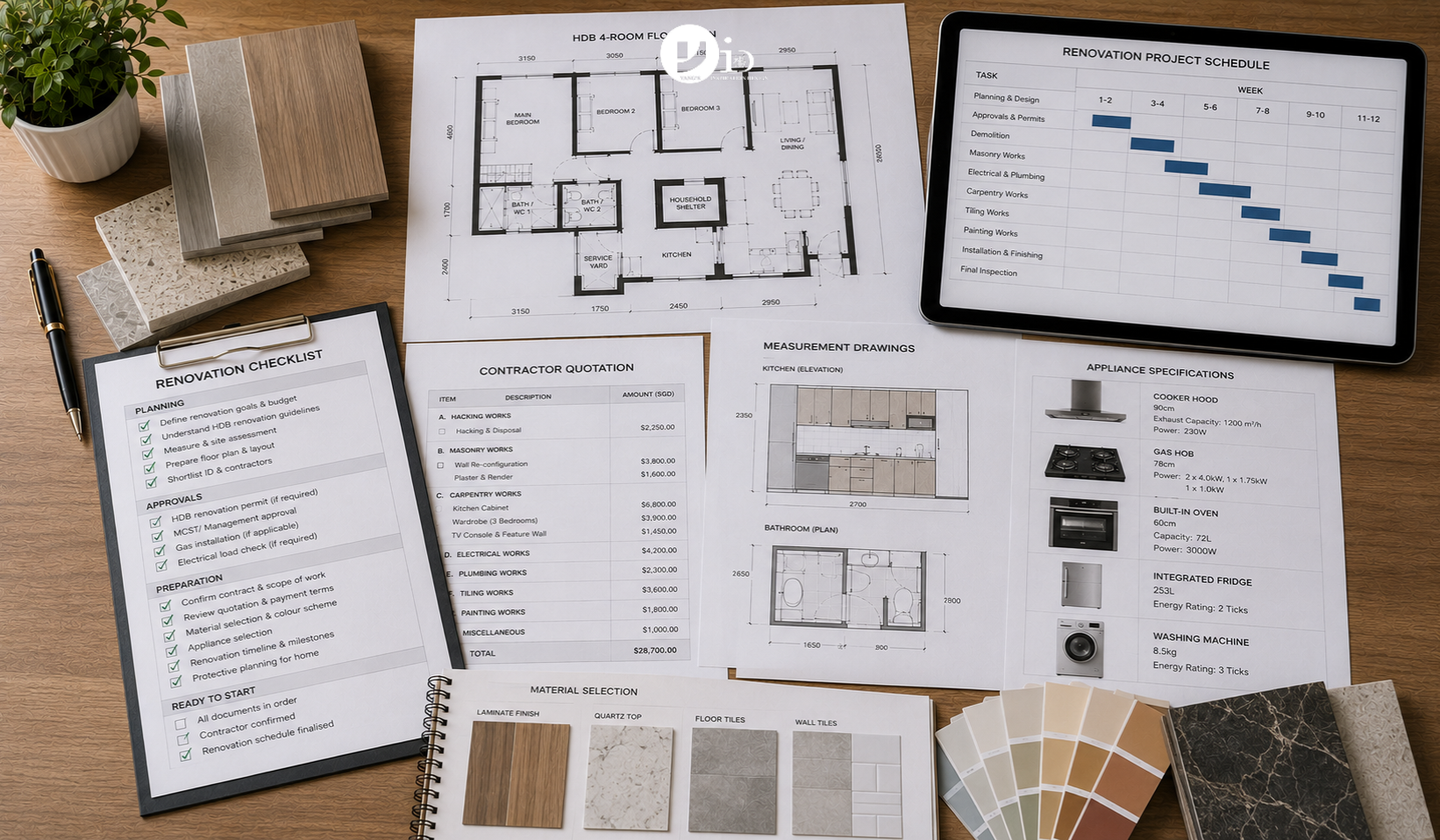
Daily site visits are not necessary. Weekly visits are. Each visit should have a specific purpose. Check that completed works match what was agreed. Flag items before they get covered or tiled over. Confirm the schedule for the following week.
Document everything in photos. Before hacking, during electrical rough-in, after tiling before grouting. These photos protect you if disputes arise later about what was agreed or what was done. They also help you locate pipes and wiring years later when you need to hang something or install a new fixture.
Track your variation orders in writing. Every change from the original contract should be documented with a written variation order that includes the additional cost and updated timeline. Verbal agreements about changes create disputes. Written ones create clarity. Insist on them even when the relationship feels friendly.
The interior design process at Yang’s Inspiration Design includes structured site supervision and variation management as part of the engagement. That structure means homeowners aren’t left to manage site issues alone. For those working without a designer, the same discipline applies. You become your own site supervisor. Act accordingly.
After Renovation: What Most People Skip
Handover is not the end of the process. It’s the beginning of the defect rectification period.
Walk through the completed unit with your contractor before signing off on handover. Check every surface. Run every tap. Switch every power point. Test every light fitting. Open and close every cabinet door and drawer. Defects discovered during the handover walk are the contractor’s responsibility to fix. Defects discovered after you sign the handover form are a negotiation.
Most contractors offer a defect liability period of twelve months from handover. During this period, defects in materials and workmanship are rectified at no additional charge. Know what your contract says about this period. Know who to contact and what the response time commitment is. Not all contracts are specific. Push for specifics before you sign.
HDB conducts its own post-renovation inspection for certain types of works. If your renovation included structural changes, waterproofing works, or other approved-category items, expect an HDB inspection. Your contractor should know this and should have handled the submission documentation. If they don’t mention it, ask.
The BTO flat renovation guide covers post-handover steps for new flats. This includes defect reporting to HDB for building defects versus contractor defects. Those are separate processes with separate parties responsible. Know the difference before the paint dries.
Common Mistakes That Delay or Cost Extra
Signing a contract before HDB approval is confirmed. Any scope requiring approval may need revision after approval comes back. Contract revisions cost time and sometimes money.
Ordering materials before layout is finalised. Tiles, cabinets, and appliances ordered before the contractor has confirmed dimensions create excess, shortfalls, or items that don’t fit. Order after dimensions are confirmed, not before.
Choosing an interior designer or contractor without checking their HDB registration. Non-registered contractors cannot legally carry out HDB renovation works. If enforcement occurs, the homeowner bears the consequences. Not the contractor.
Skipping the as-built plan. Not having your flat’s structural drawing on site before hacking begins is the single most common source of unexpected variation charges. Contractors cannot quote accurately for works they can’t assess structurally. Download the plan. Share it upfront.
Underbudgeting for the full project scope. A renovation quote covers contractor works. The total project cost includes furniture, appliances, lighting, soft furnishings, and often a temporary accommodation period. Plan the full number, not just the construction portion. A full interior design cost breakdown for Singapore HDB flats helps set a realistic total expectation before any contracts are signed.
Questions Homeowners Ask About HDB Renovation Guidelines
How early before key collection can I start planning the renovation?
As early as possible. Six months before key collection is not too early to choose a design direction and shortlist contractors. The earlier your decisions are made, the faster you can move from key collection to renovation start. Some HDB approval applications can also be submitted before key collection in certain circumstances. Check directly with HDB on your specific situation.
Can I renovate a resale HDB differently from a BTO?
Yes, in several ways. Resale flats may require additional works like waterproofing replacement, electrical rewiring, and asbestos assessment for older blocks. The permitted works categories are the same, though the existing condition of a resale flat changes which works are necessary. The HDB resale renovation guide covers the additional steps specific to older flats.
Do I need an interior designer or can I manage the renovation directly?
You can manage it directly using a renovation contractor rather than an ID firm. The difference is in who coordinates the multiple trades and manages the design decisions. A contractor manages the works, whereas a designer manages the design along with the works. For straightforward renovations, a direct contractor relationship works well. For complex layouts or full flat renovations, an ID firm’s coordination usually saves more than its fee. Avoided mistakes and rework account for the difference.
What happens if my contractor does unpermitted works?
HDB can issue a rectification order requiring the works to be removed at your expense. The order is served on the flat owner, not the contractor. Even if you didn’t know the works were unpermitted, you bear the cost of rectification. This is why verifying scope against HDB’s permitted works list before signing any contract matters. Not a formality. An actual financial protection.
How do I handle a contractor who misses the agreed timeline?
Your contract should include a liquidated damages clause specifying a daily rate for delays caused by the contractor. If it doesn’t, add it before you sign. Without it, timeline disputes become he-said-she-said conversations with no contractual resolution. Document all delays in writing as they occur. That record supports any claim if the relationship deteriorates.
A well-planned HDB renovation isn’t complicated. It’s sequential. Each step depends on the previous one being done. Compress the sequence, skip a step, or reverse the order, and costs compound quickly. A better plan avoids that entirely.

July 24, 2026
agus