



For many homeowners in Singapore, collecting the keys to a new BTO flat marks the beginning of an exciting design journey. Yet before cabinetry, lighting layouts, or feature walls can be discussed, every renovation must first align with HDB’s renovation framework.
These regulations are not simply administrative requirements. They exist to protect structural safety, manage noise within high-density housing blocks, and ensure plumbing, waterproofing, and electrical systems remain compliant.
Understanding BTO renovation rules early is therefore not just about avoiding penalties. It fundamentally shapes what can be built, how long the renovation will take, and which contractors are legally allowed to carry out the work.
When homeowners approach renovation planning with a clear grasp of these guidelines, design decisions become more strategic and the approval process far smoother.
Understanding the Regulatory Framework Behind BTO Renovation Rules
New BTO flats fall under the governance of the Housing & Development Board (HDB), which regulates renovation activities to maintain structural integrity and neighbourhood liveability.
In practical terms, this means renovation works fall into three main regulatory categories:
- Works that require HDB approval
- Works that must be performed by HDB-licensed contractors
- Works that are strictly prohibited
For homeowners planning their first renovation, the approval process typically begins before any physical work starts. Contractors must submit renovation details through HDB’s system, outlining items such as hacking works, electrical modifications, and flooring installations.
This stage is where structured planning becomes critical. Many homeowners underestimate the scope of compliance requirements until the renovation begins. A helpful reference is a structured BTO flat renovation planning guide, which outlines the broader preparation process homeowners usually undertake before work begins.
Once approval is granted, renovation works must adhere strictly to the approved scope. Any significant deviations may require additional submissions or approvals.
The key principle is simple: renovation planning must precede renovation activity.
HDB Renovation Timeline and When Works Are Allowed
Another frequently misunderstood aspect of BTO renovation rules is time regulation.
Renovation activities in HDB flats are controlled by both permit validity periods and daily working hours.
Typical Renovation Duration Limits
Depending on the type of renovation works:
- General renovation works: usually allowed within 3 months
- Hacking works: often limited to shorter durations, typically around 1 month
These restrictions exist primarily to reduce prolonged disturbance within newly occupied BTO estates.
However, the overall renovation timeline homeowners experience is often longer when planning, design development, approvals, and fabrication are considered.
For context, understanding a typical interior design renovation timeline helps homeowners anticipate the stages between concept development, permit application, material selection, fabrication, and installation.
Approved Renovation Hours
HDB renovation hours are also strictly defined:
Weekdays and Saturdays
- 9:00 AM – 6:00 PM for general works
No renovation allowed
- Sundays
- Public holidays
Noisy activities such as drilling, hacking, or tile cutting are especially restricted to prevent disturbance to neighbouring households.
Planning renovation schedules around these hours helps avoid delays and complaints within newly completed estates.
Permit-Required Works vs Prohibited Works
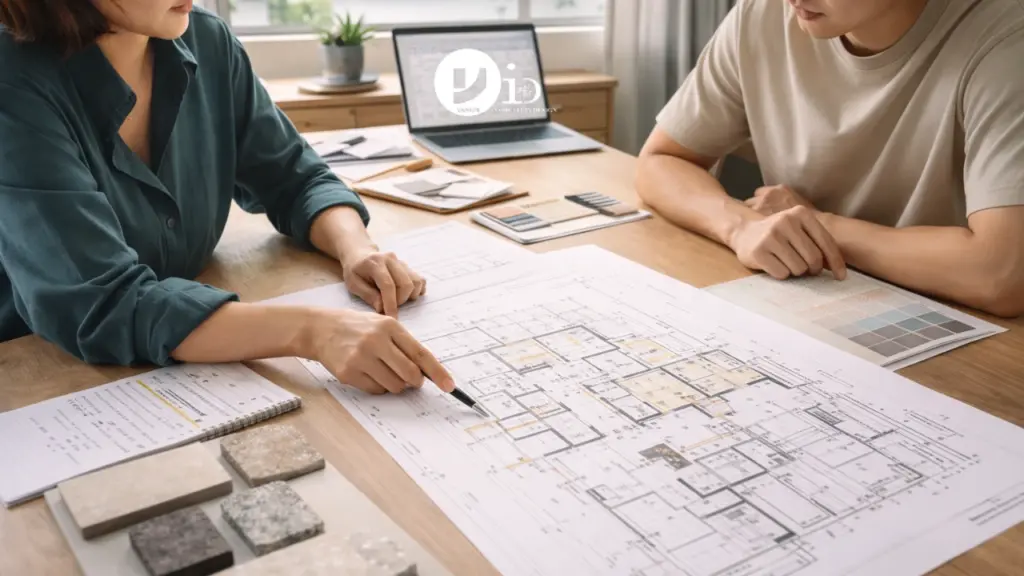
Not all renovation works carry the same regulatory weight. Some require permits, while others are entirely disallowed.
Understanding this distinction early helps homeowners avoid costly design revisions.
Works That Require HDB Approval
Examples include:
- Hacking of walls or flooring
- Changing floor finishes
- Electrical rewiring
- Window replacements
- Bathroom renovations
- Structural alterations
These works must be submitted through an HDB-licensed renovation contractor.
For homeowners unfamiliar with the roles involved, understanding the difference between an interior designer and contractor can clarify who manages design planning and who executes regulated construction works.
Works That Are Strictly Prohibited
Certain renovation ideas commonly seen online may not be allowed in BTO flats. Examples include:
- Hacking structural walls
- Altering building façades
- Changing service ducts
- Modifying structural beams
- Installing unauthorised mezzanine structures
Because BTO flats share load-bearing structural systems, unauthorised structural modification poses safety risks across the entire block.
Bathroom Restrictions and Wet Area Renovation Rules
Bathroom renovations in BTO flats are among the most regulated renovation categories.
This is largely due to waterproofing concerns.
In most BTO units, HDB provides a factory-applied waterproof membrane beneath bathroom floor tiles. Disturbing this layer without proper treatment can lead to leakage affecting neighbouring units below.
As a result, HDB places restrictions on:
- Floor tile hacking
- Changing bathroom floor levels
- Relocating floor traps
- Altering waterproofing systems
Where tile replacement is allowed, contractors must follow strict waterproofing reinstatement protocols.
Beyond regulatory compliance, bathroom renovation decisions also carry cost implications. Many homeowners underestimate the technical considerations involved, which is why reviewing bathroom renovation budgeting considerations can help clarify where structural work intersects with renovation costs.
Kitchen Renovation Rules in BTO Flats
Compared to bathrooms, kitchen renovations offer significantly more design flexibility, but still operate within certain limits.
Permitted works generally include:
- Cabinet installation
- Countertop replacement
- Backsplash installation
- Lighting upgrades
- Appliance integration
However, structural walls separating kitchens from other rooms cannot be removed unless explicitly approved.
Because many BTO kitchens are compact, renovation planning typically focuses on storage efficiency and layout optimisation. Studying practical HDB kitchen design approaches can provide useful insights into how layout planning improves usability without requiring structural changes.
The key takeaway is that functional redesign often matters more than structural alteration in BTO kitchens.
Strategic Insight: The Often Overlooked Role of Contractor Compliance
One of the most important, yet frequently overlooked, aspects of BTO renovation rules is contractor compliance responsibility.
While homeowners approve renovation plans, it is the contractor who must:
- Submit renovation permits
- Ensure workers follow HDB guidelines
- Protect common areas
- Manage debris disposal
- Comply with working hours
Choosing the wrong contractor therefore introduces regulatory risk beyond design quality.
Experienced homeowners often prioritise due diligence during contractor selection. Learning how homeowners protect themselves from unreliable renovation contractors can significantly reduce the likelihood of compliance violations, renovation delays, or unexpected cost escalations.
The most effective renovation projects tend to involve structured design planning combined with experienced regulatory management.
Renovating a BTO flat in Singapore involves far more than selecting colours, cabinetry, or flooring materials. Every design decision must first pass through the framework of HDB renovation guidelines.
From permit requirements and renovation hours to bathroom waterproofing rules and contractor licensing, these regulations shape what can realistically be achieved within a BTO renovation project.
Homeowners who approach renovation with early regulatory awareness tend to experience smoother approval processes, fewer project disruptions, and better coordination between design intent and construction feasibility.
Ultimately, understanding BTO renovation rules is not a constraint on creativity. Instead, it provides the planning structure necessary to transform a new flat into a well-designed and compliant home.
For homeowners preparing to renovate a new BTO flat, regulatory compliance, spatial planning, and contractor coordination must work together from the very beginning.
Working with experienced professionals who understand both design strategy and HDB regulatory requirements can help ensure your renovation progresses smoothly from approval to completion.
Homeowners seeking a structured approach to BTO renovation planning can explore Yang’s Inspiration Design’s expertise in residential interior design solutions, where design development, regulatory compliance, and renovation execution are aligned within a comprehensive planning process.

March 9, 2026
Yang's Inspiration Insight