


Key Takeaways
- A light landed-home refresh may begin around S$80,000, while a comprehensive renovation commonly reaches S$150,000 to S$400,000 or more.
- Property size matters, but scope, structural work, mechanical and electrical replacement, carpentry and finish level usually move the budget more.
- A&A and reconstruction should be budgeted separately from interior renovation because professional fees, submissions and structural work change the cost model.
- Keep a contingency of about 10% to 20%, with a larger allowance for older homes where concealed defects are likely.
Landed interior design and renovation in Singapore can cost from roughly S$80,000 for a controlled cosmetic refresh to S$400,000 or more for a full interior overhaul. Major A&A works and reconstruction can rise well beyond that range. The useful question is not simply “How big is the house?” but “Which parts of the building are we changing, replacing or rebuilding?”
Every figure in this guide is an early planning allowance, not a quotation. A site assessment, measured scope and material schedule are needed before a design firm can price a landed project responsibly.
Landed interior design cost in Singapore: 2026 context
The wider construction market provides useful context. In its Singapore Construction Prospects 2026, BCA reported that its Building Works Tender Price Index was estimated to have increased by about 1% year on year in 2025 and expected domestic tender prices to remain broadly steady, subject to trade and geopolitical risks.
That does not mean every renovation quote will stay flat. Landed projects contain many project-specific items that a broad tender index cannot capture, including restricted access, existing structural condition, bespoke carpentry, waterproofing failures and ageing electrical or plumbing systems.
Typical budget bands by renovation scope
| Scope | Indicative planning range | Usually includes |
|---|---|---|
| Light refresh | S$80,000 to S$150,000 | Painting, selected flooring, limited carpentry, lighting and fixture changes |
| Full interior renovation | S$150,000 to S$400,000+ | Kitchen, bathrooms, flooring, substantial carpentry, rewiring, plumbing and air-conditioning |
| Major A&A | From several hundred thousand dollars | Structural alterations, extensions, facade or roof work, professional appointments and submissions |
| Reconstruction | Often S$1 million and above | Demolition, new structure, envelope, services, interiors and professional works |
Current market guides vary because their definitions differ. A 2026 Singapore contractor guide, for example, places complete landed renovation broadly around S$150,000 to S$400,000 and terrace-house projects around S$200,000 to S$350,000. Use such figures to establish feasibility, then replace them with a project-specific cost plan.
What changes the cost most?
1. Renovation scope and existing condition
Retaining sound flooring, services and built-ins saves far more than selecting a cheaper tap later. Older houses may reveal corroded pipes, undersized electrical capacity, roof leaks, rising damp or uneven slabs after demolition. What most homeowners miss is that a “design change” can trigger several connected trades.
2. Structural and approval requirements
Removing a structural wall, extending the building or changing the roof is not priced like ordinary interior work. These scopes can require a Qualified Person, Professional Engineer, authority submissions and additional documentation. Keep professional fees and submission-related costs visible rather than burying them inside a general renovation allowance.
3. Mechanical and electrical systems
Multi-storey air-conditioning, water pressure, drainage, rewiring, data cabling and smart-home infrastructure can take a meaningful share of the budget. Planning these systems before ceilings and carpentry are detailed prevents expensive rework.
4. Carpentry and finish specification
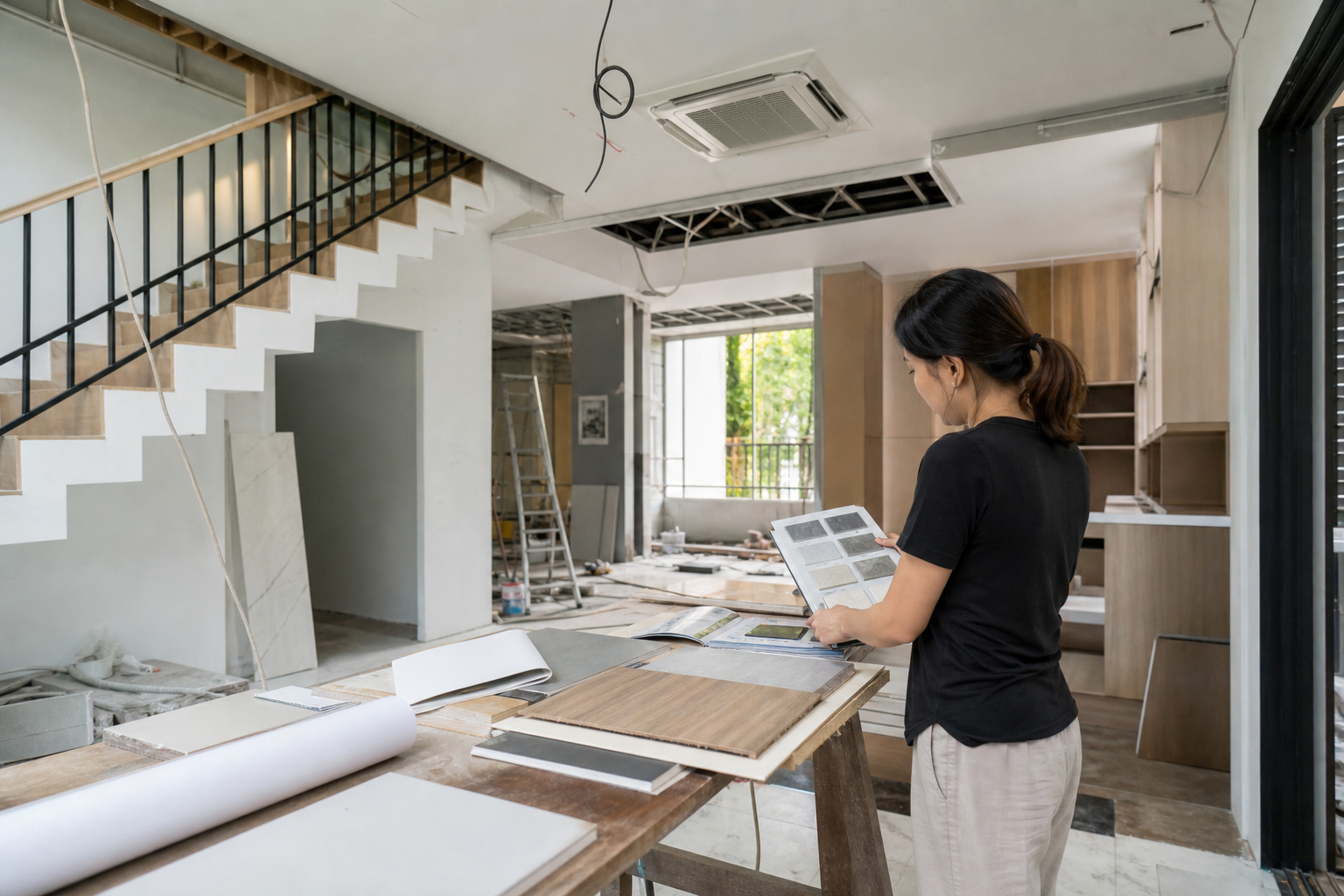
Built-in storage is useful in a large family home, but cabinetry priced room by room accumulates quickly. Veneer, spray finishes, premium hardware, natural stone and specialist metalwork also affect cost. We recommend assigning premium materials to high-touch focal areas and using durable, maintainable specifications elsewhere.
How to build a reliable landed renovation budget
- Separate needs from upgrades. List essential repairs, functional changes and aesthetic improvements in different columns.
- Confirm the project category. Decide whether the brief is interior-only, structural renovation, A&A or reconstruction.
- Survey before final pricing. Record existing services and visible defects, then allow for targeted opening-up where risk is high.
- Price a defined design. Compare quotes only when layouts, quantities, materials and exclusions are aligned.
- Hold contingency outside the contract sum. About 10% may suit a well-surveyed newer home; older or structurally complex properties may justify 15% to 20%.
For a closer look at scope-based benchmarks, see our landed renovation cost guide. The future terrace house renovation cost guide will provide a narrower breakdown for that property type once published.
What should an interior design quotation include?
A usable quotation should identify quantities, materials, unit rates, assumptions and exclusions. Look for clear sections covering demolition, masonry, waterproofing, electrical work, plumbing, air-conditioning, flooring, ceilings, painting, carpentry, doors and final cleaning. Provisional sums should be limited and explained.
Also confirm who coordinates consultants, submissions, site supervision and defect rectification. The lowest initial total can become the most expensive option when key items are omitted or variations are poorly controlled.
Plan the budget around the home you need
A landed-home budget works best when it follows the design brief, not a generic price per square foot. Start with family routines, condition risks and the intended project scope. Then make finish choices within a cost plan that protects the essential work.
If you are preparing a renovation, A&A or reconstruction brief, our landed interior design team can help align design, technical coordination and budgeting from the beginning.
Frequently Asked Questions
How much does landed interior design cost in Singapore?
A light refresh may begin around S$80,000, while a comprehensive interior renovation commonly falls between about S$150,000 and S$400,000 or more. Major structural, A&A or reconstruction work should be budgeted separately because professional appointments, approvals and building work significantly change the total.
Is landed renovation priced per square foot?
Price-per-square-foot figures are useful for an early sense check, but they are not reliable enough for contracting. Two homes with the same floor area can have very different costs due to structure, service replacement, access, bathroom count, carpentry volume and material specification.
How much contingency should I keep?
Keep roughly 10% for a newer, well-surveyed property with a clear scope. For an older house or a project involving extensive demolition, 15% to 20% may be more prudent. The contingency should remain controlled by the homeowner and used only for justified changes.
What is usually excluded from a renovation quotation?
Common exclusions include professional consultant fees, authority charges, appliances, loose furniture, specialist security systems, landscaping, temporary accommodation and certain utility upgrades. Exclusions vary, so request a written list and compare quotations against the same design, material schedule and scope.
How can I reduce cost without making the home look cheap?
Retain sound elements, simplify geometry and concentrate premium materials where people see and touch them most. Standardise concealed hardware, limit unnecessary feature carpentry and resolve layouts early. Good proportions, lighting and detailing usually create more value than applying expensive finishes everywhere.

August 12, 2026
Yang's Inspiration Insight