


Key Takeaways
- Protect the budget for necessary building repairs, services and work that is difficult to replace later.
- Spend on the rooms and fittings that support your household’s daily routines.
- Reduce decorative complexity before reducing essential preparation or installation quality.
- Compare the full cost of postponing work, including return visits and disruption.
Landed renovation spending priorities should start with the house’s condition, essential services and the way your family uses each space. Save on replaceable decoration and unnecessary complexity after those needs are covered. The aim is dependable daily use and manageable upkeep, rather than spending the same amount in every room.
A sensible priority list will differ between an older terrace with unresolved defects and a newer bungalow needing a layout refresh. Assess the existing property before allocating money to finishes. Otherwise, attractive upgrades can consume the allowance needed for more fundamental work.
Protect the Allowance for Qualified Work
Singapore’s Energy Market Authority advises consumers to engage Licensed Electrical Workers for electrical work. This is a useful reminder that some renovation decisions concern competence and safe installation, not simply a choice between premium and standard finishes.
Ask the project team to identify the professional assessments and specialist work relevant to your scope. Keep these items visible in the budget. Removing a decorative feature is a clearer saving than accepting an unexplained reduction in testing, preparation or qualified supervision.
Set Landed Renovation Spending Priorities Before Shopping
Divide the brief into essential work, high-use improvements and optional additions. Essential work addresses the assessed condition of the building and the requirements of the proposed renovation. High-use improvements support everyday activities. Optional additions can wait without undermining the completed home.
For each item, record the reason it matters and what happens if it is deferred. A leaking area and a feature wall should not compete as though they have the same consequence. This exercise makes trade-offs clearer when quotations exceed the initial allowance.
Use the broader landed interior design and renovation cost guide to organise the main budget categories. Then request a project-specific quotation based on the assessed scope. General benchmarks cannot establish what your particular property needs.
Spend First on Condition and Difficult-to-Reach Work
Investigate signs of water ingress, damaged finishes and recurring defects before covering them with new materials. Ask the appropriate professional to identify the cause and explain the proposed remedy. Replacing a visible surface without addressing the source can leave the same problem beneath a better-looking finish.
Structural concerns require suitable professional assessment. Do not assume that every crack is structural or that every wall can be altered. The budget should follow the assessed work and required design process, rather than a guess made during finish selection.
Give careful attention to waterproofing, concealed pipework and electrical provision where relevant to the renovation. These elements can be disruptive to access after tiling, ceilings or cabinetry are completed. Ask what inspections, testing and records will be provided before the work is covered.
This does not mean replacing every existing system automatically. Ask which components can reasonably be retained, what their condition is and how they connect to new work. A documented assessment is more useful than either wholesale replacement or blanket retention.
Prioritise Useful Kitchens and Everyday Storage
A kitchen used several times a day often deserves careful planning before decorative upgrades elsewhere. Spend attention on work areas, appliance clearances, storage access and a layout that suits the household’s cooking habits. A costly finish cannot compensate for a frustrating arrangement.
Compare cabinetry by its complete specification. Discuss the carcass, door finish, hardware, edge treatment and installation, rather than treating the visible front as the whole product. Ask how commonly used drawers and hinges can be adjusted or replaced later.
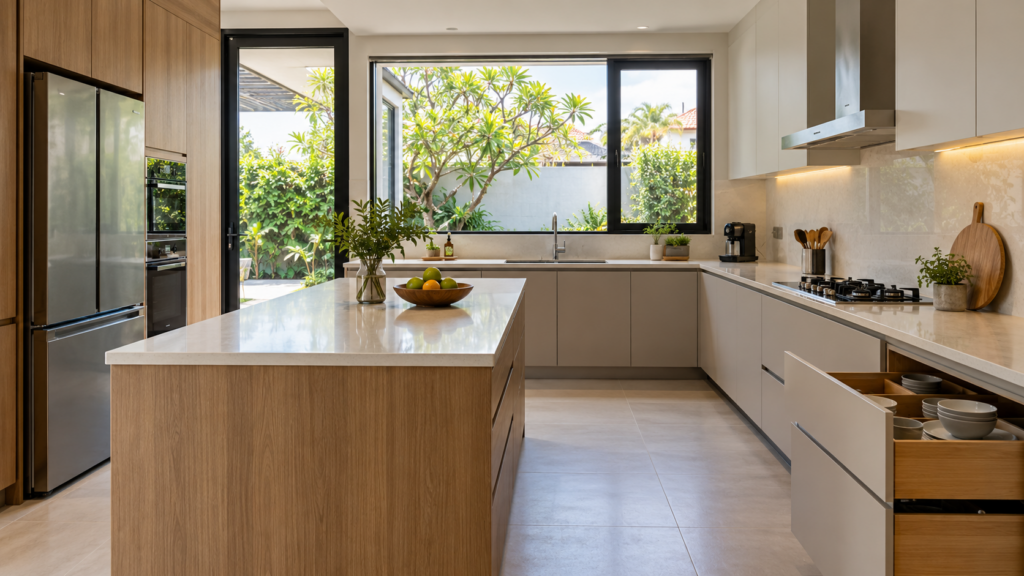
The same logic applies to wardrobes, shoe storage and utility areas. Allocate better access and durable components where use is frequent. A seldom-used guest room may need less built-in furniture, especially if loose pieces can meet its current purpose.
Save by Simplifying Finishes and Decoration
Simpler geometry can reduce unnecessary fabrication and coordination. Compare a straightforward cabinet arrangement with multiple curves, grooves or material changes. Ask the contractor to price both versions so that the saving is visible rather than assumed.
Use a limited, coordinated material palette where it suits the design. Standard formats may offer a practical alternative to unusual sizes or elaborate patterns, although installation conditions still affect the total. Review full-size samples and the complete installed cost before choosing.
Decorative lights, artwork, rugs and selected loose furniture can often be introduced later. Confirm any essential power points or mounting provisions during the main renovation, then leave room to decide after living in the house. This also reduces purchases made only to complete a rendering.
Savings on less visible finishes need a clear boundary. A simpler internal cabinet colour may be acceptable; poor moisture resistance or omitted surface preparation may not be. Specify the required performance first, then compare less costly ways to achieve it.
Recognise False Economies in Quotations
A low initial figure may exclude work that another contractor has included. Compare quantities, installation, protection, disposal, making good and testing on a consistent basis. Ask for unclear allowances to be explained before treating the difference as a saving.
Frequent design changes can also undermine an economical specification. Finalise key layouts and material decisions early enough for coordinated drawings and procurement. Record approved variations with their price and timing implications, so the total remains understandable as the work progresses.
Review the main drivers of landed renovation cost when a quotation feels unexpectedly high. Access constraints, service work and extensive fabrication may explain more of the total than the decorative material you first notice. Reduce the actual cost driver instead of removing a small item that barely changes the budget.
Stage Work Without Paying Twice
Phasing can help align spending with current needs, but it is not automatically cheaper overall. Returning trades may need to protect finished areas, move furniture and reinstate surfaces. Ask for the practical implications of each deferred item while the main design is being coordinated.
Prepare necessary infrastructure now only where there is a clear later use. For example, a planned future study may justify agreed power and network provisions. Avoid paying for speculative systems simply because they might be useful one day.
If the family intends to remain in the house, review living in a landed house during renovation before setting the phases. Temporary kitchens, access restrictions and the availability of bathrooms can affect both sequencing and household costs. Compare these consequences with the alternative of completing disruptive work together.
Keep a Decision Record and Review the Total
Maintain a short log of major choices: the requirement, options considered, selected scope and any deferred work. Update the budget when decisions change. This makes it easier to see whether several individually modest upgrades are collectively displacing something more useful.
Keep an allowance for uncertainties appropriate to the assessed condition and scope, agreed with your project team. Do not treat every unspent amount as permission to upgrade finishes before concealed conditions are understood. Revisit optional purchases as the work becomes more certain.
The strongest spending plan protects necessary work, supports daily life and leaves optional decoration flexible. Bring that order of priorities to the design discussion. It gives the team a practical basis for adjusting the proposal while preserving the parts of the renovation that matter most to your household.
Frequently Asked Questions
Should I Choose the Cheapest Renovation Quotation?
Compare the included scope before choosing by total price. Check quantities, materials, installation, protection, testing and exclusions. A lower figure may represent a simpler proposal or missing work. Ask each contractor to clarify differences so that you can judge the actual value of the offer.
Is It Sensible to Save on Hidden Finishes?
Sometimes, provided the change affects appearance rather than required performance. A simpler cabinet interior colour may be reasonable, while inadequate preparation or unsuitable materials can create later problems. Ask the designer to explain exactly what changes and confirm that the revised specification remains appropriate for use.
Which Purchases Can Usually Wait Until After Renovation?
Selected artwork, rugs, decorative objects and loose furniture can often wait until you understand the finished spaces. Confirm any necessary electrical or mounting provisions earlier. Check that deferring an item will not require reopening completed surfaces or interfere with the household’s basic daily routines.
Does Phasing a Renovation Always Save Money?
No. Phasing can spread expenditure, but repeated mobilisation, protection and reinstatement may increase the total. Ask for a written sequence and compare the cost of completing related work together. Include practical consequences such as temporary facilities, moving furniture and any accommodation needed during disruptive stages.

October 21, 2026
Yang's Inspiration Insight