



Key Takeaways
- Plan inspections during the work as well as at handover, especially before details become concealed.
- Record each issue by location, description, photograph and agreed next action.
- Separate unfinished work, defects, maintenance and new owner requests.
- Keep rectification records, product documents and warranty contacts after moving in.
A renovation defects check compares the completed work with the agreed drawings, specifications and scope, then records issues for assessment and rectification. For a landed home, work systematically through each level and include relevant interfaces with external areas. Handover should also cover documents, operating instructions and the process for resolving outstanding items.
The final walkthrough is easier when checks have taken place throughout construction. Some important details become hidden behind finishes or built-ins. Agree in advance who reviews those stages and what records will be available when the home is handed over.
What BCA’s Quality Framework Can and Cannot Tell You
BCA’s quality housing portal explains that CONQUAS benchmarks construction workmanship using sampling within a project. That does not mean a homeowner’s renovation walkthrough is a CONQUAS assessment or that every renovation is covered by the scheme. Use relevant quality references carefully and confirm the standards actually agreed for your work.
For your own inspection, begin with the contract documents and approved revisions. Ask the designer or contractor to explain how workmanship will be assessed. If a specialist assessment is required, appoint an appropriately competent person rather than treating an informal visual check as a technical certification.
Plan a Renovation Defects Check Before Handover
Agree What Site Reviews Include
Ask who reviews the works, at which stages and for what purpose. Design coordination, contractor supervision and independent inspection are different responsibilities. A weekly visit may be useful, but the right timing also depends on when particular work is ready to inspect.
Identify stages where later access becomes difficult. The appointed team should explain which checks and records are relevant before an area is covered. Include these review points in the programme so that checking does not depend on the owner happening to arrive at the right moment.
Keep the Approved Information Accessible
Maintain the current drawings, material schedule and variation records in one place. During an inspection, this helps distinguish a deviation from an approved change. It also reduces arguments based on superseded drawings or an early image that was never part of the final scope.
The landed interior design process describes how approvals develop through the project. Use that record at handover rather than relying on memory. Where an item remains provisional, ask the team to resolve its status before the final account is discussed.
Prepare a Room-by-Room Inspection Route
Arrange the walkthrough when the relevant areas are accessible and sufficiently clean to inspect. Follow a consistent route through each room, then proceed level by level. Include storage interiors, door operation and the relationship between fittings, rather than looking only at the main surfaces.
Review walls, floors and joinery under normal intended conditions, and discuss any agreed inspection criteria. Extreme viewing angles or unusual lighting can create misleading impressions. Where a concern is disputed, record it clearly and ask for the appropriate assessment instead of trying to settle it through repeated informal comparisons.
For a landed property, include accessible external interfaces within the contracted scope, such as thresholds and sheltered areas. Do not climb onto roofs or open electrical equipment yourself. Ask the relevant contractor or professional to inspect locations and systems that require specialist access or expertise.
Write an Issue List That Leads to Action
Give each item a unique reference and an exact location. Add a short description, a photograph and the date observed. For example, identify the bedroom, wardrobe and particular door instead of recording only that carpentry needs attention.
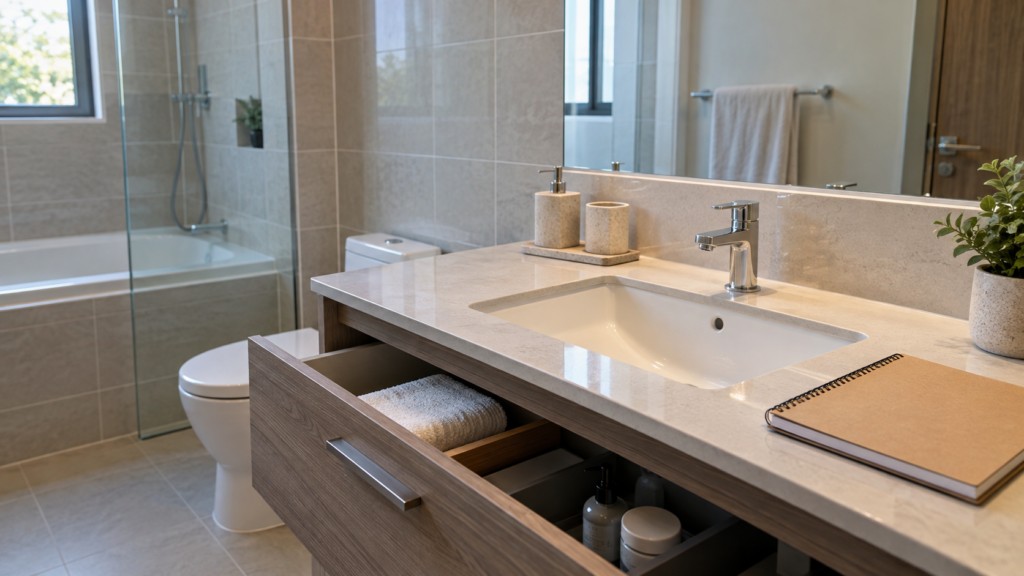
Use a simple status sequence: reported, assessed, action agreed, rectified and rechecked. Assign the responsible contact and the next review date. This makes the list useful for follow-up and prevents an item disappearing simply because someone said it would be handled.
Keep the wording factual. Describe a drawer that catches during opening or a visible stain near a pipe connection, rather than guessing the cause. The contractor or appropriate specialist can then assess whether adjustment, repair or further investigation is required.
Separate Different Types of Outstanding Work
An unfinished contracted shelf is not the same as a damaged installed shelf, and neither is the same as a request to add another shelf. Record unfinished work, defects and new requests separately. This gives each item an appropriate route for completion, rectification or quotation.
Maintenance also needs a clear explanation. Ask which products need periodic care and which issues should be reported under the agreed warranty. If the parties disagree on classification, retain the evidence and seek clarification against the documents rather than deleting the item from the record.
This distinction also helps with payment discussions. Follow the agreed claim and completion provisions, and obtain advice where there is a material dispute. Do not assume that a standard percentage can always be withheld regardless of the terms that govern your project.
Pay Attention to Water-Related Observations
Look for visible dampness, staining or other concerns around accessible wet areas and external interfaces. Record when the issue appears and whether it follows rain or normal use. Those observations can help the appointed specialist investigate without the homeowner attempting intrusive testing.
Our landed waterproofing guide explains the wider design and workmanship considerations. Do not attempt uncontrolled flooding or other tests that could damage completed work. Ask the responsible team what verification is appropriate and request the relevant records where testing forms part of the scope.
An attractive surface finish does not establish that everything beneath it performs correctly. Equally, a visible mark does not identify the cause by itself. Keep the report precise and arrange a suitable investigation before approving a proposed cosmetic repair for a recurring problem.
Agree Rectification and Reinspection Arrangements
Confirm what will be done, who will do it and when access is needed. Consider protection for completed finishes and the effect on other work. If you have already moved in, agree practical arrangements for keys, attendance, dust control and use of affected rooms.
Recheck the specific item after the stated action is complete. Record whether it is closed or needs further work, with updated photographs where useful. Some observations may require monitoring under the conditions in which they first appeared, so agree an appropriate follow-up rather than assuming every issue can be resolved visually at once.
Collect the Handover Documents
Request the documents included in your appointment, such as approved final drawings, product references, operating instructions, warranty information and applicable test or completion records. Ask the team to identify any outstanding documents and when they will be supplied. Keep keys, remotes and access information organised by system.
Read the renovation warranty and aftercare guide before closing the project file. CaseTrust’s renovation scheme describes a 12-month workmanship warranty subject to the contract terms. That scheme reference should not be treated as a universal description of every renovation agreement or product warranty.
Leave With a Clear Follow-Up Plan
Before the walkthrough ends, confirm the outstanding-items list, responsible contact and next review date. Make sure both parties hold the same version. A verbal promise to return later is less useful than a recorded action with an agreed access arrangement.
Your next step is to prepare a room list and gather the current scope documents before the inspection. Use them to guide a calm, systematic review, then keep the completed handover record available for maintenance and any later aftercare request.
Frequently Asked Questions
Should I Wait Until Handover to Check the Work?
No. Agree suitable reviews during construction as well as a final walkthrough, particularly where work will later become concealed. Confirm who performs each check and what records will be kept. The final inspection should build on those earlier reviews rather than serve as the only opportunity to identify concerns.
What Should a Renovation Defects List Include?
Record a unique reference, exact location, factual description, photograph and date for each issue. Add the responsible contact, agreed action and status after assessment. Keep unfinished work and new owner requests separately identified so the list supports clear follow-up instead of combining different obligations into one unclear record.
Is Every Renovation Covered by a Twelve-Month Warranty?
Do not assume so. Read the actual workmanship warranty and its conditions, and distinguish it from separate product coverage. Some accreditation schemes specify warranty requirements, but those should not be generalised to every contract. Confirm the reporting process and relevant dates before relying on a particular period of protection.
Can I Check Electrical or Roof Work Myself?
Limit your own review to safe, accessible observations and report concerns clearly. Do not open electrical equipment or climb onto roofs to inspect work. Ask the relevant qualified professional or contractor to perform the necessary assessment and provide the agreed records for systems or locations requiring specialist expertise.

September 29, 2026
Yang's Inspiration Insight