


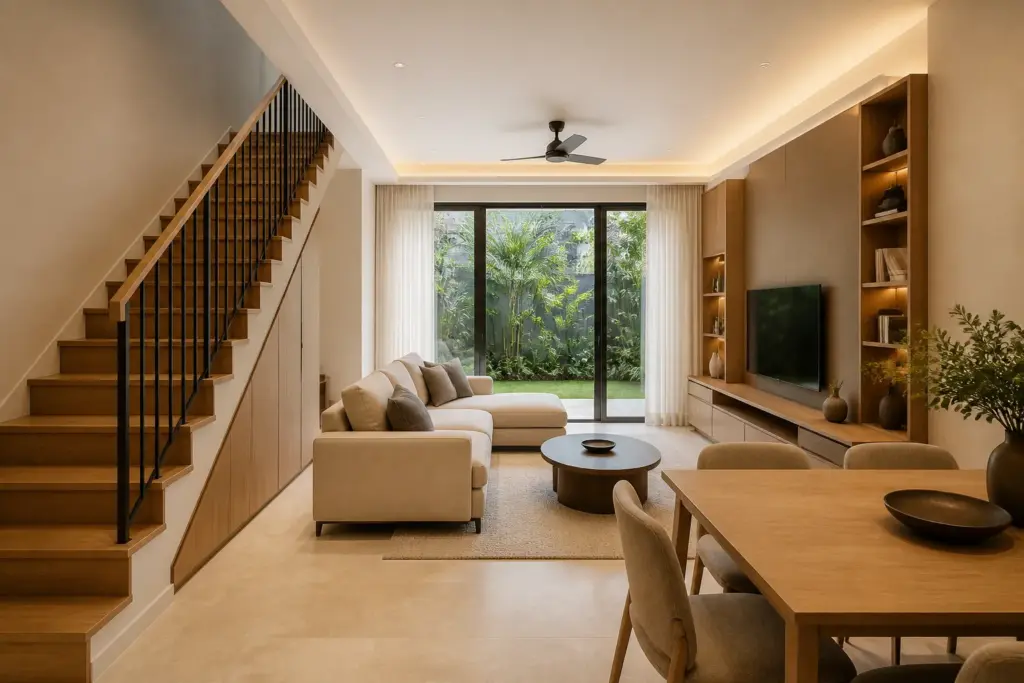
Key Takeaways
|
Yes, you can renovate a cluster house or strata-landed home in Singapore, but the work runs through your estate’s management corporation (MCST) as well as the usual authorities. You own your unit and its interior, while the structure, facade and shared services belong to the collective, so the by-laws decide what can and cannot change. Understand that split first, and the rest of the project runs smoothly.
We handle strata-landed renovations regularly, and the projects that go wrong almost always go wrong at the approval stage, not the design stage. What most people miss is that the MCST submission is a design input, not a formality to clear at the end. Knowing the by-laws before you draw anything shapes a scheme that gets approved the first time, rather than one that has to be unpicked because it touched something it should not have.
What Strata-Landed Ownership Actually Means
A cluster or strata-landed home looks like a landed house but is legally closer to a condominium unit. You hold a strata title to your unit; the land, external walls, roofs and shared facilities are common property managed by the MCST under the Building Maintenance and Strata Management Act (source: Singapore Statutes Online, BMSMA).
That distinction is the whole basis of what you can do. Anything inside your unit’s boundary is broadly yours to reconfigure; anything touching common property needs MCST consent and sometimes a general-meeting resolution. The dividing line is not always obvious, an external-facing window, a party wall between units, a service riser can all be common property, so confirming the boundary early matters. For where this sits among other house types, see how interior design differs by landed house type.
The Approval Chain: MCST Plus Authorities
Strata-landed renovation carries an extra layer on top of the normal process, and the two run in parallel rather than one after the other. Plan for both from the start.
- MCST application. Submit your scope, drawings and contractor details to management; expect by-law checks, a renovation deposit and conditions on hours and access.
- Authority submissions. Structural or external work still needs the relevant approvals, coordinated with the estate’s constraints so the two do not contradict each other.
- Neighbour and access coordination. Shared driveways, lobbies and walls mean your works affect neighbours directly, so notification, protection of common areas and scheduling all matter.
The estate’s renovation hours, noise limits and neighbour-notification requirements often mirror the wider rules covered in renovation hours, noise rules and neighbour notification, but estates usually apply them more strictly and enforce them through the deposit. A contractor who has worked in strata estates before is worth more here than the cheapest quote, because they know how to keep management on side.
What You Can and Cannot Change
The clearest way to plan a strata-landed renovation is to sort every intended change into what is yours, what needs consent, and what is off-limits. The table below is the typical split, though your specific by-laws are the final word.
| Element | Usually allowed? |
| Internal layout within your unit | Yes, subject to structural checks |
| Finishes, joinery, built-ins | Yes |
| Internal M&E and services | Yes, within capacity limits |
| External walls, windows, roof | No, or MCST consent only |
| Common walls and shared services | No, protected common property |
| Facade colour and appearance | No, estate uniformity applies |
Pro tip: get the by-laws and the estate’s renovation guidelines before the first design meeting, not after the concept is drawn. Designing a scheme and then discovering the facade, a window opening or a common wall is untouchable wastes weeks and sours the relationship with management. The timeline impact of these constraints is real and worth planning for, as discussed in how long a landed renovation takes.
Design Ideas That Work Within the Shell
A fixed exterior does not mean a fixed home. The freedom inside a strata-landed unit is generous once you plan around the shell rather than fighting it, and some of the most transformative moves never touch common property at all.
- Reconfigure vertically. Most strata-landed units run two to three storeys, so re-planning how the floors relate, moving the kitchen up to the living level, opening a stairwell, often unlocks more than shifting any single wall.
- Upgrade the services. New wiring, cooling, water heating and smart systems transform daily living entirely within your unit boundary, and are often the highest-value change in an older strata home.
- Maximise the private outdoor space. Your private enclosed space, roof terrace or private garden, where you have one, is prime territory for an indoor-outdoor connection that makes the unit feel far larger.
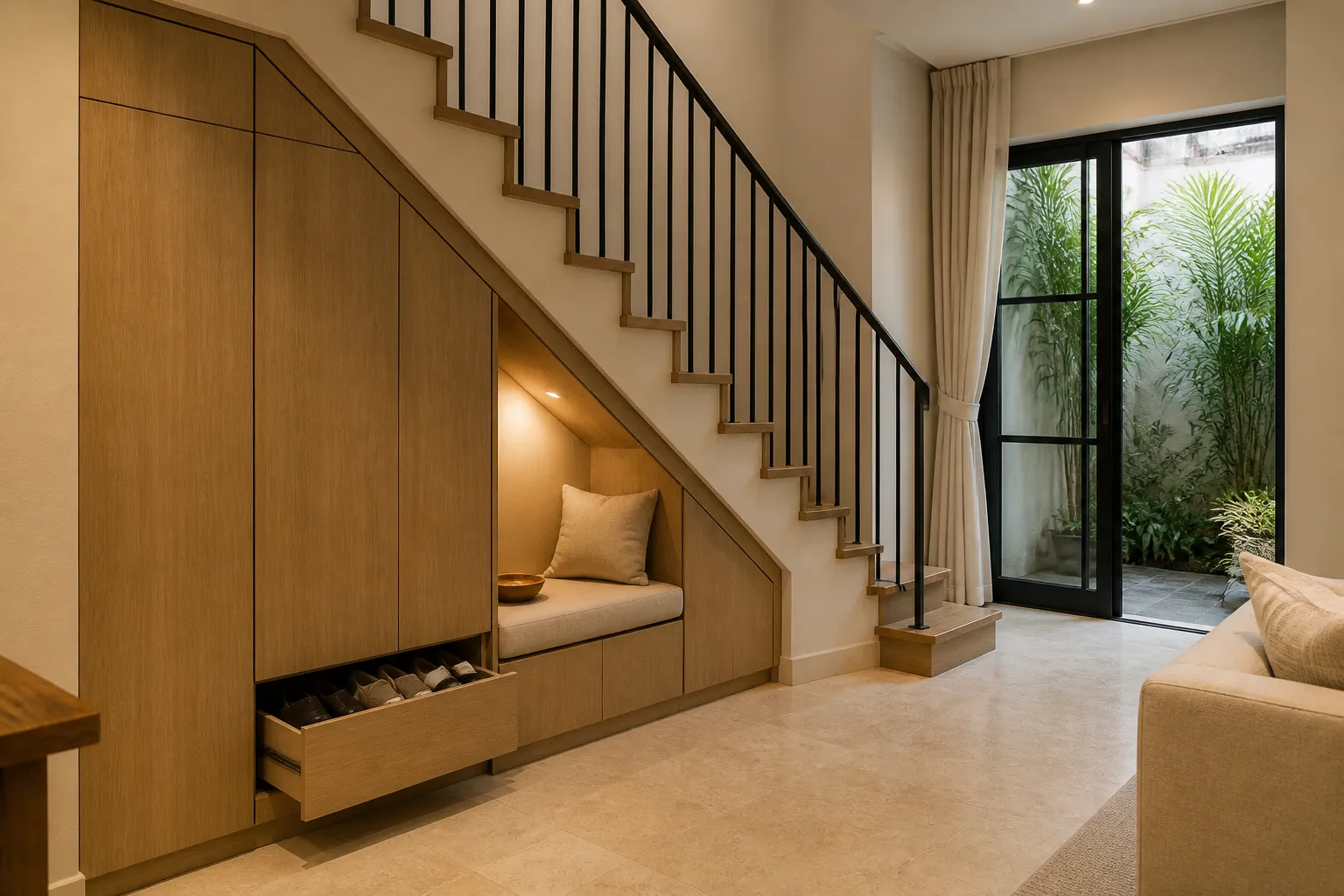
- Invest in joinery and storage. Fitted carpentry gives the biggest visible return in a unit where the footprint is set, turning awkward corners and under-stair voids into usable, considered space.
The mental shift that makes these projects succeed is to stop mourning the walls you cannot move and start exploiting the volume you already control. A well-planned strata-landed unit rarely feels constrained once the interior is working hard.
Plan the Rules First
A strata-landed renovation rewards owners who map the by-laws and MCST process before designing. Confirm what is yours to change, secure management approval alongside the authority submissions, then focus the budget on the interior where the freedom lies. When you are ready to begin, our landed interior design service coordinates the MCST and authority approvals alongside the design and build, so the two never work against each other.
Frequently Asked Questions
Do I need MCST approval to renovate a strata-landed house?
Yes. A strata-landed home sits within a managed estate, so the management corporation must approve your renovation scope, drawings and contractor before work begins. This sits alongside the usual authority submissions and is governed by the estate by-laws, not optional or a formality.
What can I not change in a cluster house?
Anything that is common property. External walls, the roof, facade appearance, common walls and shared services are managed by the MCST and generally cannot be altered without consent. Your freedom lies inside your unit boundary: layout, finishes, joinery and internal services.
Are renovation hours stricter in a strata-landed estate?
Usually yes. On top of national noise and renovation-hour rules, estates set their own limits on working hours, access and deliveries to protect residents, often enforced through your renovation deposit. This tends to lengthen the programme, so factor the estate rules into your timeline early.
Is a strata-landed home the same as a landed house?
Not legally. A strata-landed home looks landed but is held on a strata title, closer to a condominium unit. You own the interior while the land and exterior are common property. This changes the approval process and limits external changes compared with a standalone landed house.
How long does a strata-landed renovation take?
Longer than a comparable standalone unit, mainly because of the extra MCST approval layer and stricter estate access rules. The design and build phases are similar, but approvals and coordination with management and neighbours add time, so build that buffer into the schedule from the start.

August 27, 2026
Yang's Inspiration Insight