


Key Takeaways
- Define luxury through layout, comfort and detailing before selecting statement materials.
- Specify stone, metal and joinery by actual product and intended use.
- Coordinate lighting, furniture and technology with the architecture.
- Compare the complete scope and upkeep requirements before setting a finish budget.
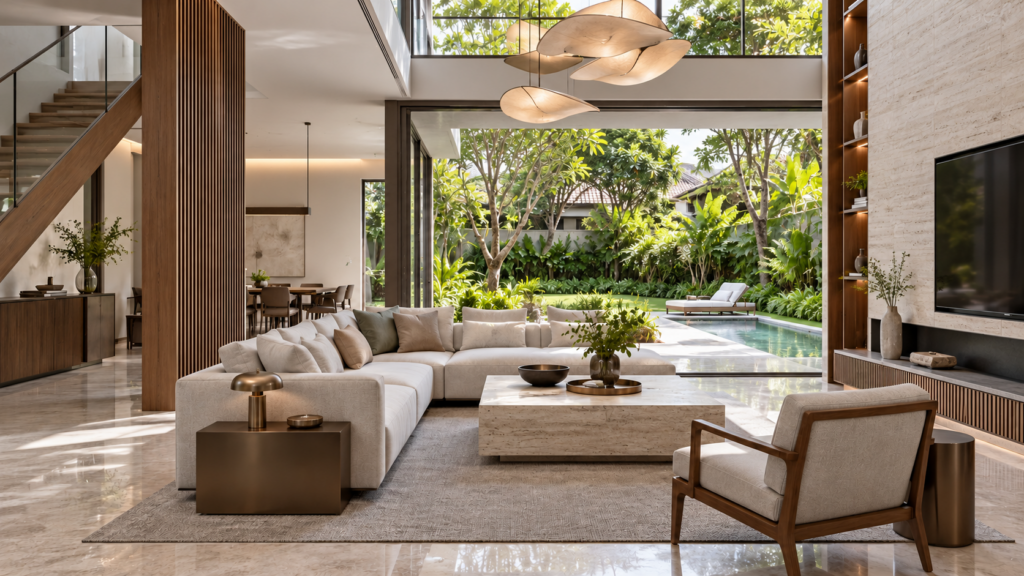
Modern luxury landed interior design combines well-proportioned spaces, carefully detailed materials and comfortable everyday use. Begin with circulation, privacy and the rooms that matter most, then select stone, joinery, lighting and furniture as a coherent scheme. Expensive finishes alone cannot resolve an awkward plan or make poorly coordinated rooms feel considered.
Define what luxury means for your household. It might be generous storage, a quiet bedroom, comfortable entertaining or a beautifully finished kitchen that is easy to maintain. Give those priorities to the designer before collecting a long list of impressive features with no clear relationship to daily life.
What Material-Care Guidance Reveals About Specification
The Natural Stone Institute’s care guidance explains that suitable care depends on the stone’s composition. It also distinguishes improved stain resistance from being stain-proof after sealing. This is a useful reminder that an attractive material should be selected with realistic expectations about use and maintenance.
Apply that approach to the whole palette. Ask what each product is, where it is suitable and how it will age. A clear specification helps the household understand what it is buying and lets the contractor price an identifiable finish rather than an ambiguous label such as premium stone.
Begin Modern Luxury Landed Interior Design With Proportion
Review the size and relationship of rooms before adding feature walls or extensive cabinetry. Check walking routes around sofas, dining chairs and kitchen work areas. A generous floor area can still feel constrained when furniture and built-ins occupy the wrong places.
Consider what is visible from the entrance and between adjoining rooms. A consistent sequence of materials and well-placed openings can give the interior a clear direction. Not every view needs a focal point, and a quiet background can help a carefully chosen feature have more presence.
Connect the Facade and Interior
Look at the windows, structural rhythm and garden relationship already available. The interior should respond to those features rather than treating each room as an isolated showroom. Review how the palette reads beside the exterior materials and under the daylight entering the actual house.
Compare the concept with other landed interior design styles to identify the characteristics you want to retain. Modern luxury may share clean lines with other approaches, but the brief can place greater emphasis on bespoke detailing and selected statement pieces. State those preferences without turning a style label into a rigid formula.
Plan Privacy and Service Routes
Separate entertaining areas from private rooms where the household needs it. Consider deliveries, household storage and the movement of cleaning equipment. A refined interior works better when routine tasks have been accommodated instead of pushed into whichever corner remains after the visual design is complete.
For larger properties, the GCB interior design guide explores the wider planning brief. The same question remains useful at smaller scales: how can guests, family and service activities move comfortably without unnecessary overlap? Let the answer guide the layout before decorative expenditure grows.
Specify Stone With the Whole Assembly in Mind
Ask to see the proposed material and finish under relevant lighting. Discuss variation, visible joints, edges and the intended layout before fabrication. A small sample cannot show every characteristic of a large surface, so agree how the actual material selection will be reviewed.
Coordinate supports and installation details with the appropriate specialists. Large panels, worktops and suspended-looking features need more than an attractive elevation drawing. Clarify how they will be delivered, fitted and, if necessary, repaired without assuming those practical questions are included in the material price.
Match maintenance expectations to use. A family dining surface exposed to daily spills creates a different brief from a decorative wall. If the preferred natural material requires care the household will not provide, compare suitable alternatives while preserving the colour and proportion that motivated the original choice.
Use Metal and Joinery as Coordinated Details
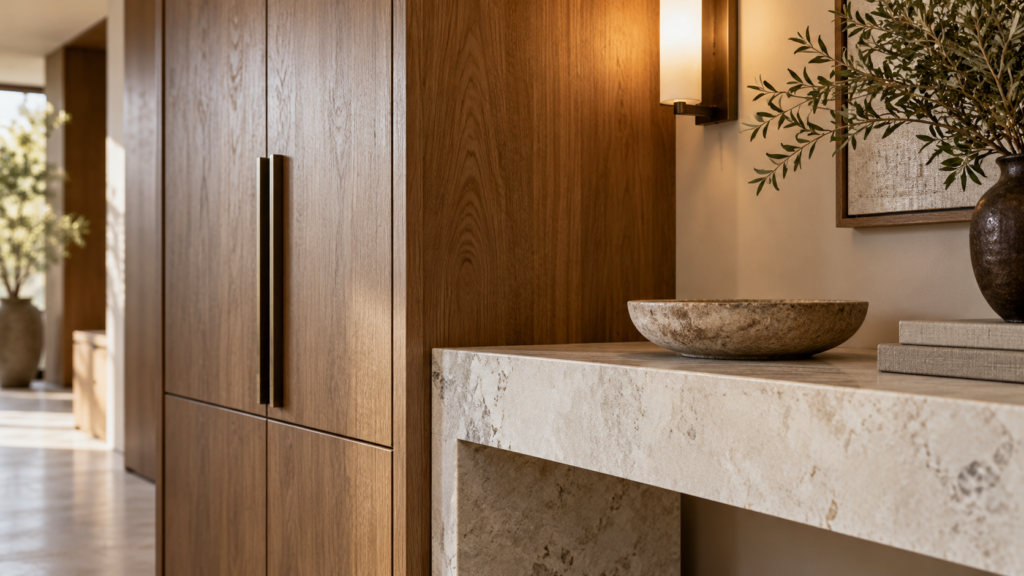
Choose metal finishes with attention to colour, sheen and how they meet adjoining surfaces. A handle, lighting fitting and trim described with similar names may still look different together. Review samples as a set before ordering repeated details throughout the home.
For cabinetry, specify the substrate, visible finish, internal arrangement and hardware. Ask how doors align, where ventilation or service access is required and how heavily used compartments are constructed. The quality of a built-in is experienced through opening, closing and storage as much as through its external appearance.
Resolve Junctions Before Fabrication
Look closely at where timber meets stone, cabinetry meets ceilings and skirting changes at doorways. Request drawings or samples for important transitions. Those decisions often determine whether a restrained scheme looks deliberate, especially where there is little ornament to distract from uneven alignments.
Do not allow concealed access panels to disappear from the technical discussion. A flush finish can still include a planned service route. Ask the designer and trades to demonstrate how valves, equipment or lighting components can be reached after the room is complete.
Choose Statement Lighting for the Actual Space
A feature pendant should suit the room’s scale, furniture and viewing positions. Review it from the upper floor where a void is involved, as well as from the entrance and sofa. Confirm support, power provision, cleaning and replacement access before the ceiling design is finalised.
Keep functional lighting in the same plan. The room still needs useful light for reading, conversation and ordinary movement. Test sample fittings against reflective stone and metal finishes so that the intended atmosphere does not depend on uncomfortable glare or keeping most of the lights switched off.
Commission Furniture Around Use and Access
Bespoke furniture can address unusual dimensions or a specific design intention, but it should solve a defined problem. Confirm seat comfort, table height, storage function and clearances before approving drawings. A unique piece is not automatically more suitable than a well-chosen standard item.
Check the delivery route through gates, doors and stair turns. Ask whether the piece can be assembled in the room and how it could be moved later. Upholstery choices should also reflect daily use, cleaning expectations and the possibility of future repair or replacement.
Integrate Technology Without Complicating Daily Life
Decide which controls and systems provide a useful benefit, then coordinate them with the interior. Lighting scenes, blinds and cooling controls need a clear operating plan. Avoid hiding essential functions behind an interface that family members find difficult to use.
The smart-home planning guide for landed houses can help structure the discussion about integration and future provision. Ask about compatibility, maintenance and basic operation when a service is unavailable. Include access to equipment rather than treating invisible technology as equipment that never needs attention.
Set the Budget by Scope and Priority
Separate building work, services, joinery, finishes, furniture and specialist systems when reviewing costs. Identify allowances that still depend on selection. A broad style description cannot establish a reliable renovation price without quantities, specifications and an understanding of the existing house.
For larger homes, use the bungalow and GCB renovation cost guide to organise the discussion. Rank the rooms and details that matter most before allocating the budget. Protect essential performance and coordination, then compare decorative options within the remaining allowance rather than reducing hidden necessities to retain every feature.
Approve a Scheme You Can Live With
Request a coordinated set of plans, material samples and itemised scope. Review the proposal in daylight and evening conditions, and ask how the main materials will be maintained. Resolve responsibilities for custom details before fabrication begins, when changes can be harder to accommodate.
Bring your priorities to Yang’s landed interior design service with a few carefully chosen references. The aim is a home whose finish quality supports its daily use. Approve the scheme when its proportions, operations and maintenance needs make as much sense as its appearance.
Frequently Asked Questions
Does Modern Luxury Require Marble in Every Room?
No. A coherent palette, comfortable layout and well-resolved details can establish the direction with selective use of stone. Choose materials according to their location and maintenance needs. Repeating an expensive finish everywhere is not a substitute for proportion, practical storage or careful coordination between adjoining rooms.
Is Bespoke Furniture Always Better Than Standard Furniture?
No. Bespoke pieces are useful when they address a particular dimension, function or design requirement. Compare comfort, quality, access and repairability alongside appearance. Confirm the benefit before commissioning, and check that the finished piece can be delivered, installed and moved through the home when necessary.
How Should I Budget for a Modern Luxury Renovation?
Start with a defined scope covering construction, services, joinery, finishes, furniture and specialist systems. Rank priorities and identify unresolved allowances before comparing quotations. The style label alone cannot establish a reliable price, particularly when the existing building condition or the extent of alterations remains uncertain.
Will Sealing Make Natural Stone Maintenance-Free?
No. Sealing may improve stain resistance for appropriate stone and products, but it does not make every surface stain-proof or eliminate care requirements. Ask the supplier for instructions specific to the selected material and finish, then decide whether those expectations suit the intended room and household.

October 8, 2026
Yang's Inspiration Insight