


Key Takeaways
- Choose flooring by room use, moisture exposure and maintenance expectations.
- Compare the installed system, including preparation, joints and transitions.
- Check the exact finish for wet areas instead of relying on a material name.
- Review total installed cost and future repair options before approving a sample.
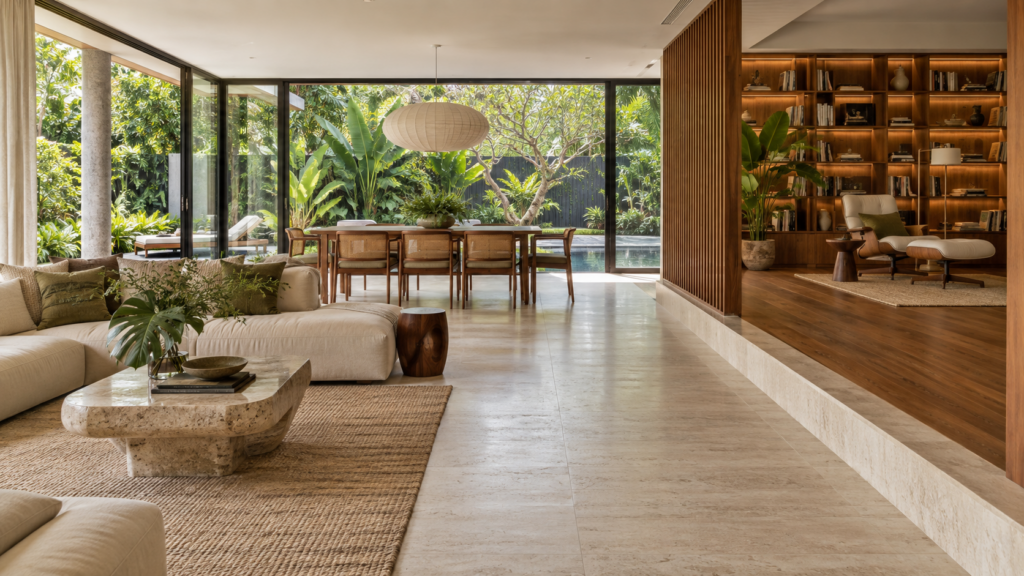
The best flooring for landed houses depends on where it will be used and how the household lives. Porcelain can suit busy areas, marble offers natural variation, engineered timber provides a real-wood surface, and vinyl can be an option for suitable dry interiors. Each choice still needs an appropriate substrate, installation method and product specification for the intended location.
A landed home does not need one material everywhere. Bedrooms, bathrooms and outdoor areas place different demands on a floor. Plan those differences deliberately, then coordinate levels and transitions so the finished house feels coherent and remains practical to use.
What Product Standards Reveal About Performance
The Tile Council of North America explains that porcelain tile has water absorption of 0.5% or less under the referenced test method. That property does not, by itself, establish the wet-slip performance of every finish or make the entire installed floor waterproof. The tile and the assembly beneath it need separate consideration.
Ask suppliers for information on the exact product and surface finish. A showroom label such as stone-look, outdoor or premium is not enough to compare all relevant properties. Confirm the intended use, installation requirements and maintenance guidance before committing to a large order.
Choose the Best Flooring for Landed Houses by Room
Start With Exposure and Daily Use
Identify areas that receive wet shoes, frequent spills, heavy furniture or direct sunlight. Consider how children, older occupants and pets use the house. A floor that looks suitable in a quiet display area may create practical difficulties in a busy family entrance.
Review the household’s cleaning habits honestly. If a material requires a product or routine you are unlikely to maintain, discuss another option. Our guide to materials for Singapore’s climate explains why humidity, direct wetting and outdoor exposure should be assessed separately.
Coordinate Levels Before Selecting Thicknesses
Compare the proposed floor build-ups across adjoining rooms and stair landings. Preparation, adhesive or underlay can affect the final level as well as the visible material thickness. Ask the designer to resolve door clearances, thresholds and other transitions before installation.
Avoid choosing each room independently and leaving the junctions to the installer. Where a level change is unavoidable, it needs deliberate detailing and consideration of the people using the space. Ask how the transition will look and function, rather than approving it only through a small material sample.
Marble: Natural Character With Specific Care Needs
Marble offers natural veining and variation that can become a major part of the interior design. Review representative pieces and the proposed layout so that you understand the range of appearance. A small sample may not show the variation across the material delivered for an entire room.
The Natural Stone Institute’s care guidance explains that stone composition affects cleaning requirements. Calcium-carbonate-based stones are sensitive to acidic substances, and sealing should not be confused with protection against every form of damage. Ask the supplier for care advice specific to the selected stone and finish.
Discuss the household’s tolerance for changes in appearance and the options for professional restoration. Clarify sealing recommendations, compatible cleaners and the treatment of spills. Marble can be a considered choice, but its maintenance expectations should be understood before it becomes the default across every level.
Porcelain: Compare Finish, Format and Installation
Porcelain is available in many colours, patterns and sizes, which can help coordinate different parts of a house. Compare several pieces to understand pattern repetition and shade variation. Ask how the proposed layout handles cuts, joints and the relationship with adjacent built-ins.
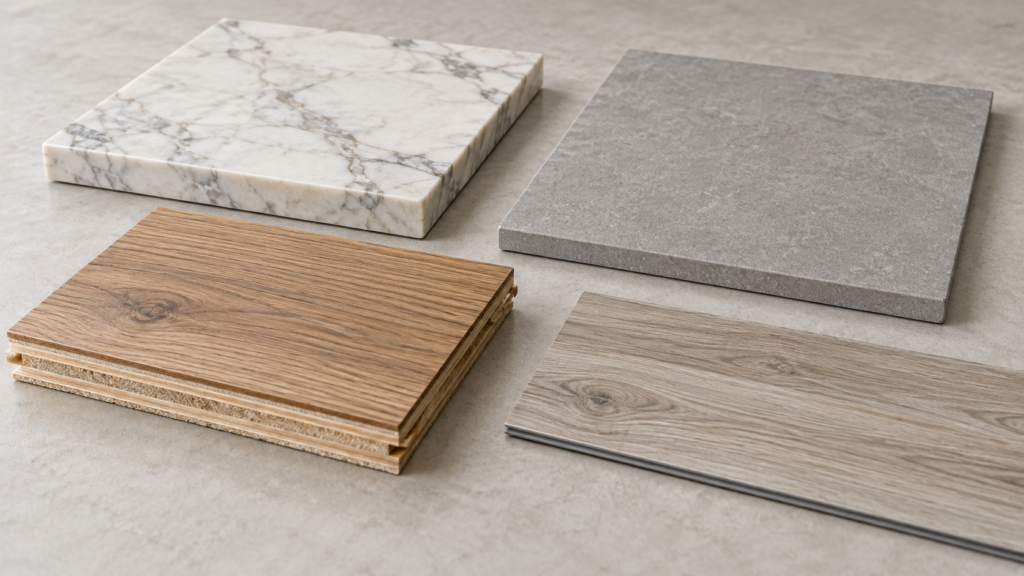
Large formats can create a different visual rhythm from smaller tiles, but size also affects handling and installation planning. Request a quotation that accounts for preparation, access and the intended laying pattern. The material price alone does not explain the completed floor cost.
For bathroom design across a landed home, confirm the suitability of the specific finish under expected wet conditions. Discuss drainage and waterproofing with the responsible team. A low-absorption tile cannot compensate for unresolved details at penetrations, joints or the underlying wet-area assembly.
Engineered Timber: Real Wood With Installation Conditions
Engineered timber combines a real-wood surface with a layered construction. The construction can help manage movement, but it does not remove the need to consider the environment. Kährs’ wood-floor guidance describes engineered products and the importance of care, including avoiding excessive moisture.
Ask about the selected product’s installation conditions, wear layer and maintenance method. Refinishing potential varies, so do not assume every engineered floor can be sanded repeatedly. Obtain the product-specific answer and keep it with the handover documents.
Discuss how the home will normally operate, including periods of air-conditioning and natural ventilation. Confirm that the proposed installation suits those conditions. A timber floor should be selected for the actual household environment, not an assumed routine that nobody intends to follow.
Vinyl: Look Beyond the Decorative Surface
Vinyl may be considered for bedrooms or other suitable interiors where its appearance and practical characteristics match the brief. Compare the exact product construction, installation system and use limitations. Broad descriptions such as waterproof should not be treated as confirmation that every adjoining detail or substrate is protected.
Quick-Step’s vinyl preparation guidance emphasises the need for an appropriate subfloor, including moisture conditions. Requirements vary by product and system, so use the selected manufacturer’s instructions rather than transferring a limit from another range.
On upper floors, discuss sound expectations and the proposed assembly. Underlay and floor construction matter alongside the surface material, and a marketing claim does not establish performance in your specific house. Ask how the installer will address unevenness, existing finishes and replacement of damaged sections.
Sintered and Ultra-Compact Surfaces: Confirm the Exact System
Products marketed as sintered stone or ultra-compact surfaces should be compared by their individual technical information. Do not assume all brands, thicknesses and finishes perform identically. Confirm that the selected version is offered for the intended flooring application.
For example, Cosentino’s flooring guidance describes Dekton options for flooring, while its technical documentation distinguishes installation and finish requirements. Ask the supplier to identify the relevant system and care instructions for your selection. Large slabs also need realistic planning for access, handling and eventual repairs.
Compare Outdoor Suitability and Total Cost
For patios, decks and poolside living areas, assess wet use, sunlight and drainage separately from interior appearance. Request relevant slip-performance information for the exact finish. A coordinated colour palette can still use different surfaces where the exposure changes.
Compare quotations for the same measured area and scope. Include removal, substrate repairs, preparation, installation, skirtings, thresholds, protection and waste allowances where applicable. Ask which items are provisional and how additional work will be valued if concealed conditions are discovered.
Consider future care and repair too. Find out whether replacement pieces can be retained, whether individual sections can be repaired and how a discontinued product would be handled. A lower initial material rate is not a complete comparison of the floor you will live with.
Make the Final Choice With Full-Size Samples
Review meaningful samples in the home’s lighting and compare them with adjoining finishes. Record the product, colour, surface finish and approved installation details. Ask the team to resolve every transition before placing the final order.
Start by choosing two suitable options for each major zone. Compare care, comfort, appearance and the complete installed quotation, then approve the choice that best matches the household’s priorities. Keep the specification and maintenance instructions for handover and future repairs.
Frequently Asked Questions
Is Porcelain Always the Best Choice for a Landed Home?
No single material is best for every room. Porcelain may suit many uses, but the exact finish, installation and maintenance requirements still matter. Compare it with alternatives against moisture exposure, comfort, appearance and household routines, then confirm that the complete floor assembly is suitable for the intended location.
Can Engineered Timber Be Used in Singapore’s Humidity?
It may be suitable when the particular product, installation and operating conditions meet the manufacturer’s requirements. Discuss the home’s actual ventilation and air-conditioning routine with the supplier. Engineered construction does not eliminate moisture-related considerations, so keep the installation and maintenance guidance for the exact flooring you have selected.
Is Waterproof Vinyl Enough for a Wet Area?
A product’s water-resistance claim does not establish that the entire room or installed assembly is waterproof. Confirm the intended application, joints, edges, substrate and other relevant details with the supplier and design team. Wet-area waterproofing and drainage need their own suitable design rather than reliance on the surface label.
How Should I Compare Flooring Quotations?
Compare the same area, product specification and installation scope. Include preparation, removal, repairs, skirtings, transitions and protection where relevant, and identify provisional items. Ask about future maintenance and repair options as well as the initial rate, so your comparison reflects the completed floor rather than only the material price.

October 1, 2026
Yang's Inspiration Insight