



Key Takeaways
- Give every bidder the same drawings and written scope.
- Compare quantities, specifications and exclusions before totals.
- Treat provisional allowances as unresolved costs, not fixed prices.
- Agree a written process for variations before work starts.
To compare renovation quotations fairly, first make sure each firm is pricing the same landed-home scope, material specifications and responsibilities. Then reconcile allowances, exclusions and payment terms before judging the total. The cheapest cover-page figure may simply contain less work.
Create one comparison sheet rather than reading each proposal in isolation. The landed interior design cost guide helps establish the budget categories, but the quotation review must reach the actual work being offered for your property.
Use the landed renovation cost benchmarks as context while keeping your comparison tied to the inspected house and agreed brief.
What CASE Says About Transparent Pricing
CASE’s renovation accreditation guidance requires clear pricing breakdowns and written agreement to variations before work under its scheme. It also describes progressive payment arrangements. These are useful points to check when assessing an accredited firm’s proposed contract, rather than assuming a logo answers every contractual question.
Keep the quotation, drawings, specifications and accepted clarifications together. If different documents describe the same item differently, ask for a corrected proposal before signing. An email promising a better material should not remain disconnected from the final contract schedule.
How to Compare Renovation Quotations Line by Line
Start With One Scope
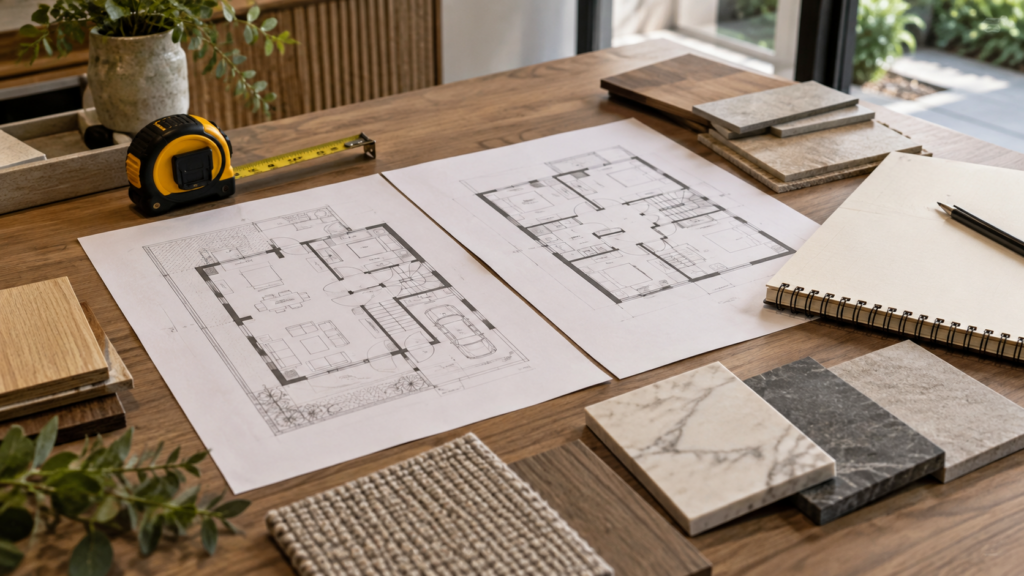
List the rooms, surfaces and systems being changed. Identify retained elements, works by others and owner-supplied items. Send the same version of the drawings and brief to every bidder, with a revision date on each document.
Ask each firm to return a list of assumptions. One contractor may assume an existing floor can remain while another prices full replacement. You cannot meaningfully compare the totals until that difference is resolved or separately priced as an option.
Compare Units and Specifications
For joinery, check dimensions, substrate, door finish, hardware and internal fittings. For flooring, check the measured area, supply allowance, installation and preparation. Similar category names do not prove equivalent products or quantities.
A lump sum can still be usable if it refers to a sufficiently clear schedule. Conversely, dozens of line items can remain vague if every description says supply and install without identifying the product. Detail is valuable when it defines responsibility and measurable work.
Understand Provisional Sums and PC Allowances
A provisional sum generally holds an allowance for work whose scope or cost is not fully resolved. A prime cost, or PC, allowance commonly relates to the supply cost of an item to be selected. The precise treatment depends on the contract, so ask the firm to explain its definitions.
For each allowance, record what is included and how the final charge is calculated. Ask whether installation, delivery, wastage, contractor attendance and markup sit inside or outside it. A low supply allowance can make the quotation look economical while leaving necessary costs elsewhere.
Request a realistic selection check before signing. If the allowed bathroom fittings cannot meet your agreed brief, adjust the allowance now. That is clearer than treating a predictable shortfall as a surprise after the work begins.
Normalise the Totals Before Choosing
Use a comparison table with the same scope down the left and one column for each firm. Mark every entry included, excluded, allowance or unresolved. Keep unsupported guesses visible rather than filling them with zero.
Consider this arithmetic example, not a market quotation: Firm A prices S$240,000 but excludes S$25,000 of work required by your brief. Firm B includes the same work at S$255,000. Once the missing scope is added, A’s comparable figure is S$265,000 before any other adjustments.
Apply the same process to taxes, professional appointments and owner purchases. Confirm the tax treatment with each supplier instead of adding a blanket amount to inconsistent bases. The comparison should show both the offered contract sum and the expected owner outlay.
Check Exclusions and Programme Assumptions
Read the exclusions as carefully as the inclusions. For a landed home, ask specifically about scaffolding, access, debris removal, protection, roof interfaces, external drainage and making good. Not every item will apply, but the relevant responsibilities need to be assigned.
Also check procurement and programme assumptions. A proposal based on readily available finishes may not cover the consequences of a later imported-material selection. Ask how delayed decisions, owner-supplied deliveries and approved changes affect completion and related costs.
Review renovation quotation and contract red flags when a proposal leaves these points vague. Resolve the gaps in writing before a deposit turns an unclear estimate into a practical commitment.
Put Variation and Payment Controls in Place
A useful variation record states the reason, drawing reference, addition or omission, price effect and programme effect. Agree who can authorise it and how the revised contract total is tracked. Keep emergency-work procedures separate and explicitly defined.
Ask how an omitted item is credited, not only how additions are charged. Compare payment milestones with tangible work or deliverables and clarify the supporting evidence expected. Our guide to payment schedules and variation orders provides the next discussion points.
Maintain one running change log shared with the project team. This avoids separate messages becoming competing versions of the budget. Review unresolved variations alongside the remaining allowance before approving optional upgrades.
Run a Clarification Meeting Before the Final Comparison
Send each bidder the same short list of unresolved questions. Ask for revised documents that incorporate the answers, rather than relying on a conversation to explain gaps in the quotation. Give every revision a date so you can identify the version being considered for acceptance.
Use the meeting to test a few representative items in detail. For a bathroom, trace the preparation, waterproofing scope, finishes, fittings and making good. For a wardrobe, compare its dimensions, internal arrangement and hardware. The aim is to understand how the descriptions translate into a finished item.
Record alternatives in a separate column. If one firm proposes retaining a floor and another recommends replacement, ask both to explain their assumptions and price the agreed comparison basis. You can then evaluate the alternative on its merits without allowing it to distort the main total.
Finish by asking what information could still change the quotation. A pending survey or unselected material is a decision to resolve, not simply fine print. Assign an owner and a deadline to each outstanding point before moving towards contract signing.
Keep the final comparison sheet alongside the accepted documents. When a later question arises, you will be able to see whether an item was included, excluded or deliberately left provisional. That record is especially useful when different family members have discussed different parts of the project with the firm.
Choose the Proposal You Can Explain
Before deciding, summarise why the preferred quote is suitable in a short paragraph: its scope matches the brief, specifications are clear and responsibilities are assigned. If you cannot explain a major price difference, return to the bidders for clarification.
Good comparison does not require choosing the lowest number. It requires knowing what you will receive, what remains uncertain and how additional work will be handled. Keep that record as the project moves from quotation to construction.
Frequently Asked Questions
How Many Renovation Quotations Should I Compare?
Several comparable proposals can help you understand scope and pricing, but consistency matters more than collecting a large number. Give shortlisted firms the same information and allow time for clarification. A smaller set of detailed, aligned quotations is more useful than many estimates based on different assumptions.
Is a Lump-Sum Renovation Quotation a Red Flag?
Not automatically. A lump sum may refer to detailed drawings and specifications that define the work clearly. The concern is an undefined scope with unclear exclusions or allowances. Ask for supporting schedules and written clarifications so you understand exactly what the contractor has committed to deliver.
Can a Provisional Sum Change After I Sign?
Yes, depending on the contract and how the allowance is adjusted when the work becomes defined. Ask for the adjustment method, supporting evidence and applicable fees in advance. Track unresolved sums separately from fixed items so the original contract total does not create false budget certainty.
What Should a Variation Order Include?
It should identify the requested change, affected scope, price adjustment and effect on the programme. Record any omission credits and the person authorised to approve it. Keep the signed record with the updated drawings and running cost log so everyone works from the same agreed instruction.

September 22, 2026
Yang's Inspiration Insight