


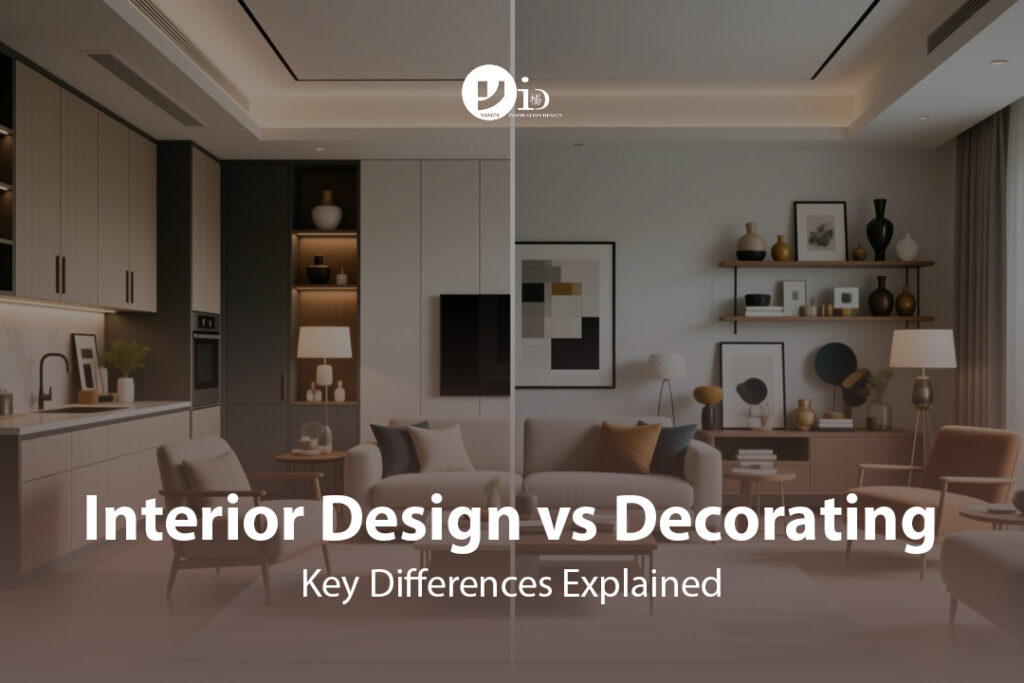
The key difference between interior design vs interior decorating lies in their scope: interior design is the art and science of creating functional, safe, and beautiful spaces by altering the very structure of the room, while interior decorating focuses purely on the aesthetic furnishing and adornment of an existing space. If you’re about to start a home project, you’ve likely seen these terms used interchangeably, which can be confusing. Making the right choice between them is a crucial first step that impacts your budget, timeline, and the final outcome of your home.
This guide will provide a definitive breakdown of the roles, responsibilities, and key distinctions between interior design vs interior decorating, helping you choose the perfect professional for your needs.
At a Glance: Interior Designer vs Interior Decorator
For those who need a quick answer, this section provides a high-level summary. The following table highlights the main distinctions between an interior designer and an interior decorator before we dive into the finer details.
Quick Comparison Table
| Aspect | Interior Designer | Interior Decorator |
|---|---|---|
| Primary Focus | Functionality, safety, and spatial planning | Aesthetics and furnishing |
| Involves Structural Changes | Yes, can work with architects on layouts and non-load-bearing walls | No |
| Typical Project Stage | From the beginning of a build or renovation | After construction is complete |
| Education | Formal degree and often certification/licensure required (e.g., HDB, CaseTrust in Singapore) | Formal training is beneficial but not required |
| Collaborates With | Architects, contractors, engineers, and builders | Furniture makers, painters, upholsterers, and suppliers |
Defining the Roles: What Do They Actually Do?

To truly understand the difference, it’s important to look at what each professional does on a day-to-day basis.
What is an Interior Designer? The Art and Science of Space
An interior designer shapes the experience of an interior space by focusing on its functionality, safety, and the well-being of its occupants. They apply creative and technical solutions within a structure to create environments that are not just beautiful but also practical and code-compliant. Their work is a blend of art and science.
Key Responsibilities:
- Space planning and developing floor plans: They analyze how a space will be used and create detailed floor plans to optimize flow, light, and usability. This includes everything from the “work triangle” in a kitchen to the circulation path in a living room.
- Understanding and applying building codes: In Singapore, this means adhering to regulations set by the HDB (Housing & Development Board) and BCA (Building and Construction Authority), ensuring all work is safe, legal, and up to standard.
- Collaborating with architects and contractors: They are a core part of the renovation team, working on structural elements like moving non-load-bearing walls, planning electrical and plumbing points, and designing custom built-ins.
- Selecting hard finishes and fixtures: They choose permanent materials like flooring, tiles, wall finishes, lighting, and plumbing fixtures that form the foundation of the space.
- Creating technical drawings and documents: Using software like AutoCAD (CAD), they produce detailed construction documents that guide contractors and tradespeople.
What is an Interior Decorator? The Art of Adornment
An interior decorator focuses on the aesthetic or “surface level” of an existing space without making structural changes. Their primary goal is to make a room look beautiful and reflect the client’s personal style. Think of them as a personal stylist for your home.
Key Responsibilities:
- Defining a client’s personal style: They work closely with homeowners to understand their taste, whether it’s minimalist, contemporary, Scandinavian, or eclectic.
- Selecting color palettes, paint, and wallpaper: They help choose the right hues and wall treatments to create a specific mood or ambiance.
- Sourcing furniture, fabrics, and accessories: They are experts at finding the perfect sofa, rug, curtains, artwork, and decorative items to bring a room together.
- Arranging furniture and styling: They have a keen eye for layout, proportion, and scale, ensuring that all the elements in a room are arranged for maximum visual impact.
- Focusing on the look and feel: Their job is to adorn the finished space, adding personality and flair through styling.
The 5 Key Differences You Need to Understand
Let’s break down the distinctions even further into five key areas that directly impact your project.
1. Scope of Work: Structure vs Surfaces
The most significant difference is the scope. Interior designers are involved with the “bones” of a building. They can reconfigure a layout, move a wall, or redesign a bathroom from scratch. Their work affects the structure and function of the space.
Interior decorators, on the other hand, work with the “skin.” They come in after the structure is set to work on surface treatments and movable furnishings.
A useful analogy is this: An interior designer builds the functional canvas, while an interior decorator paints on it.
2. Education & Certification: Formal Degrees vs Acquired Skill
The path to becoming an interior designer is typically more rigorous. It usually requires a formal education, such as a Bachelor’s degree in Interior Design or Architecture. To demonstrate proficiency, designers often pursue professional certifications. Globally, this might be the NCIDQ (National Council for Interior Design Qualification). In Singapore, a reputable design firm managing renovations will be accredited by RCMA CaseTrust and be an HDB Licensed Contractor, ensuring they meet industry standards for quality and business practices.
The path for an interior decorator is more flexible. While formal training and certifications like C.I.D. (Certified Interior Decorators International) exist and are valuable, they are not always required. A great decorator often relies on a strong portfolio, hands-on experience, and an innate sense of style.
3. Collaboration: Who’s on the Team?
An interior designer is an integral part of the construction team. They collaborate closely with architects, general contractors, and specialized tradespeople (electricians, plumbers) from the project’s inception. They speak the technical language required to execute a renovation.
An interior decorator typically enters the picture after the construction team has completed its work. Their collaborators are suppliers, furniture makers, painters, and upholsterers who help execute the final aesthetic vision.
4. Cost and Pricing Models
The difference in scope and technical expertise is reflected in how they charge for their services.
Interior Designers: Due to the complexity of managing renovations, creating technical drawings, and coordinating with multiple parties, designers often use one of these models:
- Flat Fee: A fixed price for the entire project scope, agreed upon upfront. This is common for comprehensive renovation projects.
- Percentage of Total Project Cost: Typically ranging from 10% to 20% of the total renovation budget.
- Higher Hourly Rate: Reflecting their technical skills and project management responsibilities, rates can range from $150 to $500+ per hour.
Interior Decorators: Since their work is focused on aesthetics and sourcing, their pricing models are usually more straightforward:
- Hourly Rate: A common model where you pay for the time they spend on your project, which can range from $50 to $200 per hour.
- Flat Fee Per Room: A fixed cost to decorate a specific room, regardless of the hours spent.
- Markup on Goods (Cost-Plus): They may purchase furniture and decor at a trade discount and sell it to you with a markup, typically 15% to 30%.
5. Career Path and Job Outlook
The career opportunities for designers and decorators also vary significantly.
- Interior Designers: Their technical training opens doors to a wider variety of sectors beyond residential projects. Designers can specialize in commercial interiors, such as corporate offices, retail stores, and F&B establishments. They also work in highly specialized fields like hospitality (hotels, resorts), healthcare (clinics, hospitals), and institutional design. This diversity of roles often leads to higher long-term earning potential.
- Interior Decorators: Their careers are primarily focused on the residential sector. Many build a successful brand around their personal style, attracting clients who want to replicate their look. Other common career paths include home staging for real estate, visual merchandising for retail brands, or working as a freelance stylist for magazines and photoshoots.
Which Professional Should You Hire? A Practical Guide
Now for the most important question: who is right for your project?
Hire an Interior Designer If You Are…
- Undertaking a major home renovation (e.g., a BTO flat makeover or a resale condo overhaul).
- Planning to move walls, change the layout of a room (like a kitchen or bathroom), or need construction documents for contractors.
- Concerned with functionality, accessibility (e.g., for elderly family members), and making the absolute most of every square foot in your home.
- Real-World Example: You’ve just gotten the keys to your new 4-room BTO flat. You want to hack a wall to create an open-concept kitchen, build a custom walk-in wardrobe, and need to plan all your lighting and electrical points from scratch.
Hire an Interior Decorator If You Are…
- Looking to refresh the look of a room or your entire home without any hacking or construction.
- Needing help choosing a color scheme, finding the right furniture that fits your space, and selecting accessories to tie it all together.
- Staging a home for sale to make it more appealing to potential buyers.
- Real-World Example: Your living room feels outdated. The layout is fine, but you want a new style. You need help choosing a new paint color, a comfortable sofa, a stylish rug, new curtains, and art to make the space feel fresh and modern.
Can They Work Together? The Designer-Decorator Synergy
The lines between these professions can sometimes blur, and they can even collaborate.
Can an Interior Designer Decorate?
Yes, absolutely. Decoration is a fundamental part of the interior design process. A qualified interior designer possesses the skills for both the technical and aesthetic aspects of a project. At integrated firms like Yang’s Inspiration Design, our designers manage the entire journey—from the initial floor plan to the placement of the final decorative cushion. They ensure a cohesive vision from start to finish.
How a Designer and Decorator Might Collaborate
While not common for most residential projects, collaboration can occur on very large-scale or luxury properties. In such cases, an interior designer might oversee the entire architectural renovation, space planning, and custom carpentry. Once the “canvas” is built, a specialized interior decorator or art consultant might be brought in to source unique, high-end furnishings, one-of-a-kind vintage pieces, or gallery-level artwork. This synergy allows each professional to focus on their core strength, but for the vast majority of home renovations, a single skilled interior design firm is all you need.
Conclusion: Choosing the Right Expert for Your Vision
To summarize the core distinction in the interior design vs interior decorating debate: design focuses on both how a space works and how it looks; decorating focuses only on how it looks.
The right choice depends entirely on the scope of your project. If you’re changing the physical space, you need a designer. If you’re just changing the look, a decorator can help. However, since most designers are also skilled decorators, hiring a design firm often gives you the best of both worlds.
Now that you understand the difference between interior design and decorating, you can confidently assess your project’s needs and find the perfect professional to bring your vision to life.
Ready to transform your space but unsure where to start? Whether you need a full-scale renovation or expert styling, the integrated team at Yang’s Inspiration Design has you covered. Skip the confusion and start with clarity. WhatsApp us at 8855 7575 for a free, no-obligation consultation today and let our accredited experts guide you in bringing your dream home to life.

December 5, 2025
Yang's Inspiration Insight