


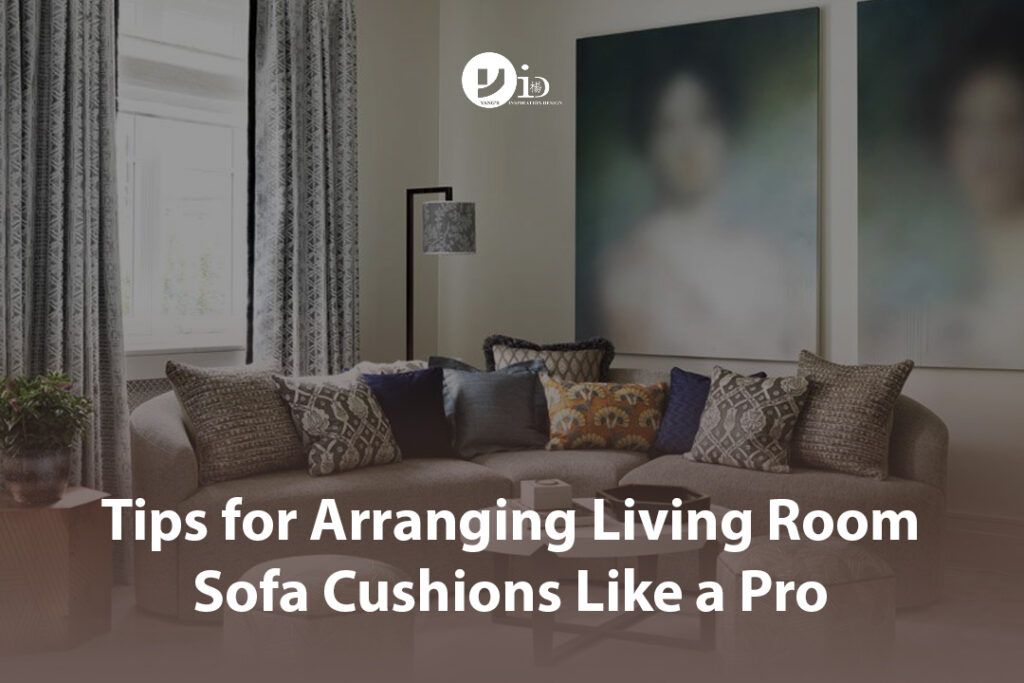
The secret to a magazine-worthy living room often lies in the details, and one of the most impactful is the artful arrangement of sofa cushions. The right combination can instantly elevate a standard sofa into a plush, inviting centrepiece, adding personality, comfort, and a touch of designer flair. You’ve invested in a beautiful sofa, but without the right styling, it can look messy or uninviting. You want that polished, comfortable look that feels both effortless and intentional. At Yang’s Inspiration Design, we believe that luxury is accessible, and mastering this skill is easier than you think.
This guide provides simple, step-by-step tips for arranging living room sofa cushions from our professional designers, covering everything from choosing the right number and inserts to avoiding common styling mistakes.
The Foundation: How Many Cushions Should You Have on a Sofa?
Before you start styling, it’s crucial to get the quantity right. The goal is to add layers of comfort and style without creating so much clutter that there’s no room left to sit. It’s a delicate balance between a sparse, unwelcoming look and an overwhelming pile of pillows.
The Rule of Odd Numbers for a Modern Look
For a relaxed, contemporary, or eclectic feel, always aim for an odd number of cushions—think three or five. Interior designers favour this rule because asymmetry creates visual interest and a more dynamic, less formal energy. An odd-numbered arrangement feels more natural and inviting, making it perfect for a modern interior design aesthetic.
When to Use Even Numbers for a Traditional Feel
If your home leans towards a traditional, classic, or formal style, using an even number of cushions—two or four—is the way to go. This approach creates a sense of symmetry, order, and balance. A perfectly mirrored arrangement of two cushions at each end of the sofa conveys a feeling of formality and deliberate design.
A Simple Formula Based on Sofa Size
The size of your sofa is the ultimate deciding factor. Here’s a simple guide to follow:
- Two-Seater Sofa: Keep it minimal and chic with 2 to 3 cushions. For an even look, place one at each end. For an asymmetrical style, group two on one side and leave the other bare.
- Three-Seater Sofa: This is the most common sofa size and works perfectly with 3 to 5 cushions. You can create a symmetrical look with two on each side or a modern arrangement with three on one side and two on the other.
- Corner/Sectional Sofa: Larger sofas can handle more. Aim for 5 to 9 cushions. The key here is to arrange them in clusters or “pockets” in the corners and the middle section to avoid a long, uniform line.
The “Secret” Ingredient: Choosing the Right Cushion Inserts
A beautiful cushion cover with a lumpy, flat insert will instantly cheapen the look of your sofa. Professional designers know that the filling is just as important as the exterior for achieving that plush, high-end appearance. The right insert provides structure, comfort, and that signature “choppable” look.
Feather/Down Inserts for a Plush, “Choppable” Look
- Pros: Feather and down inserts are the gold standard for luxury. They are incredibly soft, mouldable, and create a relaxed, lived-in feel. Most importantly, they hold the famous “karate chop” indent that signals effortless style.
- Cons: This luxury comes with maintenance. They need to be fluffed regularly to maintain their shape and can be significantly more expensive. They are also not suitable for those with allergies.
Foam or Polyester Inserts for Structure and Support
- Pros: Foam and polyester (or microfibre) inserts are a practical and affordable alternative. They hold their shape firmly, providing excellent support and a consistently neat look. They are also hypoallergenic and require minimal fluffing.
- Cons: Their firmness can sometimes look stiff or rigid. They don’t have the same sink-in, luxurious feel as feather inserts and cannot be “chopped.”
Pro Tip: Go One Size Up
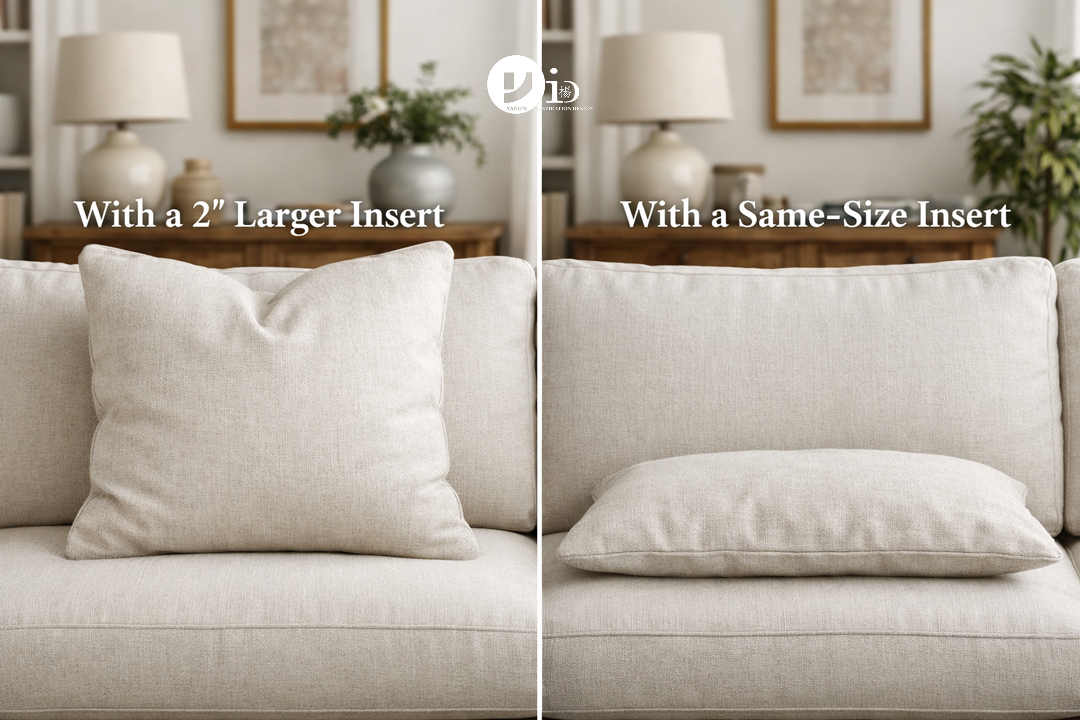
Here’s a trick straight from the interior design playbook: always buy an insert that is 1-2 inches (or about 5 cm) larger than your cushion cover. For example, if you have a 20×20 inch cover, use a 22×22 inch insert. This ensures the cushion is completely filled out from corner to corner, looking plump, firm, and inviting, rather than sad and saggy.
Building Your Collection: The 3-Step Layering Formula
The key to a dynamic and visually interesting cushion arrangement is layering. This involves a thoughtful mix of sizes, shapes, textures, colours, and patterns to create depth and character.
Step 1: Vary Your Sizes and Shapes
Avoid a lineup of identical cushions. Instead, build your arrangement from back to front with varying dimensions.
- Start with the Anchors: Place your largest cushions at the back, against the sofa arms. These are typically 22 to 24-inch squares. They form the foundation of your arrangement.
- Layer in the Middle: Next, add slightly smaller cushions in front, around 18 to 20 inches. This is where you can introduce a complementary pattern or solid colour.
- Finish with an Accent: The final touch is a smaller accent cushion at the very front. This is the perfect place to introduce a different shape, such as a rectangular lumbar cushion (great for back support) or a round bolster, to break up the monotony of squares.
Step 2: Mix and Match Textures
Texture is essential for adding sensory appeal and preventing your arrangement from looking flat. Even if you prefer a monochromatic colour scheme, mixing textures creates depth. Think about combining different materials that feel as good as they look. For example, pair a smooth linen or cotton cushion with the rich pile of a velvet one, the cozy feel of a chunky knit, or the luxe touch of faux fur. This tactile contrast makes your sofa instantly more inviting.
Step 3: Create a Cohesive Color and Pattern Palette
This is where you can truly express your personal style. To keep the look cohesive rather than chaotic, follow these simple rules.
- The 60-30-10 Rule: This classic design principle works perfectly for cushions.
- 60% Dominant Color: Your main, solid-coloured cushions should reflect the primary colour in your scheme.
- 30% Secondary Color/Texture: This can be a secondary colour or a prominent texture (like a knit or velvet).
- 10% Accent: This is your “pop”—a bold pattern, a bright accent colour, or a uniquely shaped cushion at the front.
- Pattern Mixing Made Easy: The formula is simple: 1 large-scale pattern + 1 small-scale pattern + 1 solid. For instance, pair a bold floral cushion with a subtle pinstripe and a solid velvet cushion in a colour pulled from the floral print. The solid colour acts as a visual break, allowing the patterns to shine without competing.
- Use Neutrals to Balance: If you love bold colours and patterns, ground your arrangement with one or two neutral cushions in cream, beige, or grey. They provide a calming backdrop and tie everything together. For guidance on a palette, explore the best colors for small condos to see how colour can transform a space.
5 Foolproof Arrangement Styles to Try Today
Ready to put these tips for arranging living room sofa cushions into practice? Here are five go-to styles that designers use.
1. The Symmetrical (Formal & Tidy)
- The Vibe: Classic, formal, and orderly. This look is perfect for traditional living rooms and those who appreciate a clean, balanced aesthetic.
- How-To: Place a matching pair or group of cushions at each end of the sofa, creating a mirror image. A common recipe is one large patterned cushion and one smaller solid cushion, mirrored on both sides.
2. The Asymmetrical (Relaxed & Modern)
- The Vibe: Casual, modern, and effortlessly stylish. This is the most popular style for contemporary homes.
- How-To: Use the rule of odds. Group a larger number of cushions on one side and a smaller number on the other. For a three-seater sofa, a 3-2 arrangement (three cushions on one side, two on the other) works beautifully. For a smaller sofa, try a 2-1 arrangement. Remember to vary the sizes and shapes within each cluster.
3. The Central Cluster (Great for Curved Sofas)
- The Vibe: Minimalist and chic, drawing focus to the centre. This is an excellent option for curved sofas or loveseats where corner arrangements feel awkward.
- How-To: Arrange a group of three cushions (using varied sizes and shapes) in the middle of the sofa. This leaves the ends of the sofa clear, creating a clean and uncluttered look.
4. The “Karate Chop” Look (Effortlessly Casual)
- The Vibe: Plush, inviting, and high-end casual. This is less of an arrangement and more of a finishing touch.
- How-To: After arranging your cushions, use the side of your hand to make a sharp indent in the top centre of each one. This “chop” creates soft folds and makes the cushions look irresistibly plump. This technique works best with feather or down inserts.
5. The Pocket Arrangement (Cozy & Clustered)
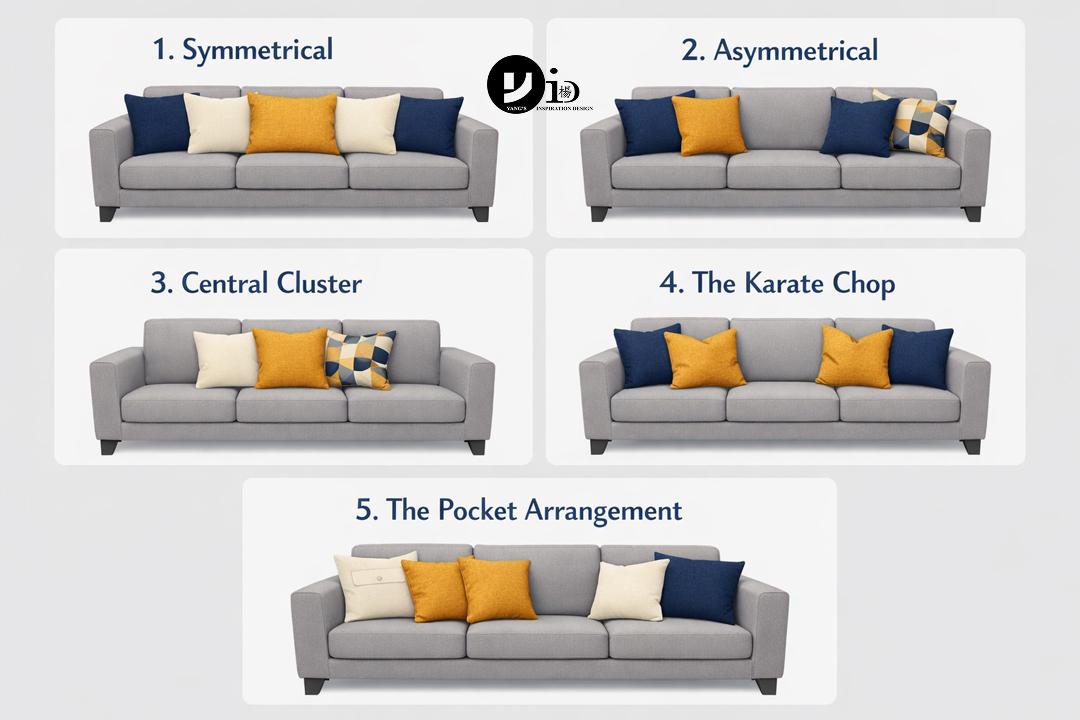
- The Vibe: Ideal for large sectional sofas, this style breaks up a long expanse of seating and creates cozy, defined zones.
- How-To: Instead of spreading cushions evenly, create small “pockets” or clusters of 2-3 cushions in the corners and the middle of your sectional. This approach adds visual interest and makes the large piece of furniture feel more intimate.
Pro Tips for Specific Sofa Types
Not all sofas are created equal. Tailoring your cushion arrangement to your sofa’s material, depth, and height is a key part of our expert tips for arranging living room sofa cushions. This focused approach ensures the final look is harmonious and proportional.
Styling a Leather Sofa
A common challenge with leather sofas is that cushions can slide around, and the wrong textures can clash with the sleek material. The key is to create a deliberate contrast that feels warm and inviting, not cold.
- Focus on Texture: Leather is smooth and cool, so introduce cushions with rich, soft textures to add warmth and grip. Velvet is a fantastic choice as its pile provides some friction to prevent slipping. Other great options include chunky wool knits, boucle, linen, and faux fur. These materials create a beautiful tactile juxtaposition against the sleek leather.
- Anchor with Weight: Choose cushions with heavier inserts, like feather/down, which are less likely to shift than lightweight polyester fills.
- Embrace Warmer Tones: While black or dark brown leather sofas are classic, they can feel imposing. Soften the look with cushions in warm, earthy tones like rust, mustard, olive green, or deep cream. For a grey or cream leather sofa, you can introduce either soft pastels or bold jewel tones like emerald or sapphire for a dramatic pop.
Styling a Deep-Seated Sofa
Deep-seated sofas are designed for ultimate comfort and lounging, but standard-sized cushions can get lost in their generous proportions, looking comically small and failing to provide adequate support.
- Go Big: Scale is everything. Opt for larger cushions, starting with 24×24 inch squares as your base layer. You can even use oversized floor cushions as back pillows for a truly relaxed, layered look.
- Prioritise Support: Because you sit further back, deep sofas require more substantial back support. A combination of large square cushions and oversized lumbar pillows is both functional and stylish.
- Layer Extravagantly: Deep sofas can handle more layers without looking cluttered. Don’t be afraid to use a 5 or 7 cushion arrangement, building from large squares at the back to smaller rectangles and bolsters at the front. This adds visual depth that balances the sofa’s scale.
Styling a Low-Back Sofa
Low-back sofas, popular in contemporary interior design, offer a sleek, minimalist silhouette. The biggest mistake is overpowering this clean line with cushions that are too tall.
- Respect the Line: The golden rule is to choose cushions that are no taller than the back of the sofa. When a cushion towers over the frame, it disrupts the intended modern aesthetic and looks awkward.
- Opt for Shorter Shapes: Standard square cushions might be too tall. Instead, make rectangular lumbar pillows your go-to. They provide back support without adding excessive height. Shorter square cushions (e.g., 16×16 or 18×18 inches) and round bolster pillows also work well.
- Focus on a Horizontal Arrangement: Emphasise the long, low line of the sofa by arranging your cushions horizontally. A long lumbar cushion in the centre or two flanking the sides can look incredibly chic and sophisticated.
Keep it Fresh: How to Arrange Cushions Seasonally
One of the easiest and most affordable ways to update your living room is to swap out your cushion covers with the changing seasons. This simple refresh can completely alter the mood of the space, making it feel lighter in the summer and cozier in the winter.
Spring/Summer Styling
As the weather warms up, your interior should feel brighter and more airy. Think of shedding the heavy layers of winter for something more relaxed.
- Lighter Fabrics: Pack away the heavy velvets and wools. This is the time for breathable, natural fabrics. Crisp linen, smooth cotton, and light wovens are perfect choices. They not only look lighter but also feel cooler to the touch.
- Brighter Colours & Patterns: Introduce a fresh palette. Soft pastels, vibrant citrus tones, or classic blue and white combinations can make the whole room feel sunnier. Swap out dark, moody patterns for cheerful floral prints, botanical motifs, or coastal-inspired stripes. This is a great way to bring the feeling of the outdoors inside, complementing any indoor vertical garden ideas you might have.
Autumn/Winter Styling
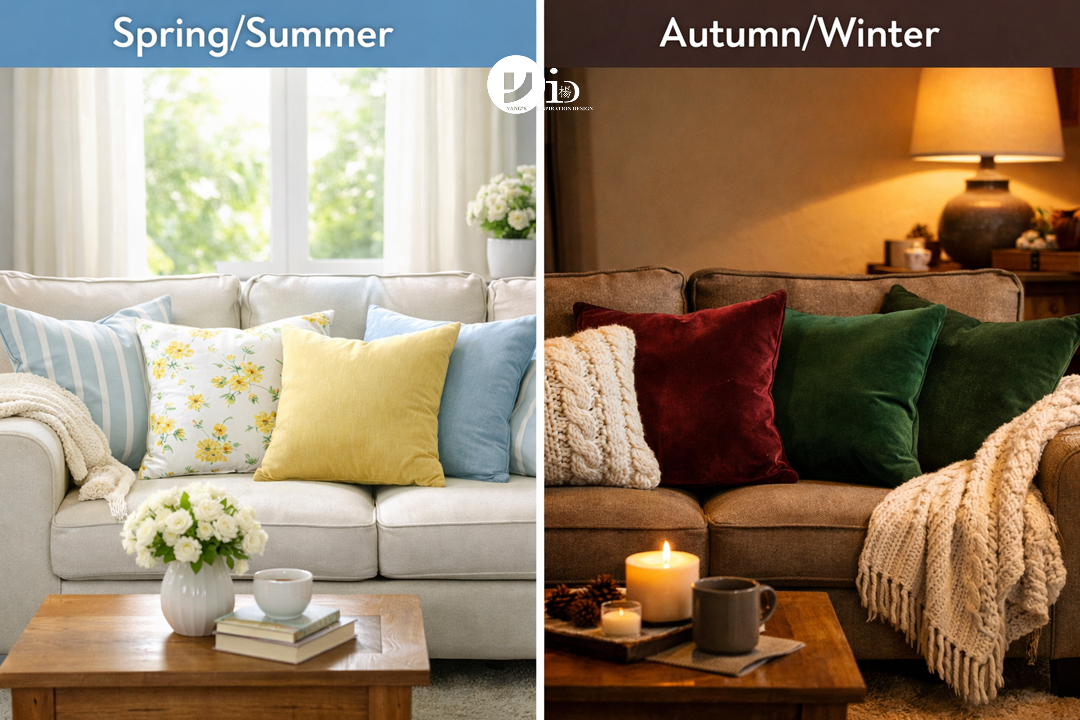
When it gets colder, the goal is to create a warm, cozy sanctuary—a concept central to achieving a cozy Scandinavian home. Your cushions play a huge role in creating this “hygge” atmosphere.
- Cozy Textures: This is when rich, tactile fabrics shine. Bring out the plush velvets, chunky cable knits, warm wools, and luxurious faux furs. These textures add physical and visual warmth, making you want to curl up on the sofa.
- Deeper, Richer Colours: Shift your colour palette to deeper, more saturated hues. Think of colours that reflect the season: rich burgundy, deep navy, forest green, burnt orange, and warm spice tones. These colours absorb light and make a space feel more intimate and enclosed, which is perfect for creating a snug retreat from the cold. A well-placed feature wall can amplify this effect; get inspired by these living room feature wall ideas.
Common Cushion Arrangement Mistakes to Avoid
Even with the best intentions, a few common missteps can derail your styling efforts. Here’s what to watch out for.
Mistake 1: The “Too Many Cushions” Overload
- The Symptom: Your sofa looks more like a pillow pit than a place to sit. Guests have to move a mountain of cushions just to find a spot.
- The Solution: Less is often more. Refer back to the formula based on your sofa size. The goal is to accent the sofa, not hide it. If in doubt, take one or two cushions away. Your arrangement should invite people to sit down, not present them with a task.
Mistake 2: The “Too Perfect Match”
- The Symptom: Using only the two or three matching, uniform cushions that came with the sofa. This often results in a look that is dated and lacks personality.
- The Solution: See those included cushions as a starting point, not the final look. The first step to a designer-style arrangement is to introduce variety. Bring in new cushions with different textures, complementary colours, or interesting shapes to break up the monotony. Even adding one new cushion can make a world of difference.
Mistake 3: The Scale is Wrong
- The Symptom: You have tiny 16-inch cushions on a massive sectional, where they look lost and insignificant. Or, you have huge 24-inch cushions on a delicate two-seater, making it look bulky and overwhelmed.
- The Solution: Proportionality is key. Always match the scale of your cushions to the scale of your sofa. Large, deep sofas need large, substantial cushions. Smaller, more streamlined sofas require more modest cushion sizes.
How to Keep Your Cushions Looking Brand New
Once you’ve perfected your arrangement, a little maintenance will keep it looking fresh and plump.
Regular Fluffing and Rotating
Just like the pillows on your bed, sofa cushions need regular attention. Make it a habit to fluff them daily or at least weekly. This prevents the inserts from becoming compacted and flat, especially feather/down ones. Also, rotate their positions on the sofa to ensure even wear on the covers over time.
Cleaning and Care Based on Material
Accidents happen. Spills and stains are inevitable in a well-used living room.
- Check the Label: Always check the care tag on your cushion covers before attempting to clean them. Some may be machine washable, while others are dry-clean only.
- Spot-Cleaning: For small spills, act quickly. Blot (don’t rub) the stain with a clean, dry cloth to absorb as much as possible. For specific materials, a gentle spot treatment can work wonders. A mixture of mild soap and water is often effective on cotton and linen, but always test it on an inconspicuous area first.
Transform Your Living Room with Expert Styling
A thoughtful cushion arrangement is a simple, powerful tool in your design arsenal. As we’ve explored, creating a stylish and inviting sofa is a straightforward formula: get the quantity right for your sofa’s size, build layers with a variety of sizes, shapes, and textures, and choose a clear arrangement style that fits your home’s aesthetic. These actionable tips for arranging living room sofa cushions are your starting point to unlock a new level of polish and comfort in your home. Don’t be afraid to experiment, play with combinations, and let your personal style shine through.
While mastering your cushion arrangement is a fantastic step, it’s often part of a larger vision for your Singapore home. If you’re dreaming of a cohesive, professionally curated space—from a complete HDB interior design refresh to a luxurious condo interior design transformation—our award-winning team at Yang’s Inspiration Design can turn that vision into a stunning reality. We manage every detail in-house, ensuring meticulous quality backed by a lifetime warranty.
Ready to elevate your entire home? Let’s talk about your project. Contact us for a complimentary consultation via WhatsApp at +65 8855 7575 today!

January 22, 2026
Yang's Inspiration Insight