



Key Takeaways
- Staying in depends on safe separation, reliable services and the actual work sequence.
- Compare total disruption and project cost, not rent alone.
- Temporary accommodation must meet the applicable rental rules and household needs.
- Build flexibility into moving dates and agree what makes the house ready for occupation.
Living through a landed renovation is possible only when the proposed work and site arrangements can support appropriate occupation. Moving out may be the more workable option when structure, roofs, essential services or several living areas are affected. Ask the contractor and relevant professionals to assess the actual sequence before deciding that staying home will save money.
This guide compares remaining in the house with renting elsewhere during the works. It does not suggest renting the active worksite to someone else. The decision should protect the household’s routines and give the construction team a realistic way to deliver the agreed scope.
Check Temporary Accommodation Rules Early
URA’s private residential rental guidance requires occupants to fulfil a minimum stay of three consecutive months. Its short-term accommodation guidance explains that ordinary residential properties cannot be used for shorter stays. If the required period is shorter, investigate accommodation lawfully operated for that purpose and verify its applicable conditions.
This matters before the renovation timetable is fixed. A short construction stage may still create a longer accommodation commitment, while an uncertain completion date can make a rigid booking inconvenient. Compare lawful options against the likely duration and the household’s practical requirements.
Living Through a Landed Renovation Needs a Site Plan
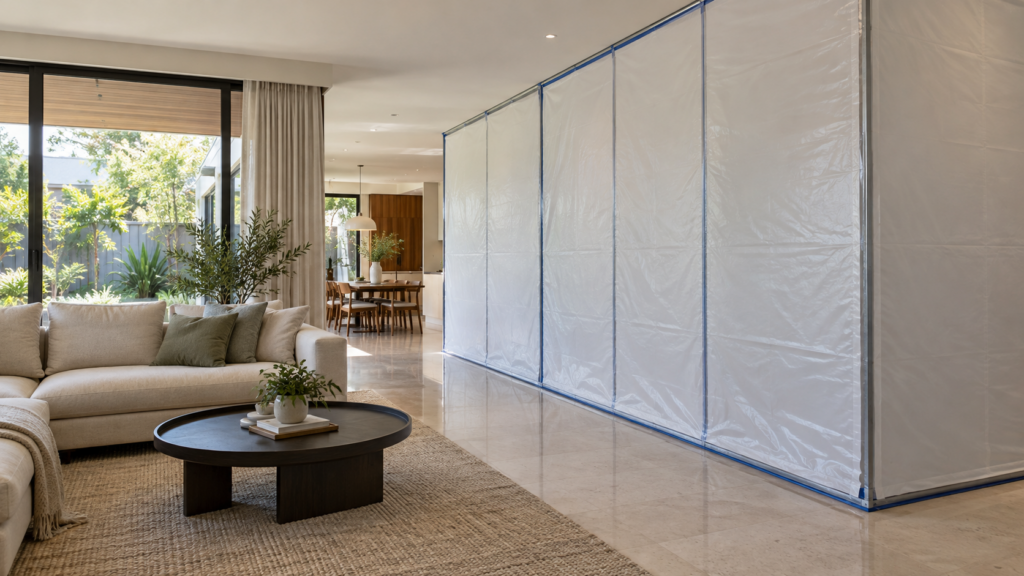
Ask the team to draw occupied areas, work areas and the routes between them. The plan should show how occupants reach the entrance, bathrooms and essential facilities without crossing unsuitable work zones. A verbal promise to keep one floor clean is not a complete arrangement.
Review how that separation changes through each construction stage. Work on stairs, roofs or shared services may affect the whole house even when a bedroom remains untouched. Identify the periods when staying in becomes impractical and whether temporary relocation would be needed regardless.
The guide to whether you can remain in a landed house during renovation helps frame the sequence. Use the actual programme to assess occupation rather than assuming that the whole project creates the same level of disruption from beginning to end.
Test Essential Services and Daily Routines
Confirm how water, electricity, sanitation and cooking will function during each phase. Ask when interruptions are expected and how occupants will be notified. A temporary arrangement should be appropriate to the household and coordinated by the relevant competent trades.
Map an ordinary day for everyone who will remain. Consider bathing, laundry, meals, school preparation and work calls. If a routine depends on repeatedly entering the work area or moving equipment around contractors, the arrangement needs revision before it becomes the default plan.
Include domestic helpers, children, older relatives and pets in the discussion. Their needs should not be treated as secondary to the main homeowner’s preference. Where health or care requirements affect suitability, seek appropriate advice rather than relying solely on a contractor’s general reassurance.
Compare the Full Cost of Staying and Moving
Staying may avoid rent but introduce other costs, such as temporary facilities, repeated protection, phased mobilisation and a longer programme. Ask the contractor to identify these consequences in writing. Do not assume that working around an occupied household is included without effect on price or duration.
Moving can involve deposits, rent, utilities, storage, transport and two sets of moving arrangements. Compare these with the cost of an occupied-site programme using the same scope and assumptions. Keep refundable deposits separate from actual expenses while still recognising the cash needed upfront.
The landed renovation duration guide can help organise decisions and dependencies. A useful comparison shows both total cost and the months when money is needed, especially if accommodation overlaps with large contractor claims.
Make Furniture Storage a Deliberate Decision
Inventory the items to retain, move, store or replace before work begins. Record dimensions and condition for valuable or fragile pieces. Leaving furniture in the house may appear convenient, but repeated moving and protection can interfere with the construction sequence.
Ask where stored items can remain without blocking access, inspection or services. Confirm the contractor’s responsibility for protection and any exclusions. Do not place the same room on both the occupied-area plan and the contractor’s material-storage plan without resolving the conflict.
For off-site storage, check access arrangements, insurance terms and suitability for the belongings involved. Label boxes by destination and priority so essential items can be found without unpacking everything. A small amount of preparation can make temporary living substantially easier.
Understand What Phasing Changes
Phasing can be useful where the works genuinely divide into manageable sections. It becomes less convincing when the same services, stairs or circulation routes must be repeatedly interrupted. Ask the team to explain the construction logic rather than simply dividing the house into coloured zones on a plan.
Compare the phased programme with a vacant-site programme. Identify repeated setup, protection and cleaning, along with any constraints on trade access. The preferred option should reflect the household’s priorities, but the technical consequences need to remain visible.
Set decision points for reassessing occupation. If an investigation reveals more extensive work, the original stay-in plan may no longer be appropriate. Agree how the household will respond rather than forcing the contractor to preserve an arrangement that has become unsuitable.
Plan for Noise and Concentration
The renovation hours and noise rules guide explains why permitted work can still disrupt daily life. Compliance does not guarantee a quiet environment for remote work, study or daytime rest. Identify the stages when alternative work or care arrangements will be needed.
Discuss realistic expectations about dust and cleaning with the team. Separation and protection can reduce disruption, but they should not be described as eliminating every effect of construction. If a household member needs a particular environment, make that requirement explicit before choosing to remain.
Keep communication predictable. A short advance notice of a service interruption or especially disruptive stage is more useful than a lengthy explanation after it occurs. Agree the contact person and the channel for updates so essential information reaches the whole household.
Leave Room for a Delayed Return
Avoid tying the move-back date only to the day the last trade expects to finish. Allow for relevant inspections, testing, cleaning and outstanding items that affect occupation. Ask the team to define readiness in practical terms and identify any required completion clearances for the scope.
Check extension options for temporary accommodation before signing. A programme can change for legitimate reasons, and an inflexible move-out date may create pressure to return before the home is ready. Keep a contingency plan that does not depend on unconfirmed handover promises.
Choose the Arrangement That Supports the Whole Project
Ask for two clear scenarios where feasible: staying with defined phases and moving out for the main works. Compare safety arrangements, services, duration, cost and household disruption. Record the assumptions behind the selected option and revisit them when the scope changes.
The best decision is the one that the household and construction team can realistically maintain. Saving rent is useful only if the occupied-site arrangement remains workable. A well-planned temporary move can be part of a controlled renovation rather than an avoidable luxury.
Frequently Asked Questions
Can I Stay Upstairs While the Ground Floor Is Renovated?
Possibly, but the arrangement needs assessment against access, services and the work sequence. An untouched bedroom does not guarantee suitable occupation if stairs, bathrooms or shared systems are affected. Ask the contractor and relevant professionals to define the separation and identify stages when temporary relocation is necessary.
Is Moving Out Always More Expensive?
Not necessarily when the full project is compared. Staying may require extra protection, temporary facilities, repeated mobilisation or a longer programme. Compare those costs with accommodation, moving and storage using the same renovation scope, and consider the household’s disruption as well as the cash total.
Can I Rent a Private Home for Only a Few Weeks?
Ordinary private residential rentals must meet URA’s minimum stay requirement of three consecutive months. For a shorter period, investigate accommodation lawfully operated for that purpose and verify its conditions. Do not assume that a listing offering a short stay establishes that the arrangement is permitted.
When Should We Move Back Into the House?
Agree readiness with the project team based on the actual scope, relevant clearances, working services and suitable access. Allow for testing, cleaning and outstanding issues that affect occupation. Avoid treating a contractor’s target finishing date as the only condition for returning the household to the property.

November 2, 2026
Yang's Inspiration Insight