



Choosing a paint color is one of the most impactful design decisions you can make, but with thousands of shades to pick from, it can feel overwhelming. The key to how to choose paint colors is to follow a structured approach that goes beyond simply picking a color you like. It’s about creating a specific mood, complementing your decor, and making a space feel like home. This guide breaks down the process into 7 simple, actionable steps, transforming a daunting task into an exciting part of your design journey. By the end, you’ll have the confidence to select the perfect color every time.
Step 1: Define the Room’s Mood and Purpose
Before you even glance at a paint swatch, the first step is to decide how you want the room to feel. The function of the space is your best starting point for determining the right atmosphere and, consequently, the right color family.
For Relaxing & Private Spaces (Bedrooms, Offices, Bathrooms)
To create a sanctuary for rest and focus, turn to cool colors. These hues are known for their calming effect, helping to lower blood pressure and create a sense of serenity. They are perfect for spaces where you unwind or concentrate.
- Suggested Hues: Think of soft blues like sky blue or deep navy, tranquil greens such as sage, mint, or forest green, and gentle purples like lavender.
Soft neutrals like warm grey or off-white also provide a serene and sophisticated backdrop for a peaceful master bedroom design.
For Social & Active Areas (Living Rooms, Kitchens, Dining Rooms)
Spaces designed for entertaining and activity benefit from the energy of warm colors. These shades stimulate conversation, create a welcoming atmosphere, and make a room feel lively and inviting.
- Suggested Hues: Consider reds, oranges, and yellows.
- Context is Key: A warm terracotta red can increase appetite, making it an excellent choice for a dining room. A cheerful yellow can evoke feelings of happiness and is perfect for a busy HDB kitchen design.
For Creating a Cozy & Intimate Feel
If you want to make a large room feel more intimate or simply create a comforting nook, focus on warm, muted, and rich tones. These colors absorb light, making the walls feel closer and creating a snug, cocooning effect.
- Examples: Rich chocolate brown, creamy beige, muted dusty pinks, and deep charcoal greys are excellent choices.
For Making a Small Room Feel Bigger
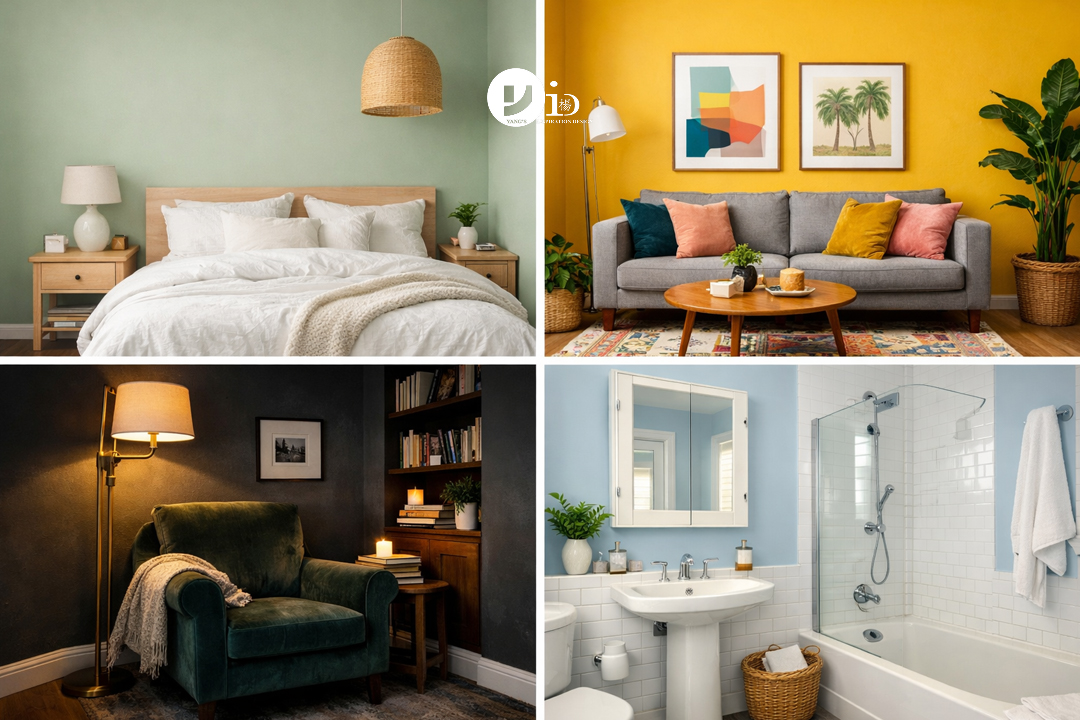
To create an illusion of space, especially in smaller HDB or condo interiors, the principle is to use light colors. Lighter shades reflect more light, making walls recede and the room feel more airy and expansive. This is one of the best tricks for small condos to make your space feel bigger.
- Examples: Opt for cool whites, soft light grays, and delicate pastels like pale blue or blush pink.
Step 2: Understand the Basics of Color Psychology
Color is a powerful, non-verbal language that directly influences emotion and perception. Understanding these fundamental associations helps you align your paint choice with the precise mood you defined in Step 1. This knowledge is a cornerstone of professional interior design.
The Psychology of Warm Colors
- Colors: Reds, Oranges, Yellows.
- Associated Feelings: These colors are advancing, meaning they make spaces feel cozier and more intimate. They are associated with comfort, energy, warmth, passion, and excitement. A splash of orange can feel optimistic, while a deep red can feel dramatic and luxurious.
- Best for: Social spaces like living rooms, dining rooms, and kitchens that need an energizing and welcoming boost.
The Psychology of Cool Colors
- Colors: Blues, Greens, Purples.
- Associated Feelings: These are receding colors, which can make rooms feel more spacious and open. They are linked to feelings of calm, tranquility, peace, and focus. Green, the color of nature, can feel balancing and harmonious, while blue is often associated with stability and serenity.
- Best for: Private spaces like bedrooms, home offices, and bathrooms where relaxation and concentration are key.
The Power of Neutrals
- Colors: Whites, Creams, Grays, Beige, Taupe.
- Associated Feelings: Neutrals are the versatile workhorses of the design world. They are associated with cleanliness (white), stability (gray), and comfort (beige).
Their true power lies in their flexibility. Neutrals provide a quiet, sophisticated backdrop that allows your furniture, artwork, and decor to take center stage. They can be layered to create a rich, textured look or used to create a seamless flow between rooms.
Step 3: Evaluate Your Existing Furniture and Fixed Elements
Your walls don’t exist in a vacuum. The most successful paint color is one that harmonizes with what’s already in the room, from your sofa to your flooring. Choosing the paint color last is a secret of many professional interior designers.
Find Inspiration in Your Decor
Instead of starting with a blank slate, look at the items you already own and love. Your favorite rug, a statement piece of art, or even a decorative sofa pillow can be the perfect source of inspiration.
These items contain a curated color palette you are already drawn to. Pull a dominant color for the walls or a subtle accent shade to create a cohesive and personalized look.
Work With Your Fixed Elements
Identify the “fixed” or permanent elements in your room—things that are difficult or expensive to change. This includes kitchen cabinets, bathroom tiles, flooring, countertops, and brick fireplaces.
These elements are not optional; your new paint color must complement them. Pay close attention to their inherent colors and, most importantly, their undertones.
What Are Undertones and How to Find Them?
An undertone is the subtle, underlying color within a main color. It’s the hint of warmth or coolness that determines if a color feels right in your space. For example, a beige might have a yellow (warm), pink (warm), or green (cool) undertone. A gray might have a blue (cool), purple (cool), or brown (warm) undertone. Ignoring undertones is one of the most common painting mistakes.
- Warm Undertones are based on yellow, red, and orange. They create a cozy, inviting feel.
- Cool Undertones are based on blue, green, and purple. They create a crisp, clean feel.
- Actionable Tip: To identify an undertone, compare your “neutral” item (like a gray floor tile or a white countertop) to something with a true primary color. Place a pure white piece of paper next to your “white” cabinet. Does the cabinet suddenly look yellowish or bluish in comparison? That’s its undertone. Similarly, hold a primary blue color chip next to your gray tile. If the tile looks more brown, it has a warm undertone. If it blends, it likely has a cool undertone.
Plan for a Cohesive Whole-Home Palette
Think about how your home “flows,” especially in modern open-plan HDBs and condos where rooms are visible from one another. You want the colors to feel connected, not jarring, as you move from space to space.
This doesn’t mean every room has to be the same color. Instead, choose a palette of 3-5 colors that work well together and use them in varying amounts throughout your home. For instance, the accent color in your living room could be the main wall color in your home office.
- Pro Tip: To instantly unify your entire home, use a single, consistent shade of white for all trim, doors, and ceilings. This creates a crisp, clean frame for the wall colors in each room and ensures a seamless transition between spaces.
Step 4: Account for Lighting—The Most Important Factor
Lighting is the single most critical element affecting how a paint color appears on your wall. A color that looks perfect in the store can look completely different in your home. It can even change dramatically from morning to night in the same room.
The Impact of Natural Light by Direction
The direction your windows face determines the quality and temperature of the natural light your room receives.
- North-facing rooms: Receive cool, indirect, bluish light all day. This light can make colors look duller. To counteract this, consider using warmer colors or choose a cool color with some warmth in its undertone (e.g., a gray with a beige undertone).
- South-facing rooms: Bathed in bright, warm light for most of the day. This intense light makes colors appear brighter. Both cool and warm colors work well here; cool colors can look fantastic and balanced, while warm colors will be amplified.
- East-facing rooms: Get bright, warm light in the morning and become cooler in the afternoon as the sun moves. A color that works well in all conditions is best here.
- West-facing rooms: Receive cool, indirect light in the morning, but are filled with intense, warm, golden light in the late afternoon and evening. Cool colors can help balance the intense evening warmth.
How Artificial Lighting Changes Color
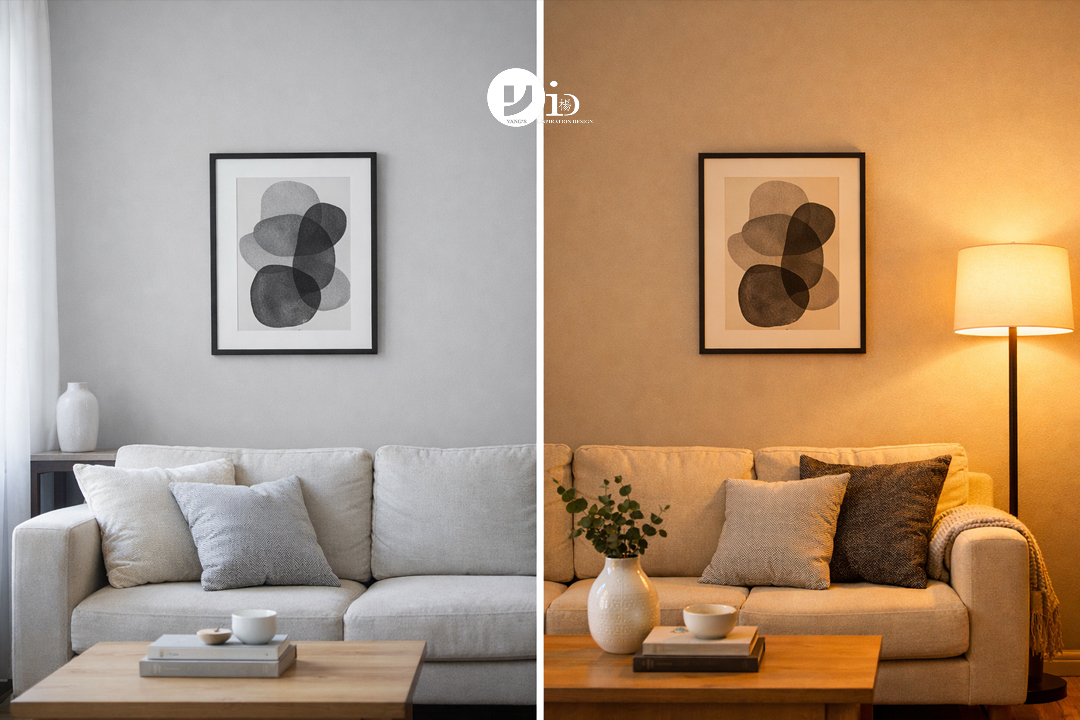
Just as important as natural light is the artificial lighting you use at night. Different types of bulbs have different color temperatures:
- Incandescent bulbs: Emit a warm, yellowish glow that enhances warm colors (reds, yellows) and can mute cooler colors.
- LEDs: Highly versatile and available in a range of temperatures. Check the packaging for the Kelvin (K) rating. Warm white (2700K-3000K) mimics incandescent light, while cool white or daylight (4000K-5000K+) gives off a bluer, more energizing light. It’s crucial to match your LED temperature to the mood you want. Consider consulting a guide for choosing the right lighting for a bedroom.
- Halogen lights: Produce a bright, white light that most closely resembles natural daylight, rendering colors very accurately.
Step 5: Test Your Paint Samples the Right Way
Never, ever choose a final paint color from a small chip you picked up at the store. This is the most crucial step in the process and the single best way to avoid a costly and frustrating mistake.
Why Small Chips Are Deceiving
A tiny 2-inch square of color cannot accurately represent how that color will look across an entire wall. Our perception of color changes with scale; when a color covers a large area, its intensity is magnified. This is known as the “mass effect,” and it’s why a pleasant light gray on a chip can feel cold and stark on a wall.
The Best Method: Paint Directly on Your Walls
Buy sample pots of your top 2-3 color choices.
Paint a large test patch, at least 1-foot by 1-foot (30cm x 30cm), for each color directly onto your wall.
Crucially, paint samples on multiple walls within the same room (e.g., one that gets direct light and one that’s in shadow) to see how the color behaves differently.
Always apply two full coats to get a true representation of the final color and opacity.
Use Peel-and-Stick Samples for Convenience
A fantastic, mess-free alternative is to use large, peel-and-stick paint samples. These are made with real paint and allow you to test colors without marking up your walls.
The main benefit is their portability. You can easily move them from wall to wall, see how they look next to your sofa, check them against your kitchen cabinets, and observe them in different lighting conditions throughout the day.
Observe Throughout the Day
This is non-negotiable. Live with your large samples for at least 24-48 hours. Observe them in the bright light of the morning, the direct sun of the afternoon, and at night with all your artificial lights turned on. How a color looks at 8 PM when you’re relaxing is just as important as how it looks at noon.
Step 6: Choose the Right Paint Finish (Sheen)
The paint finish, or sheen, affects not only the final look of the color but also its durability and washability. Choosing the right sheen is an essential part of the selection process, ensuring your paint performs as well as it looks.
Matte/Flat:
- Look: A non-reflective, velvety, and sophisticated texture. Matte finishes excel at hiding minor surface imperfections like bumps or small cracks on the wall, creating a smooth, uniform appearance.
- Best for: Low-traffic areas where durability isn’t the primary concern. Ideal for ceilings, formal dining rooms, and adult bedrooms.
Eggshell/Satin:
- Look: These finishes have a low to medium lustre, offering a subtle glow without being shiny. Eggshell has slightly less sheen than satin. This is by far the most popular and versatile choice for residential interiors.
- Best for: They offer a great balance of washability and a beautiful finish. Perfect for almost any room, including modern living room designs, hallways, and kids’ bedrooms.
Semi-Gloss/Gloss:

- Look: Highly reflective and shiny. These finishes are tough, durable, and highlight architectural details. The shinier the finish, the more it will show imperfections.
- Best for: Areas that require maximum durability and easy cleaning. Use them for high-moisture areas like bathrooms, high-traffic trim and baseboards, doors, and kitchen cabinets.
Step 7: Use Color Theory Rules and Digital Tools
To finalize your choice with the confidence of a professional, leverage classic design principles and modern technology. These tools help you visualize the final result and ensure your color palette is balanced and harmonious.
Apply the 60-30-10 Rule for a Balanced Palette
This timeless interior design rule is a simple way to create a well-proportioned color scheme. It ensures your colors are distributed in a way that is pleasing to the eye.
- 60% Dominant Color: This is your main color, used for the majority of the room. It’s typically your wall color and sets the overall tone for the space.
- 30% Secondary Color: This color should support the dominant color and is used for about half as much area. Think furniture, curtains, or perhaps an accent wall.
- 10% Accent Color: This is your pop of color, used for small decor items that add personality and interest. This includes pillows, throws, artwork, and decorative accessories.
Utilize Paint Visualizer Tools
Most major paint brands (like Sherwin-Williams, Benjamin Moore, Nippon Paint, and Dulux) offer powerful apps or web-based visualizer tools.
These tools allow you to upload a photo of your own room and digitally “paint” the walls with different colors. It’s a quick, easy way to see if you prefer a bold green or a subtle beige without buying a single sample.
- Important Note: While these tools are fantastic for narrowing down your choices from hundreds to a handful, they are not a substitute for physical samples. Screen calibrations and lighting in the photo can alter the color’s appearance, so always follow up with Step 5.
Common Mistakes to Avoid When Choosing Paint Colors
Learning from common pitfalls can save you time, money, and the frustration of having to repaint a room. Here are the top mistakes we see homeowners make when they try to determine how to choose paint colors.
Forgetting the Undertones
You find a beautiful “greige” paint chip, but on your walls, it looks purple. This is the classic pitfall of ignoring undertones. As discussed in Step 3, the subtle warm or cool base of a color will be magnified on a large wall and can clash horribly with your flooring, furniture, or countertops. Always test large samples next to your fixed elements to see how the undertones interact.
Choosing the Paint Color First
It’s tempting to start with paint, but it’s much harder to find a sofa or rug that perfectly matches your specific shade of sage green than it is to find a shade of sage green that complements your dream sofa. There are thousands of paint colors but a more limited selection of textiles and furnishings. Select your big-ticket items first, then use them to find your perfect paint color. This is a key step where a professional interior designer vs contractor can provide invaluable guidance.
Only Testing One Color Sample
Falling in love with a single color and committing without seeing alternatives is a risky move. Always select your top two or three contenders and test them side-by-side in your space. Seeing them together will highlight their differences and make it much clearer which one truly works best with your lighting and decor.
Ignoring the Paint Sheen
You choose the perfect calming blue for your bathroom, but you buy it in a matte finish. Within months, it’s stained from moisture and impossible to clean. The paint’s finish is as important as its color for both aesthetics and performance. As outlined in Step 6, a high-moisture area like a bathroom requires a semi-gloss sheen for durability, while a low-traffic bedroom is perfect for a velvety matte finish.
Conclusion
Choosing a paint color is a journey of balancing your personal taste with the practical realities of your space. It’s an art and a science, but it doesn’t have to be intimidating. By following these 7 steps—from defining the mood and understanding lighting to testing samples correctly and avoiding common mistakes—you are now equipped to make a confident and informed decision. You have the tools to create a space that not only looks beautiful but also feels perfectly, uniquely you.
While this guide empowers you to tackle the challenge, we understand that a home renovation involves countless decisions. If you’re looking for expert guidance to create a cohesive and professionally executed space, the team at Yang’s Inspiration Design is here to help. Our comprehensive interior design services in Singapore cover everything from initial concept and color consultation to project management and final execution, all backed by a lifetime warranty on workmanship.
Let us take the guesswork out of your renovation. WhatsApp us at +65 8855 7575 for a free, non-obligatory consultation today!

February 4, 2026
Yang's Inspiration Insight