


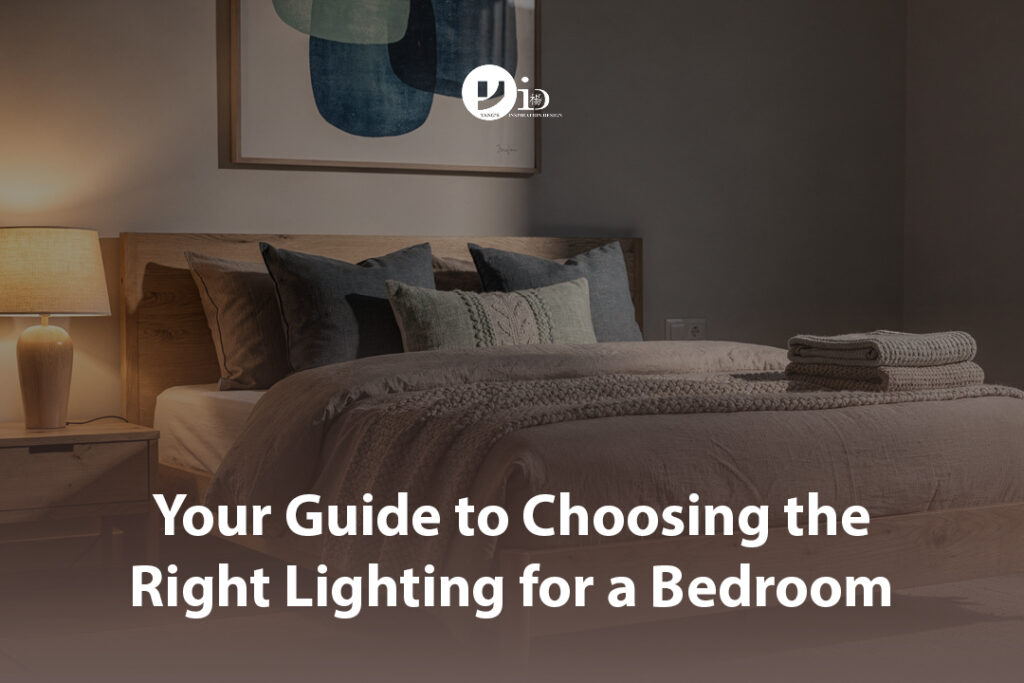
A bedroom is more than just a place to sleep—it’s a sanctuary for relaxation, reading, and unwinding. Choosing the right lighting for a bedroom is one of the most transformative decisions you can make for this personal space, directly impacting your mood, sleep quality, and the room’s functionality. Many homeowners in Singapore and beyond struggle with lighting that’s either too harsh for winding down, too dim for getting ready, or simply doesn’t adapt to the room’s multiple functions. The result is often a space that feels flat and uninspired.
This guide will walk you through everything you need to know, from foundational principles to specific fixture ideas, to help you design a beautiful and functional bedroom lighting scheme that feels like a five-star retreat every night.
The Core Principle: Layering Your Bedroom Lighting
The most common mistake in bedroom lighting is relying on a single overhead fixture. This creates harsh shadows and offers no flexibility. The secret to a professionally designed space lies in layering. This approach uses three distinct types of lighting—ambient, task, and accent—to create a versatile, balanced, and inviting atmosphere.
“Ambient light is the foundation of any good lighting plan,” states the lead design team at Yang’s Inspiration Design. “Get it wrong, and the entire room feels off-balance. But when you layer it correctly with task and accent lighting, you create a space that is both functional and emotionally resonant.”
Layer 1: Ambient Lighting for Overall Illumination
Ambient lighting is the general, foundational light that allows you to see and move around the room safely. It sets the overall tone and provides a base level of brightness.
- Function: To provide soft, even, and widespread illumination for the entire room.
- Common Fixtures:
- Ceiling Lights (Flush & Semi-Flush Mounts): These are ideal for rooms with standard or low ceilings, such as most HDB flats and condos in Singapore. They sit close to the ceiling, providing ample light without taking up vertical space.
- Chandeliers: For bedrooms with higher ceilings, a chandelier adds a powerful decorative statement. It serves as a beautiful focal point while distributing light effectively.
- Recessed Lighting (Downlights): For a modern, clean, and minimalist aesthetic, recessed lights offer a seamless look. They provide broad, even light without any visible fixtures.
- Placement Tips: Position your main ambient fixture in the center of the room for the most even distribution. However, try to avoid placing it directly over the head of the bed, as this can create uncomfortable glare when you’re lying down.
Layer 2: Task Lighting for Specific Activities
Task lighting provides focused, brighter light for specific activities that require more clarity, such as reading, applying makeup, or working from a desk.
- Function: To illuminate a specific area for a particular function without lighting up the entire room.
- Common Fixtures & Placement:
- Bedside Lamps: The classic choice. For proper scale, ensure the bottom of the lampshade is at eye level when you are sitting up in bed. This prevents glare while providing ample light for reading.
- Wall Sconces: An excellent solution for saving nightstand space, sconces add a touch of hotel-like luxury. Mount them approximately 55-60 inches (140-152 cm) from the floor. Swing-arm sconces are particularly useful as they can be adjusted to direct light exactly where you need it.
- Pendant Lights: A stylish and modern alternative to bedside lamps. Hanging low pendants on either side of the bed frees up table space and creates a strong vertical design element.
- Desk Lamps: If your bedroom includes a workspace, a dedicated desk lamp is crucial to prevent eye strain.
Layer 3: Accent Lighting for Mood and Drama
Accent lighting is the final, decorative layer. It’s used to draw attention to specific features, such as artwork, architectural details, or textured walls, adding depth and a touch of drama to your room.
- Function: To create visual interest and highlight the features you love.
- Common Fixtures:
- Picture Lights: Placed above artwork to illuminate it beautifully.
- Track Lighting: A versatile option where individual heads can be aimed at a feature wall, closet doors, or a piece of art.
- Uplights: Often placed on the floor behind a plant or a piece of furniture to cast dramatic shadows on the ceiling, making the room feel taller and more dynamic.
- Placement Tips: Use accent lighting sparingly to create focal points. The goal is to create contrast between light and shadow, which adds depth and sophistication.
Read also: Modern Dining Room Lighting Ideas: The Ultimate Guide
Understanding Light Temperature: Setting the Right Mood
Beyond the type of fixture, the colour of the light itself plays a massive role in setting the bedroom’s atmosphere. This is measured on the Kelvin (K) scale. In simple terms: a lower Kelvin number means warmer, yellower light (like a candle), while a higher number means cooler, bluer light (like daylight).
The Best Color Temperature for Relaxation (2700K – 3000K)
For a bedroom, warm white light is the undisputed champion. A colour temperature between 2700K and 3000K is ideal.
- Why it works: This warm, cozy glow is similar to candlelight or a sunset. It promotes relaxation and helps signal to your brain that it’s time to wind down. Crucially, it doesn’t suppress melatonin production, the hormone that regulates your sleep-wake cycle, making it the perfect choice for creating a restful environment.
When to Use Cooler Light Temperatures (3000K – 4000K)
While warm light should dominate, there are specific instances where a slightly cooler, neutral white light is beneficial.
- Where to use it: For task-oriented areas like a makeup vanity, the inside of a wardrobe, or a dedicated reading light, a temperature around 3500K to 4000K provides better colour rendering and clarity. This helps you distinguish between black and navy blue when getting dressed.
- A word of caution: We strongly advise against using anything above 4000K in a bedroom. The light becomes too blue and clinical, mimicking midday sun, which can disrupt a peaceful atmosphere and interfere with sleep.
The Non-Negotiable Feature: Dimmers for Full Control
If there is one feature that can instantly elevate your bedroom lighting from amateur to professional, it’s the dimmer switch. Installing dimmers on all your light sources is essential for giving you complete control over the room’s function and mood.
From Bright to Moody: The Versatility of Dimmers
Dimmers allow a single room to serve multiple purposes effortlessly. Consider these scenarios:
- Bright (100%): For practical activities like cleaning, folding laundry, or getting dressed on a dark morning.
- Medium (50-70%): For general daily activities, creating a comfortable and pleasant atmosphere.
- Low (10-30%): For winding down before bed, creating a soft, intimate glow that promotes relaxation.
Types of Dimmer Switches
Technology has made dimming easier than ever. Options include:
- Rotary & Slide Dimmers: Traditional manual controls.
- Smart Dimmers: These can be controlled via a wall panel, a remote, or your smartphone, often integrated into a complete smart home system.
Matching Lighting to Your Bedroom’s Style & Size
Applying these principles requires tailoring them to your specific room. Here’s how choosing the right lighting for a bedroom changes based on its size and your personal decor style.
Lighting for Small Bedrooms
In a smaller bedroom, every centimetre counts. The goal is to provide ample light without cluttering the space.
- Space-Saving Solutions:
- Wall Sconces: Swap bulky bedside lamps for sleek wall sconces to free up your nightstands.
- Flush-Mount Ceiling Lights: A flush or semi-flush mount provides excellent ambient light without lowering the visual height of the ceiling.
- Slender Floor Lamps: If you need an extra light source, choose a floor lamp with a small footprint, like an arc lamp that can extend over a chair without taking up floor space.
- Pro Tip: Use mirrors strategically. Placing a large mirror opposite a window or a lamp will reflect the light, making the room feel brighter and more spacious.
Lighting for Large Bedrooms
A large bedroom presents a different challenge: ensuring it feels cozy and well-lit rather than empty and cavernous.
- Create Zones: A large room can feel more intimate if you create distinct zones with dedicated lighting. For example, create a reading nook with a comfortable armchair and a focused floor lamp, or a dressing area with its own set of downlights.
- Statement Pieces: A large bedroom is the perfect canvas for a statement fixture. A grand chandelier or an oversized pendant light can serve as a stunning focal point that anchors the room’s design. Don’t be afraid to use multiple floor or table lamps to fill the space with warm, inviting pools of light.
Lighting Ideas for Popular Decor Styles
Your light fixtures should be an extension of your room’s aesthetic.
- Modern/Minimalist: Look for clean lines and simple forms. Recessed lighting, sleek track lights, and geometric pendants made of metal or matte black finishes are perfect.
- Bohemian/Scandinavian: Emphasize natural textures and soft light. Think pendants made of rattan, woven bamboo, or light wood. Simple table lamps with linen shades complete the look.
- Industrial: Embrace raw, utilitarian aesthetics. Exposed Edison bulbs, fixtures with metal cages, and track lighting with a dark finish are hallmarks of this style.
- Traditional: Opt for timeless elegance. Classic chandeliers with crystal or brass details, fabric-shade table lamps (like ginger jar styles), and traditional picture lights over artwork work beautifully.
Smart Lighting: The Future of Bedroom Ambiance
Smart lighting has moved from a novelty to a key consideration for modern homes, offering unparalleled convenience and control over your bedroom’s atmosphere.
What is Smart Lighting?
At its simplest, smart lighting involves using smart bulbs (like Philips Hue or WiZ) or smart switches that connect to your home’s Wi-Fi. This allows you to control them through an app on your phone or with voice commands via a smart assistant like Google Assistant or Amazon Alexa.
Key Benefits for the Bedroom
- Ultimate Convenience: Adjust the lights without getting out of bed.
- Scheduled Scenes: Program your lights to create automated routines. For example, a “Wind Down” scene that gradually dims the lights over 30 minutes, or a “Wake Up” scene that slowly brightens them to mimic a natural sunrise.
- On-Demand Color Temperature: Many smart bulbs allow you to adjust the colour temperature on the fly—perfect for switching from warm, relaxing light in the evening to a cooler, more energizing light as you get ready in the morning.
Common Bedroom Lighting Mistakes (and How to Avoid Them)
Here are some of the most frequent pitfalls we see at Yang’s Inspiration Design and how you can easily avoid them.
Mistake #1: The “Single Ceiling Fixture” Approach
Relying on one overhead light creates a “light bulb” effect—a bright spot in the middle and gloomy corners. It’s unflattering and inflexible.
- The Fix: Always layer your lighting. Combine an ambient source with task lights (like bedside lamps) and, if desired, an accent light.
Mistake #2: Placing Lights Directly Over the Bed
Recessed downlights positioned directly over your pillows will shine straight into your eyes when you lie down. It’s irritating and far from relaxing.
- The Fix: Position ambient lighting in the room’s central circulation path, not directly over the bed. Use bedside lamps or sconces for reading.
Mistake #3: Ignoring Scale
A tiny lamp next to a king-sized bed looks lost, while a massive chandelier in a small HDB bedroom can feel overwhelming.
- The Fix: Choose fixtures proportional to your room and furniture. For a standard 2.6m ceiling, a chandelier should hang no lower than 2.1m from the floor to ensure adequate headroom.
Mistake #4: Forgetting the Dimmers
A light that’s perfect for finding a lost earring is far too bright for relaxing before sleep. Without dimmers, your lighting is all-or-nothing.
- The Fix: Install dimmer switches on every fixture. It’s a small investment that offers a massive return in functionality and ambiance.
Quick-Reference: A Bedroom Lighting Checklist
Use this scannable checklist to simplify the process of choosing the right lighting for a bedroom.
Before You Buy
- [ ] Measure your room (ceiling height, square footage).
- [ ] Identify all activities you do in the room (reading, dressing, working, relaxing).
- [ ] Choose your desired mood (cozy and intimate, bright and airy, or dark and dramatic).
- [ ] Confirm your decor style (Modern, Scandinavian, Traditional, etc.).
Your 3-Layer Shopping List
- [ ] Ambient: Choose one primary source (e.g., Flush Mount for a low ceiling, Chandelier for a high one).
- [ ] Task: Choose one or two sources for key activities (e.g., Bedside Lamps for reading, a Desk Lamp for working).
- [ ] Accent: Choose an accent light if you have a feature to highlight (e.g., Picture Light for art, Uplight for a plant).
- [ ] Controls: Add dimmer switches for every new fixture. This is non-negotiable!
Conclusion: Illuminate Your Perfect Sanctuary
Choosing the right lighting for a bedroom doesn’t have to be complicated. By focusing on three core principles—layering your lights (ambient, task, accent), selecting a warm color temperature (2700K-3000K) for a relaxing feel, and installing dimmers on everything—you can craft a scheme that is deeply personal and perfectly functional.
This is one of the most impactful changes you can make to your home. With these principles, you’re ready to create a bedroom that is not just a place to sleep, but a true sanctuary that supports your well-being.
Ready to transform your sanctuary? Stop guessing and start designing. For a personalised lighting plan that perfectly fits your space and lifestyle, contact our expert team at Yang’s Inspiration Design for a free, no-obligation consultation. WhatsApp us at 8855 7575 today and let us illuminate your vision.


December 19, 2025
Yang's Inspiration Insight