


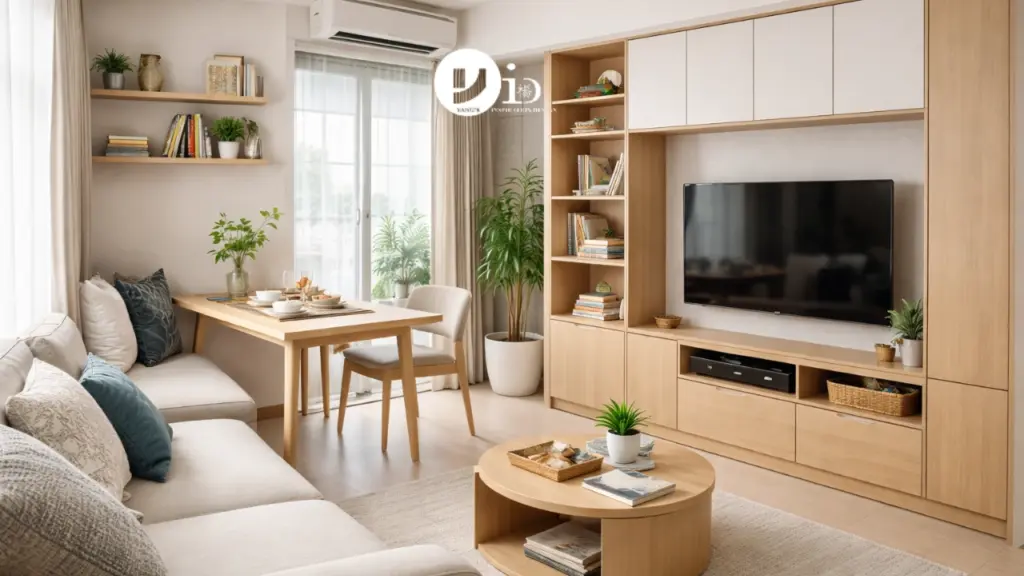
HDB interior design Singapore is no longer just about aesthetics. For today’s homeowners, it is a structured planning exercise that determines how effectively a flat supports daily living, storage needs, multigenerational dynamics, and long-term property value.
With evolving layouts from the Housing & Development Board (HDB), rising renovation costs, and shifting lifestyle patterns such as hybrid work, interior planning must go beyond selecting colours and carpentry finishes. It requires spatial intelligence, renovation foresight, and cost discipline.
This guide examines HDB interior design & renovation from a practical homeowner perspective, balancing design ambition with buildability, budget, and compliance realities within Singapore’s residential framework.
Understanding the Real Constraints Behind HDB Interior Design
Before exploring HDB design ideas, homeowners must first understand structural limitations.
Unlike private properties, HDB flats operate within regulated renovation guidelines. Structural walls cannot be altered. Wet areas are tightly controlled. Service yards, household shelters, and utility shafts impose design boundaries that affect layout reconfiguration.
This is particularly critical for new BTO units. Many homeowners enter renovation with inspiration-driven expectations, only to realise that practical constraints reshape possibilities. Our detailed BTO flat renovation planning framework explains how early layout decisions influence long-term flexibility .
The key implication:
The best HDB interior design Singapore projects do not fight constraints, they optimise around them.
Strategic approach includes:
- Reframing open-concept goals within structural walls
- Planning concealed storage within shelter perimeters
- Working with existing plumbing stacks rather than relocating them unnecessarily
Without this foundation, aesthetic ambition often leads to costly revisions mid-renovation.
Layout Strategy: Designing for Daily Use, Not Just First Impressions
Many HDB interior design Singapore projects fail not because they lack visual appeal, but because they lack spatial logic.
Layout planning must prioritise movement flow, storage layering, and multi-use adaptability.
For example, multifunctional planning has become increasingly relevant as homeowners require work-from-home adaptability. Our guide on creating a multifunctional space explores how zoning can be achieved without heavy partitioning .
Similarly, storage strategy must be integrated early. Built-in solutions can dramatically alter perceived spaciousness, especially in 3-room and 4-room units. Instead of reactive add-ons, proactive storage design, such as concealed cabinetry or integrated seating, should be part of the core layout thinking.
Kitchen configuration deserves particular scrutiny. Before committing to an island or peninsula, homeowners should understand layout typologies and work triangle efficiency. Referencing structured kitchen planning principles ensures the design is not merely aspirational but functional .
In practical terms:
Good layout planning reduces future renovation regret.
Poor layout planning increases renovation fatigue and resale complications.

Design Features for New Flats: Choosing What Truly Adds Value
Design features for new flats often trend quickly, curved partitions, fluted panels, concealed doors, statement lighting.
However, not all features age well.
For example, creative curves can soften angular BTO layouts, but they demand carpentry precision and spatial allowance. Overuse may compress already compact units. When considering curved architectural details, homeowners must weigh cost per square foot against visual payoff .
Similarly, foyer design in HDB flats can elevate first impressions, yet it must not compromise circulation width or storage depth. Proper proportioning is essential .
Bedroom planning also requires spatial sensitivity. In master bedrooms especially, wardrobe depth and bed clearance must be calculated before committing to feature walls or platform beds. Strategic bedroom layout considerations prevent long-term functional compromise .
The principle is simple:
Feature elements must support usability, not dominate it.
HDB Interior Design Singapore Cost: Where Budgets Are Won or Lost
Cost remains a dominant concern at the MoFu stage.
HDB interior design Singapore cost is influenced by three primary factors:
- Extent of hacking and wet works
- Carpentry volume
- Material specification tier
Homeowners often underestimate the financial impact of layout changes. Moving plumbing lines or increasing built-in carpentry substantially alters overall renovation investment.
Bathroom upgrades in particular can escalate quickly if tiling, waterproofing, and fixtures are not carefully specified. A structured bathroom renovation budgeting approach helps prevent scope creep .
Another overlooked cost driver is material selection. For instance, choosing between granite and quartz countertops affects not only upfront expense but also long-term maintenance requirements .
Best HDB interior design Singapore projects are rarely the cheapest. They are the most efficiently allocated, where spending aligns with durability, lifestyle needs, and resale considerations.
Strategic Insight: Interior Design vs Renovation Execution
At this stage, many homeowners ask:
Should we engage a contractor directly, or work with a structured design firm?
Understanding the difference between interior design and renovation execution is crucial. Design strategy precedes construction. Without coherent design direction, contractor-led projects risk fragmented decision-making .
Similarly, distinguishing interior design from decorating clarifies expectations. Renovation reshapes structure and functionality; decoration enhances surface expression .
In Singapore’s regulated housing & development context, coordination matters:
- Compliance submission
- Carpentry sequencing
- Electrical load planning
- Waterproofing integrity
- Handover inspection
When structured planning leads execution, renovation becomes a controlled process rather than a reactive one.
For homeowners seeking the best HDB interior design Singapore outcome, design leadership is not optional, it is foundational.
HDB interior design Singapore demands more than aesthetic inspiration. It requires:
- Structural awareness
- Layout intelligence
- Cost discipline
- Material foresight
- Execution coordination
Whether you are renovating a 3-room BTO or upgrading a resale 5-room unit, the objective remains the same:
Design that supports daily living efficiently while maintaining long-term adaptability.
Aesthetic room HDB design ideas in Singapore are widely available online.
Strategic interior planning, however, is what transforms a flat into a durable home.
If you are evaluating your next renovation step and want structured clarity before committing a budget, explore our dedicated approach to HDB interior design where planning, spatial logic, and execution management are aligned within Singapore’s regulatory framework.
When renovation is approached as a strategic investment rather than a decorative exercise, decision-making becomes significantly more confident and controlled.


February 20, 2026
Yang's Inspiration Insight