



Condo toilet renovation in Singapore operates within a uniquely constrained yet opportunity-rich environment. Unlike landed properties, condominium bathrooms are governed by management regulations, structural limitations, and spatial efficiency requirements. These constraints, however, do not diminish design potential, they redefine it.
For homeowners navigating condo toilet renovations in Singapore, the challenge is rarely about selecting finishes alone. It is about aligning waterproofing integrity, space planning, material durability, and aesthetic coherence within a tightly regulated framework. This is where renovation outcomes are determined, not by isolated decisions, but by the quality of planning that connects them.
This guide provides a structured, advisory-level perspective on how to approach a condo toilet renovation, from design elements and regulatory processes to cost structures and strategic planning considerations.
Understanding the Nature of Condo Toilet Renovation
At a foundational level, condo toilet renovation differs from other residential upgrades due to its technical sensitivity. Bathrooms are water-intensive zones, meaning errors in design or execution can have implications beyond the unit itself.
In Singapore’s condominium context, this is further reinforced by Management Corporation Strata Title (MCST) guidelines. These regulations often govern:
- Wet area waterproofing systems
- Floor level restrictions
- Noise and renovation hours
- Plumbing alterations
This introduces a critical planning principle: renovation feasibility must be assessed before design ambition. A layout that appears visually compelling may not be structurally permissible or may require additional approvals.
Practically, this means homeowners should approach renovation not as a styling exercise, but as a coordination process between design intent and compliance requirements. The earlier this alignment is established, the smoother the renovation trajectory becomes.
Common Renovation Elements and Design Considerations
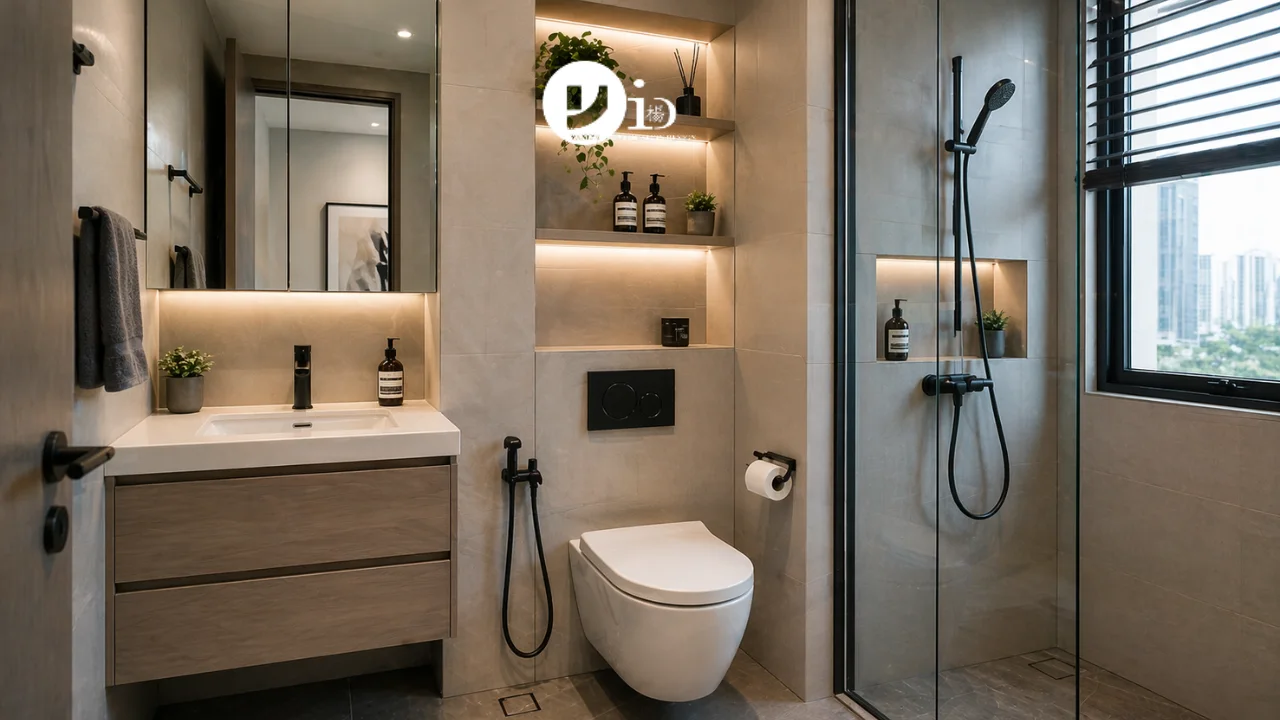
A well-executed condo toilet renovation is defined by how seamlessly functional elements integrate with spatial efficiency. In most Singapore condos, bathrooms are compact, making every design decision consequential.
Spatial Optimisation and Storage
Limited floor area necessitates vertical thinking. Wall-mounted vanities, recessed niches, and concealed storage systems are not stylistic trends, they are spatial strategies. Integrating insights from small bathroom storage planning ideas allows homeowners to maximise usability without overcrowding the space.
Material Selection and Durability
Material choice extends beyond aesthetics. Tiles, for instance, must balance slip resistance, maintenance, and visual scale. Larger format tiles can visually expand the space, but may require precise installation to avoid misalignment in smaller bathrooms.
Similarly, the comparison between ceramic and stone surfaces, often explored in broader renovation discussions, becomes particularly relevant in wet environments where durability and maintenance cycles are intensified.
Lighting and Atmosphere
Lighting in condo toilets is frequently underestimated. Beyond basic illumination, layered lighting can influence perceived space and comfort. Indirect lighting, mirror backlighting, and warm colour temperatures contribute to a more refined environment, especially in windowless bathrooms.
Design Direction
For homeowners exploring aesthetic direction, referencing bathroom remodel design ideas provides a starting point. However, the key is not replication but adaptation, ensuring the chosen style aligns with spatial constraints and long-term maintenance considerations.
Cost Structure and Popular Renovation Packages
Cost remains one of the most frequently misunderstood aspects of condo toilet renovation in Singapore. While package pricing is commonly marketed, it often obscures the underlying cost structure.
Typical Cost Components
A renovation budget is generally distributed across:
- Demolition and hacking
- Waterproofing and screeding
- Tiling and finishes
- Plumbing and sanitary fittings
- Carpentry (if applicable)
What differentiates a basic package from a comprehensive renovation is not just material quality, but scope depth. For example, replacing tiles without addressing waterproofing may reduce upfront cost but introduce long-term risk.
Homeowners often benefit from reviewing a structured bathroom renovation budget planning checklist to understand how costs are allocated and where adjustments can be made without compromising performance.
Package vs Custom Approach
“Condo simple toilet renovation” packages typically focus on essential upgrades, tiles, fixtures, and minimal carpentry. These are suitable for cosmetic refreshes but may not address deeper layout inefficiencies.
Custom renovations, on the other hand, allow for:
- Layout reconfiguration
- Integrated storage solutions
- Higher-grade material selection
The decision between the two should be guided by long-term usage goals rather than immediate budget constraints.
Renovation Process and Regulatory Considerations
Understanding the renovation process is critical to managing expectations and avoiding delays.
Typical Renovation Flow
- Site assessment and measurement
- Design development and material selection
- MCST submission and approval
- Demolition and preparatory works
- Installation and finishing
- Final inspection
Each stage is interdependent. Delays in approval or material selection can cascade into extended timelines. Reviewing interior design project timeline expectations provides clarity on sequencing and duration, particularly in Singapore’s regulated renovation environment.
Approval and Compliance
Condo renovations often require submission of:
- Proposed layout changes
- Waterproofing details
- Contractor credentials
Failure to comply may result in penalties or enforced rectifications. As such, working with professionals familiar with condo-specific regulations is not merely convenient, it is strategically necessary.
Planning Beyond Aesthetics
One of the most overlooked aspects of condo toilet renovation is risk management. While design and cost receive primary attention, execution risk often determines the final outcome.
This includes:
- Contractor reliability
- Workmanship quality
- Material authenticity
- Timeline adherence
Homeowners who understand the importance of avoiding contractor risks during renovation tend to approach projects with greater scrutiny and structured evaluation. This reduces the likelihood of cost overruns, disputes, or compromised finishes.
Beyond risk, there is also the question of integration. A toilet renovation should not exist in isolation, it should align with the broader condo interior strategy, ensuring visual and functional coherence across the home.
Condo toilet renovation in Singapore is a multifaceted process that extends beyond surface-level upgrades. It requires a coordinated approach that balances design intent, regulatory compliance, spatial efficiency, and cost structure.
From understanding common renovation elements to navigating approval processes and evaluating package options, each decision contributes to the overall success of the project. When approached strategically, even compact condo bathrooms can achieve a high level of functionality and refinement.
For homeowners seeking a more structured approach to condo toilet renovation, the value lies not just in execution, but in integrated planning across the entire home. A well-designed bathroom should align seamlessly with broader spatial and lifestyle considerations.
Engaging a team experienced in condo interior design planning and renovation integration allows for a more cohesive outcome, where layout, materials, and detailing are considered within a unified framework rather than as isolated upgrades.

April 22, 2026
Yang's Inspiration Insight