


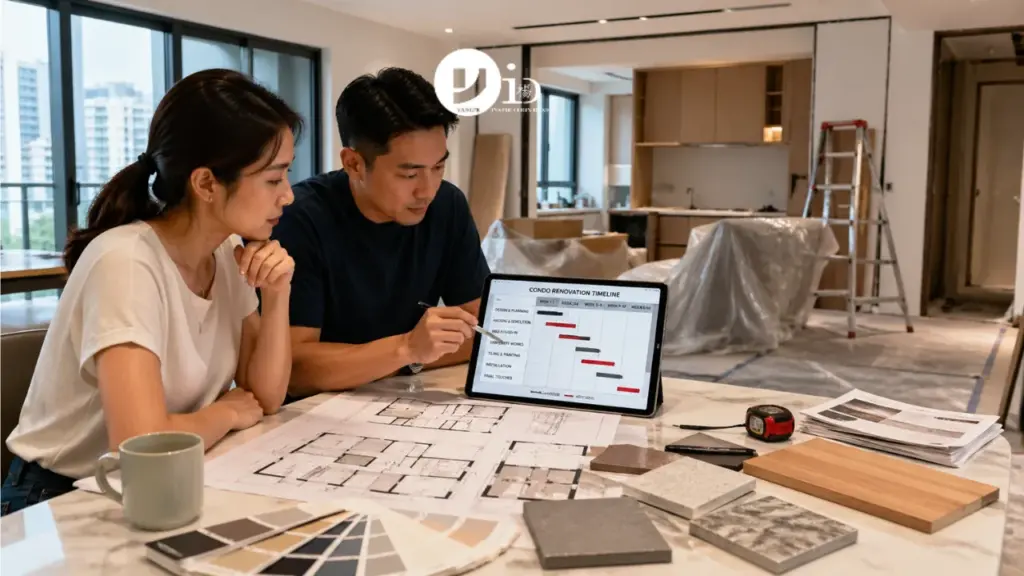
A condo renovation timeline in Singapore is often underestimated, not because homeowners lack awareness, but because the process itself appears deceptively linear. On paper, it may seem like a straightforward sequence: design, hacking, carpentry, and completion. In reality, the timeline is shaped by regulatory constraints, management approvals, contractor coordination, and design complexity.
Unlike landed properties, condominiums operate within stricter management frameworks. Renovation hours are limited, wet works are regulated, and approval processes introduce waiting periods that are not always visible at the outset. These structural realities fundamentally influence how long a renovation truly takes.
For homeowners seeking clarity, understanding the true rhythm of a typical condo renovation timeline is less about counting weeks and more about recognising dependencies. Each phase is interconnected, and delays are rarely isolated events, they cascade.
This article provides a structured, planning-focused breakdown of what is realistically achievable, and where expectations often diverge from execution.
Pre-Renovation Planning, The Phase That Defines Everything
The most overlooked portion of any renovation timeline is the pre-renovation stage. In Singapore’s condo context, this phase can take anywhere from 3 to 8 weeks, depending on decision clarity and approval requirements.
This stage includes spatial planning, design development, material selection, budgeting alignment, and submission drawings for management approval. What makes this phase critical is that it determines whether the execution phase proceeds smoothly, or becomes fragmented.
Homeowners often rush this stage in anticipation of starting works quickly. However, this compression creates downstream inefficiencies. Design changes during construction are among the most common causes of timeline overruns.
Selecting the right professional is also embedded within this phase. Understanding how to choose the right interior designer becomes directly linked to timeline reliability, as experienced designers anticipate constraints early and structure the workflow accordingly.
Additionally, condo-specific considerations, such as wet area restrictions, hacking limitations, and acoustic control, require a different planning approach compared to other housing types. The nuances highlighted in the differences between condo and apartment design planning often influence both design decisions and approval timelines.
In essence, a well-structured planning phase does not shorten the timeline, it stabilises it.
Design Finalisation and Approval, Where Time Becomes Conditional
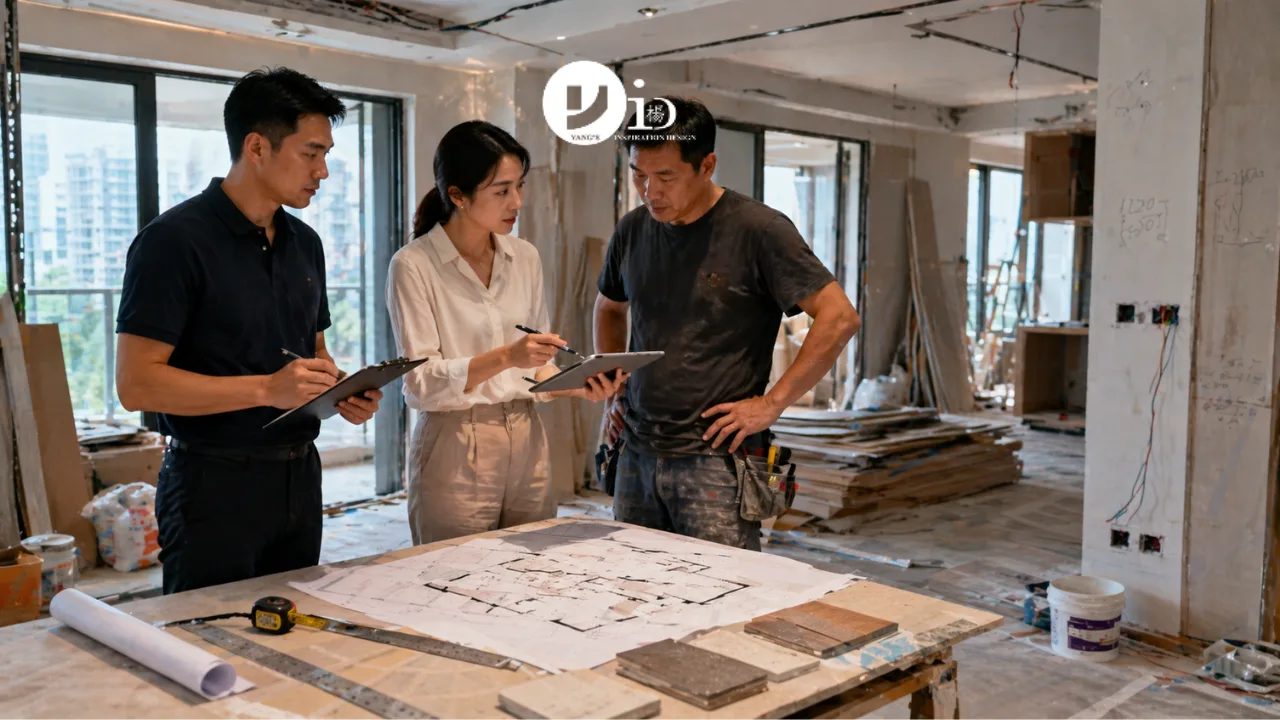
Once conceptual planning is aligned, the project transitions into design finalisation and submission. This phase typically overlaps with management approvals, which can take 1 to 3 weeks depending on the condominium’s MCST (Management Corporation Strata Title) processes.
This is where many homeowners misinterpret the typical condo renovation timeline. They assume approvals are procedural. In practice, they are conditional.
Incomplete submissions, unclear drawings, or design elements that conflict with condo regulations can result in resubmissions, effectively resetting the waiting period.
At the same time, detailed design decisions must be locked in. Carpentry drawings, electrical layouts, and material specifications are not minor details, they determine procurement timelines and installation sequencing.
For a clearer understanding of how these phases interlock, reviewing realistic interior design project timeline expectations reveals how early-stage decisions directly affect downstream scheduling.
In Singapore, this stage is not merely administrative, it is a gating mechanism. Execution cannot begin until alignment is achieved across all stakeholders.
Execution Phase, Controlled Progress, Not Continuous Momentum
The execution phase is often perceived as the “main event” of the renovation timeline. However, in condo projects, it is not a continuous flow, it is a controlled progression shaped by trade sequencing and site constraints.
A typical execution phase may range from 6 to 10 weeks, depending on scope. However, this duration includes built-in pauses between trades:
- Hacking and debris removal
- Masonry and wet works
- Electrical and plumbing installation
- Carpentry fabrication (often off-site)
- Painting and finishing
Each stage depends on the completion and inspection of the previous one. Delays are rarely due to inactivity but rather to necessary curing times, fabrication lead times, and inspection approvals.
Coordination becomes critical at this stage. Miscommunication between homeowner, designer, and contractor can introduce friction that disrupts sequencing. This is why communicating effectively with your interior designer is not a soft skill, it is a timeline control mechanism.
In well-managed projects, progress may appear slower at certain points. This is not inefficiency, it is controlled pacing to ensure quality and compliance.
Hidden Variables That Extend Renovation Timelines
Even with structured planning, several variables can extend a condo renovation timeline beyond initial expectations.
One of the most significant is contractor reliability. Delays in manpower allocation, subcontractor coordination, or material delivery can shift the entire schedule. This is where understanding avoiding common contractor risks during renovation becomes relevant, not only for cost protection but also for timeline stability.
Material availability is another key factor. Imported finishes, custom carpentry, or specialised fittings often introduce lead times that are not immediately visible during planning.
Condo-specific restrictions also play a role. Limited working hours, noise control regulations, and lift booking schedules can reduce daily productivity compared to landed properties.
Furthermore, design complexity directly correlates with timeline length. A minimalist aesthetic with clean detailing may require more precision and coordination than a more straightforward renovation.
These variables highlight a critical insight: timelines are not extended by a single issue, they are gradually stretched by accumulated micro-delays.
The Difference Between Estimated and Managed Timelines
A common misconception among homeowners is treating renovation timelines as fixed durations rather than managed processes.
An estimated timeline is a projection based on ideal conditions. A managed timeline, however, accounts for sequencing logic, risk buffers, and coordination realities.
In Singapore’s condo environment, the difference between these two perspectives determines whether a project feels “delayed” or simply “progressing as expected.”
Experienced designers do not aim to compress timelines aggressively. Instead, they structure the workflow to absorb variability without compromising quality.
For homeowners, the key shift is this:
A realistic condo renovation timeline is not the shortest possible duration, it is the most stable and predictable one.
Understanding a condo renovation timeline in Singapore requires more than knowing how long each phase takes. It requires recognising how each stage influences the next, and how external constraints shape the overall progression.
From pre-renovation planning to final installation, the process is defined by dependencies, not just durations. When these dependencies are respected, timelines become more predictable, even if they are not shorter.
For homeowners, clarity comes from aligning expectations with execution realities. The goal is not speed, but coherence.
For homeowners evaluating how to structure their renovation journey, aligning timeline expectations with design strategy is often the turning point. A well-managed project begins with a clear understanding of sequencing, approvals, and execution flow.
If you are exploring how to approach your own condo interior design planning in Singapore, engaging a structured design team early allows these variables to be addressed cohesively, before they evolve into delays.

April 29, 2026
Yang's Inspiration Insight