


Choosing the right flooring is one of the most impactful decisions you’ll make during a home renovation. A Ceramic vs Marble Floor Comparison often comes down to a choice between practical durability and timeless luxury. Ceramic offers incredible resilience and design flexibility at an accessible price point, while marble delivers unparalleled elegance and a significant boost to your home’s value. If you’re caught between these two popular options, you’re not alone.
This guide moves beyond the basics to provide a clear, comprehensive breakdown of every critical factor—from cost and durability to maintenance and resale value—empowering you to make the best decision for your Singapore home and lifestyle.
Quick Comparison Table: Ceramic vs. Marble at a Glance
For those who need a fast answer, this table breaks down the essential differences between ceramic and marble flooring.
| Feature | Ceramic Tile | Marble Tile |
|---|---|---|
| Average Cost (Installed) | $12 – $45 / sq. ft. | $17 – $50+ / sq. ft. |
| Durability | Very High (Resists scratches, stains) | Moderate (Prone to scratches, etching) |
| Maintenance | Low (Easy to clean, no sealing needed) | High (Requires regular sealing, special cleaners) |
| Water Resistance | Excellent (Especially glazed ceramic) | Moderate (Porous, needs sealing to resist stains) |
| Design Options | Virtually limitless | Unique, natural patterns |
| Resale Value | Good | Excellent |
| Best For… | High-traffic areas, kitchens, bathrooms, budgets | Luxury homes, formal rooms, increasing home value |
The Core Comparison: An In-Depth Look
Appearance & Aesthetics: Timeless Luxury vs Unmatched Versatility
-
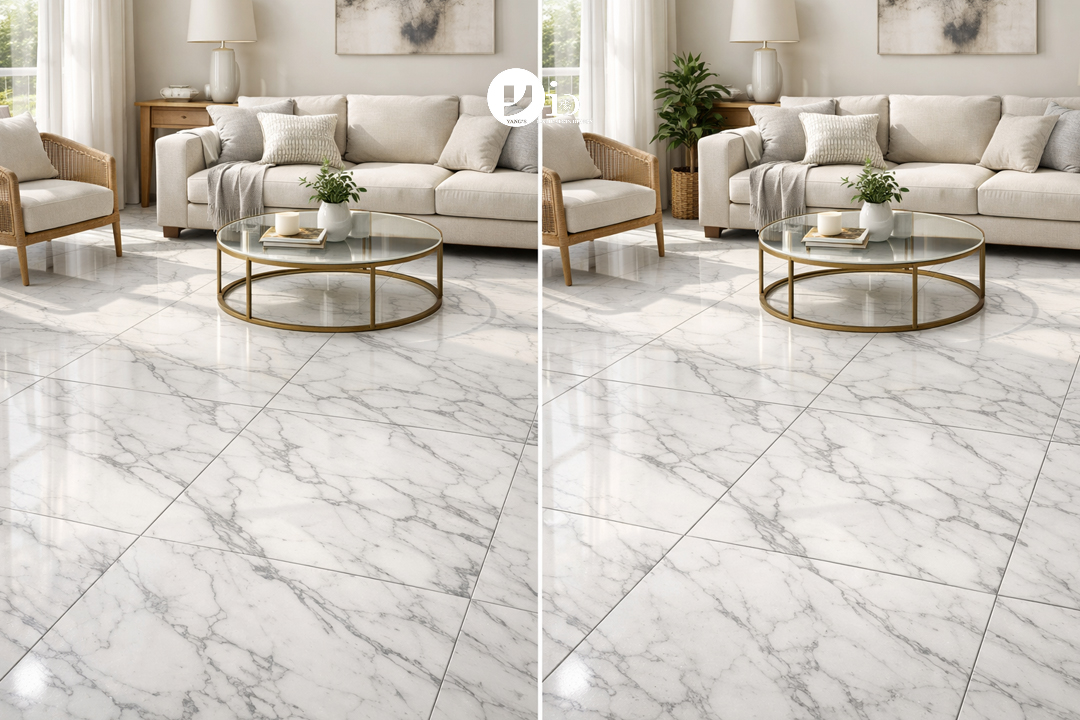
Marble: The Signature of Elegance: Marble is a natural metamorphic stone, celebrated for centuries as a symbol of opulence and refined taste. Its most defining feature is its veining—unique, flowing patterns created by mineral impurities. This means that no two marble tiles are ever identical, guaranteeing a one-of-a-kind floor that is a piece of natural art. Its inherent luminosity brightens spaces, and its connection to classical architecture instantly elevates any room, making it a cornerstone of luxury interior design.
-
Ceramic: The Design Chameleon: Ceramic tile is a manufactured product made from clay fired at high temperatures. This process allows for incredible control over the final product. The design possibilities are virtually endless, with a vast spectrum of colours, patterns, shapes, and sizes. Modern printing technology has advanced to the point where ceramic can realistically mimic other, more expensive materials. You can achieve the look of Carrara marble, rich hardwood, or industrial concrete with ceramic tiles, gaining the desired aesthetic without the associated cost or maintenance challenges. This makes it a versatile choice for many interior design styles, from minimalist to modern.
Durability & Longevity: The Resilient Workhorse vs. The Enduring Classic
-
Ceramic’s Toughness: The intense firing process makes ceramic tiles incredibly hard, dense, and non-porous (especially when glazed). This gives them exceptional resistance to daily wear and tear. They stand up well to scratches from pet claws, dragged furniture, and heavy foot traffic. Glazed ceramic is also highly resistant to stains and water damage, making it a workhorse for busy areas. With proper installation, a quality ceramic floor can easily last 20 years or more, looking great with minimal fuss.
-
Marble’s Vulnerability: As a natural stone, marble is softer and more porous than ceramic. This makes it susceptible to scratches from grit and dirt tracked in on shoes or heavy objects. Its biggest vulnerability is etching—a chemical reaction that dulls the surface when it comes in contact with acidic substances like lemon juice, wine, or even harsh cleaning products. While it is a durable material that can last a lifetime (and often outlives the house itself), it requires mindful care to preserve its pristine condition.
Maintenance & Upkeep: Low-Effort Living vs. A Commitment to Care
-
Caring for Ceramic: Ceramic flooring is celebrated for its low-maintenance nature, a key reason it’s favoured in many HDB kitchen designs. A simple routine of sweeping or vacuuming to remove debris, followed by mopping with a mild detergent and water, is all that’s needed. Glazed ceramic tiles have a protective layer that requires no sealing. The only long-term task is cleaning the grout lines, which can be periodically sealed to prevent staining and mould growth.
-
The Demands of Marble: Maintaining marble’s beauty requires a more significant commitment. Because it’s porous, marble must be sealed upon installation and then re-sealed every 6-12 months to protect it from absorbing liquids and staining. Spills must be wiped up immediately. For cleaning, you must use a pH-neutral cleaner specifically designed for natural stone, as acidic or abrasive cleaners will cause permanent etching. It’s less about hard work and more about a consistent, careful routine.
Cost Analysis: Budget-Friendly Practicality vs. Premium Investment
-
Breaking Down Ceramic Costs: Ceramic is one of the most budget-friendly flooring options available.
- Material Cost: Tiles can range from as low as $0.50 to $15 per square foot, depending on the quality, design, and origin.
- Installation Cost: Labour typically costs between $4 and $25 per square foot. The price increases for complex layouts like herringbone or intricate mosaic patterns, which require more cutting and time.
-
Understanding the Price of Marble: Marble sits at the premium end of the market, reflecting its status as a luxury material.
- Material Cost: Marble tiles generally start around $5 per square foot and can exceed $20 for rarer varieties. Large slabs for a seamless look are significantly more expensive.
- Installation Cost: Installation is more expensive than ceramic because it requires specialized tools for cutting natural stone and greater expertise to ensure level surfaces and tight grout lines. Long-term costs should also be factored in, including high-quality sealants and professional-grade stone cleaners.
Which Flooring Is Best For Your Lifestyle? (Application-Based Scenarios)
The right answer in the ceramic vs marble floor comparison depends entirely on your home, family, and priorities.
When to Choose Ceramic Tile:
- For Busy Families with Kids and Pets: Its superior scratch and stain resistance makes it a worry-free choice for the beautiful chaos of family life. For those with pets, consider finding inspiration on how to design a purr-fectly pet-friendly HDB flat.
- For High-Moisture Areas: Ceramic’s excellent water resistance makes it the ideal material for kitchens, bathrooms, laundry rooms, and mudrooms. It stands up to splashes, spills, and humidity without warping or damage.
- For Budget-Conscious Renovations: It delivers maximum style and durability for its price point, allowing you to achieve a high-end look without the high-end cost, making it perfect for a BTO flat renovation.
- For DIY Enthusiasts: While professional installation is always recommended for the best results, ceramic tile is more forgiving for a skilled DIYer to work with compared to the delicate and heavy nature of marble.
When to Choose Marble Flooring:
- For a High-End, Luxury Aesthetic: If the goal is to create a space that feels opulent, sophisticated, and timeless, nothing compares to the natural beauty of marble. It’s about defining luxury in interior design.
- To Maximize Home Resale Value: Marble is a universally recognized luxury feature. It signals a high-quality, premium home to potential buyers and can significantly increase its market value.
- For Low-Traffic, Formal Spaces: It is perfectly suited for spaces that don’t see heavy, rough use, such as formal living rooms, dining areas, or grand entryways where its beauty can be appreciated without constant risk of damage.
- For Homeowners Committed to Maintenance: If you view the upkeep not as a chore but as a worthwhile investment in preserving timeless beauty, then marble is an excellent choice.
Beyond the Basics: Other Factors to Consider
Sustainability & Environmental Impact
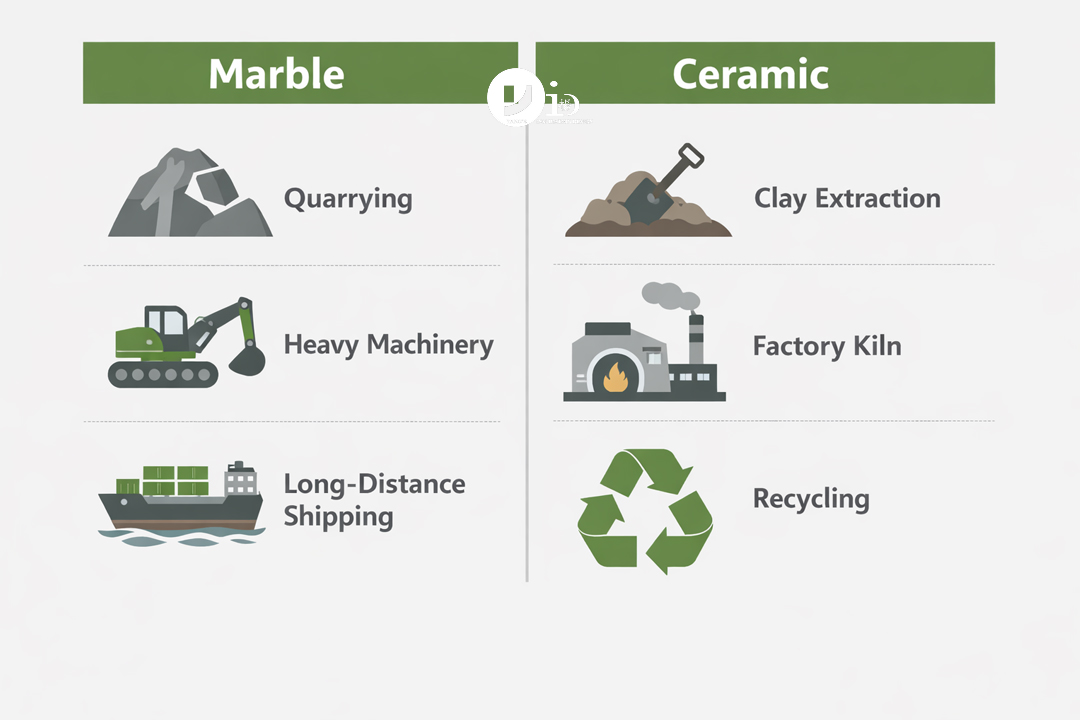
When considering the environmental footprint of your flooring, the ceramic vs marble floor comparison presents a trade-off. Marble is a natural product, which means it doesn’t require chemical processing to create. However, its extraction is energy-intensive. Quarrying involves heavy machinery to cut massive blocks of stone from the earth, which can scar landscapes and disrupt local ecosystems. Transporting this heavy material from quarries, which are often located in specific regions globally (like Italy or Turkey), to your home also contributes a significant carbon footprint. While marble is incredibly long-lasting and biodegradable, the upfront environmental cost of extraction and transport is high.
Ceramic tiles, on the other hand, are made from abundant natural clay. The manufacturing process, however, is also energy-intensive. Firing clay in kilns requires extremely high temperatures, consuming a large amount of natural gas or electricity. Some modern manufacturers are adopting more sustainable practices, such as using recycled content in their tiles and implementing water and energy recycling systems. The lighter weight of ceramic compared to marble can also reduce the environmental impact of transportation. Ultimately, for the eco-conscious homeowner, the choice involves weighing the impact of quarrying natural stone against the energy consumption of manufacturing. Sourcing locally-made ceramic tiles or reclaimed marble can be more sustainable alternatives.
Underfoot Feel & Heat Retention
Both ceramic and marble are known for being cold to the touch. In a warm climate like Singapore’s, this is often a significant benefit, as the floor can help keep a room feeling cool and comfortable. The cool surface provides a refreshing sensation underfoot, especially during hot and humid months. However, in an air-conditioned bedroom or for those who are sensitive to cold, this can be a drawback.
Fortunately, both materials are excellent conductors of heat, making them ideal choices for homes with underfloor radiant heating systems. The heat transfers efficiently through the tile, warming the surface and radiating gently into the room, turning a potential con into a luxurious pro. In terms of hardness, both are unforgiving surfaces. Dropped glassware will almost certainly shatter. While marble is technically a softer stone than ceramic, the difference underfoot is negligible. Neither offers the cushioning of materials like vinyl or carpet, a consideration for households with toddlers or elderly residents where fall safety is a concern. For areas like the living room, an area rug can soften the space both visually and physically.
The Final Verdict: Which Flooring Should You Choose?
Ultimately, the Ceramic vs Marble Floor Comparison isn’t about which material is “better,” but which is better for you. The decision hinges on a core trade-off between everyday practicality and aspirational luxury.
Choose Ceramic for its unparalleled durability, low maintenance, and design versatility. It’s the resilient, practical, and budget-friendly choice that excels in the high-traffic, high-moisture areas of a busy household. It offers peace of mind and endless style possibilities without breaking the bank.
Choose Marble for its timeless, one-of-a-kind luxury and its proven ability to increase home value. It’s an investment in pure elegance. This choice is best for those who are prepared for the higher upfront cost and the ongoing commitment to careful maintenance, rewarding them with a floor of unmatched natural beauty.
Making the right choice can transform your space, but proper installation is key to ensuring your new floor lasts a lifetime. At Yang’s Inspiration Design, we provide a fully integrated renovation service, managing every phase from design to flawless installation. Our in-house team of expert tilers has extensive experience with both delicate marble and versatile ceramic, ensuring a perfect finish every time. As a trusted, RCMA CaseTrust accredited interior design firm in Singapore, we back our work with a lifetime warranty on workmanship.
Feeling inspired? Don’t let the choice overwhelm you. Contact our design experts for a free, no-obligation consultation to find the perfect floor for your home. WhatsApp us at +6588557575 today!

January 19, 2026
Yang's Inspiration Insight