


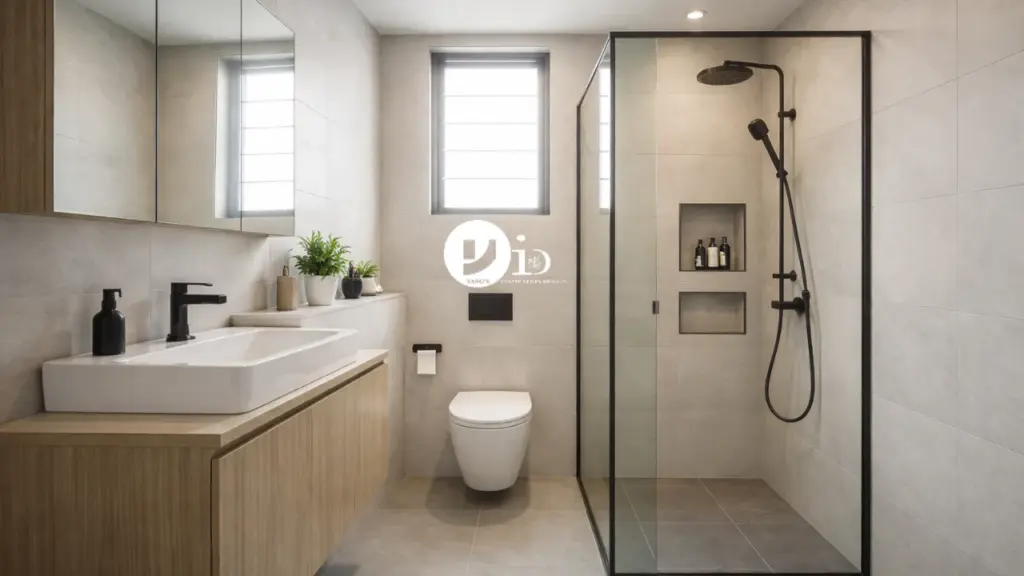
A strong BTO toilet design is rarely defined by appearance alone. In Singapore, where HDB BTO bathrooms are compact and expected to work hard every day, the real design question is not simply what looks good, but what performs well over time. That distinction matters. A toilet that feels visually clean on renovation handover can still become frustrating within months if the layout interrupts movement, if storage is insufficient, or if materials are chosen without regard for daily moisture, maintenance, and household routines.
This is why toilet planning in a BTO flat should be approached as part of a wider spatial strategy rather than an isolated styling decision. The bathroom sits at the intersection of utility, hygiene, circulation, and long-term durability. For first-time homeowners especially, it is useful to view the toilet as one of the most technically sensitive rooms in the home. Its success depends on proportion, fixture placement, ventilation logic, cleaning access, and visual restraint. These are also the same planning principles that shape a broader BTO flat renovation planning guide, because bathroom decisions affect budget allocation, renovation sequencing, and how the rest of the home feels as a complete environment.
For homeowners searching for HDB BTO toilet bathroom ideas, the most valuable direction usually comes from practical layout thinking. A good design does not attempt to force luxury gestures into a tight footprint. Instead, it creates a calm, functional room where every element has been placed with intention.
Start with movement, not fixtures
The most overlooked part of HDB BTO toilet planning is circulation. Many homeowners begin with a basin style, tile look, or shower screen reference. In practice, the better starting point is movement. How do you enter the toilet? Where do you place your feet when stepping in? Does the door swing into usable space? Is the basin the first thing encountered, or does it compress the room visually?
In a compact Singapore BTO toilet, layout success often comes from protecting the central standing zone. Once that standing zone is interrupted, the bathroom begins to feel smaller than it is. This is why fixture positioning should be judged not only by whether it “fits,” but by whether it preserves ease of use. A wall-mounted basin can visually open the floor, but it only works well when depth is carefully controlled. A vanity may add welcome storage, but in a narrow room it can also create side-clearance discomfort and make cleaning harder around the base.
The shower area deserves the same level of discipline. A full shower screen may create a polished appearance, but in some HDB BTO toilet layouts, it can visually segment the room too aggressively. In those cases, a simpler divider strategy or cleaner zoning line may produce a more generous overall reading. The point is not minimalism for its own sake. The point is to avoid introducing elements that compete with the actual movement pattern of the room.
When homeowners treat toilet renovation as space choreography rather than fixture assembly, the results are usually far more convincing.
Storage must be integrated without crowding the room
One of the fastest ways for a new toilet to lose its clarity is through unresolved storage. BTO bathrooms are small, but the number of daily-use items is not. Cleaning products, toiletries, spare rolls, hair tools, and laundry-related items all need a logical place. Without built-in thinking, the room gradually fills with hooks, caddies, ledges, and countertop clutter.
This is why the strongest HDB bathroom design ideas are often the least visually noisy. Storage should be integrated into surfaces and dead zones rather than added as an afterthought. Vertical planning becomes especially useful here. Recessed niches in the shower zone, mirrored cabinets above the basin, and slim wall-hung shelves placed outside splash-heavy areas can all preserve floor openness while improving utility. In very compact bathrooms, the question is not how much storage to add, but where storage can disappear into the architecture of the room.
That approach aligns naturally with smart small bathroom storage solutions. The lesson is not merely to add more compartments. It is to ensure that storage supports cleaning, visual calm, and efficient routines. Open shelving may work for carefully styled homes, but in many BTO toilets it exposes too many daily objects and quickly undermines the sense of order. Closed or partially concealed storage often performs better because it protects the room’s visual discipline.
This is particularly relevant in Singapore, where shared bathrooms may serve multiple users across morning and evening peaks. A toilet should not only look organised in photographs. It should remain organised under actual household pressure.
Material selection should follow maintenance logic
A practical BTO toilet design is shaped as much by what homeowners do not have to manage as by what they see. In compact wet environments, the cost of poor material judgment is not dramatic on day one, but accumulative over time. Surfaces that stain easily, grout lines that are overly dense, fittings that show water marks excessively, or detailing that traps dirt can all make a renovated bathroom feel older much sooner than expected.
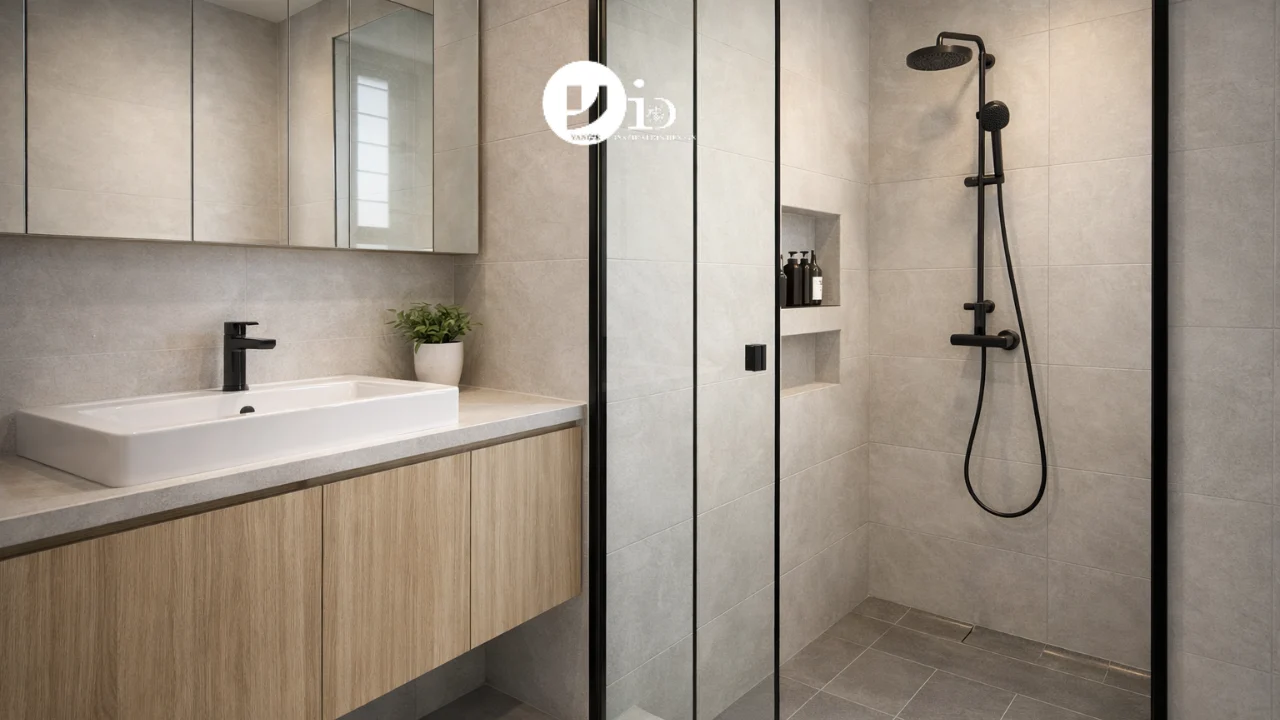
This is why finish selection should follow maintenance logic before aesthetic ambition. Large-format tiles, for example, may visually reduce grout interruptions and create a more composed look. Light and mid-tone palettes often help compact HDB toilets feel more open, but they should still be selected with an understanding of water exposure and cleaning frequency. Matte textures can introduce softness, yet some finishes are easier to maintain than others depending on usage intensity.
Budget discipline matters here too. Many homeowners allocate money to visual features first and resolve practical performance later. That often reverses the priority that small-space design actually requires. A better approach is to establish a framework around waterproof-friendly finishes, durable fittings, cleaning efficiency, and sensible joinery before deciding where visual upgrades are genuinely worthwhile. This is where structured bathroom renovation budget planning becomes useful, because a bathroom that performs well is usually one where cost decisions were made according to operational priorities rather than surface trend.
In other words, toilet renovation in Singapore is not just about making the room look better. It is about reducing long-term friction in one of the most regularly used spaces in the home.
Style should support scale, not compete with it
There is strong interest today in HDB BTO toilet bathroom ideas that feel hotel-like, spa-like, minimalist, or contemporary. These design directions can work well, but only when translated appropriately for BTO scale. Problems usually begin when style references are copied directly from larger bathrooms without adjusting for the compression of the room.
In compact toilets, style needs to operate with restraint. Strong veining, dark surfaces, oversized feature walls, or multiple accent materials can quickly overwhelm the footprint. A more resolved approach is to use one dominant material language and then create depth through proportion, lighting reflection, and consistent detailing. For instance, a warm neutral palette paired with slim-profile fittings and quiet storage lines often reads more premium than a bathroom trying to accommodate too many decorative moves at once.
This is also where broader bathroom remodelling ideas should be filtered through local practicality. Not every attractive reference is appropriate for HDB conditions, and not every trend improves daily life. A practical toilet: interior design Singapore homeowners can trust is one where aesthetic decisions reinforce usability. Mirror size, wall tone, tile rhythm, fixture silhouette, and lighting reflection all contribute to the perception of spaciousness. That perception, in a small BTO toilet, is one of the most valuable design outcomes available.
A well-designed bathroom does not need to announce itself loudly. It only needs to feel proportionate, effortless, and durable.
Strategic Insight Section
The most effective HDB BTO toilet design in Singapore is rarely produced by treating the bathroom as a standalone project. It becomes stronger when aligned with the overall logic of the flat. Household size, room count, storage strategy, and lifestyle patterns all affect what the toilet should prioritise.
For example, in layouts informed by 3-room BTO interior design ideas, spatial economy is often more critical across the whole home. In that context, the bathroom should contribute to a broader sense of efficiency and openness. Slim storage, visually lighter finishes, and easy-to-maintain detailing often matter more than expressive styling. In a home shaped around 4-room HDB interior design ideas, the planning may allow for more differentiated family use, but that still does not mean the toilet should become materially heavy or visually crowded. The central principle remains the same: every design move must justify itself spatially.
This is the deeper planning lesson. Toilet renovation is not a minor room-level exercise. It is part of residential design intelligence. The homeowner who approaches it this way is more likely to make decisions that remain useful years later, because those decisions are anchored in behaviour, proportion, and maintenance rather than novelty.
A successful BTO toilet design is built on discipline. In Singapore’s HDB context, that means planning around movement, preserving usable floor area, integrating storage carefully, selecting finishes that age well, and choosing a style language that respects the scale of the room. The strongest HDB BTO toilet design in Singapore is not necessarily the one with the most features. It is the one where nothing feels misplaced.
For homeowners evaluating HDB bathroom design ideas or thinking through a toilet renovation, the key is to move beyond inspiration images and ask more precise questions. Does this layout support the way the bathroom is actually used? Will these materials remain manageable? Will storage reduce clutter or create more of it? Does the design make the room feel calmer, or merely busier?
Those questions lead to better bathrooms because they lead to better planning.
For homeowners who want their BTO toilet design to be resolved as part of a coherent home strategy rather than handled as an isolated upgrade, a structured residential design approach becomes especially valuable. Yang’s Inspiration Design’s residential interior design planning in Singapore is most useful when the objective is not just renovation, but a home where layout, utility, and visual clarity are developed together.

April 1, 2026
Yang's Inspiration Insight