


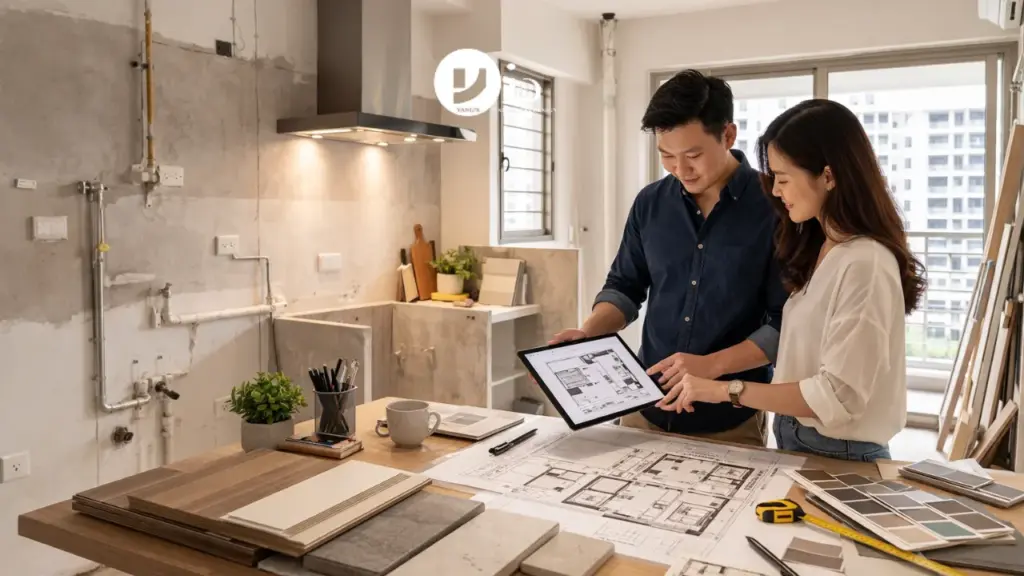
For many Singapore homeowners, the kitchen becomes one of the most important spaces to get right during a BTO kitchen renovation. Unlike resale flats where previous renovations can influence layout decisions, Build-To-Order flats typically start as blank canvases. This creates both opportunity and complexity.
A well-planned kitchen renovation can significantly improve daily living efficiency, storage capacity, and the overall spatial flow of the home. Poorly planned renovations, however, often result in cramped work zones, inefficient layouts, and expensive post-renovation adjustments.
Because most BTO kitchens are compact by design, renovation decisions must carefully balance layout efficiency, material durability, ventilation, and long-term maintenance. Understanding these planning factors before renovation begins can prevent costly redesigns and ensure the kitchen functions effectively for years.
This guide explores the critical considerations homeowners should evaluate before starting a kitchen renovation in Singapore, particularly within the structural constraints of HDB BTO flats.
Understanding the Structural Limits of BTO Kitchen Renovation
Before exploring design ideas, homeowners must first understand the planning framework governing BTO renovations.
HDB flats come with structural limitations that influence what can and cannot be modified. For example, structural walls cannot be removed, and certain plumbing lines must remain within designated zones. These limitations often shape how kitchens are configured.
This is why renovation planning should begin with a broader understanding of the flat’s renovation process. Many homeowners benefit from reviewing a structured BTO flat renovation planning guide, which explains the sequence of renovation decisions, from hacking considerations to cabinetry installation.
In practice, most BTO kitchens fall into several common layout categories due to corridor-style space planning. As a result, renovation success often depends less on dramatic structural changes and more on optimising the existing layout footprint.
Understanding these constraints early ensures the renovation strategy focuses on achievable improvements rather than unrealistic structural modifications.
Choosing the Best Kitchen Layouts for HDB BTO Flats
One of the most important decisions in a BTO kitchen renovation is selecting the right layout.
Layout determines how efficiently homeowners move between the three key functional zones: cooking, preparation, and cleaning. In compact kitchens, poor layout planning can quickly lead to congestion and limited workspace.
Many renovation projects reference essential kitchen layout configurations for renovation such as:
- Galley kitchens
- L-shaped kitchens
- U-shaped kitchens
- Parallel layouts
- Peninsula kitchens
Among these, the galley layout is particularly common in Singapore BTO flats due to the narrow kitchen footprint. This configuration allows cabinets and appliances to be positioned along two parallel walls, maximising storage and maintaining clear walkways.
Meanwhile, L-shaped kitchens are often preferred when the kitchen connects to dining or living spaces. This arrangement helps create a more open visual flow, especially when homeowners opt for partially open kitchens.
Choosing the right layout is not purely a design decision, it directly influences storage capacity, cooking ergonomics, and ventilation efficiency.
BTO Kitchen Design Ideas That Work in Compact Spaces
Once the layout framework is established, the next step involves refining the design strategy.
Singapore homeowners frequently explore BTO kitchen design ideas in Singapore that prioritise both functionality and aesthetics. However, the most effective kitchen designs are usually those that respond intelligently to spatial limitations rather than simply following trends.
For example, many compact kitchens benefit from vertically oriented storage solutions. Reviewing practical HDB kitchen design ideas can reveal how tall cabinetry and concealed storage compartments significantly increase usable space.
Another important strategy involves reducing visual clutter. Handle-less cabinets, integrated appliances, and consistent material palettes help make small kitchens feel more spacious.
Homeowners working with particularly tight kitchen footprints can also apply space-saving strategies for small kitchen renovation, which often include:
- Pull-out pantry systems
- Corner carousel cabinets
- Slim storage modules
- Foldable preparation surfaces
These design solutions allow BTO kitchens to maintain a streamlined appearance while still accommodating the practical demands of daily cooking.
BTO Kitchen Renovation Price: What Influences Cost
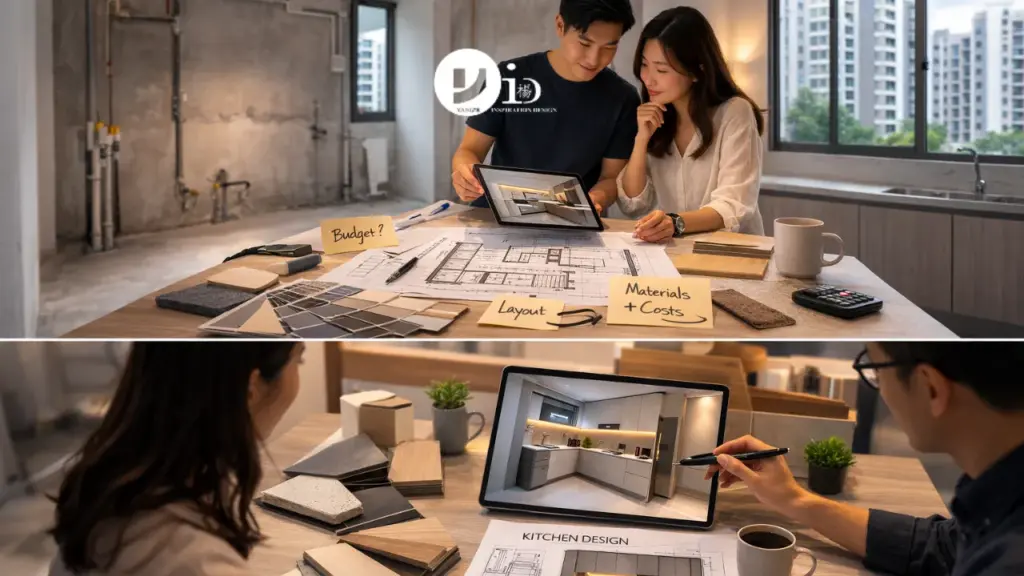
Budget is another major consideration when planning a BTO kitchen renovation price in Singapore.
Kitchen renovation costs can vary significantly depending on several key factors:
Cabinetry scope
Custom carpentry typically represents the largest portion of renovation costs. The size, finish, and internal fittings of cabinets can significantly affect pricing.
Countertop materials
Countertops are both functional and aesthetic centrepieces of the kitchen. Many homeowners weigh durability against cost when choosing materials. Understanding a granite versus quartz countertop comparison can help determine which material offers the best balance of maintenance, durability, and visual appeal.
Appliance integration
Built-in ovens, induction hobs, and concealed refrigerators may increase renovation costs but contribute to a more cohesive kitchen design.
Backsplash and lighting
While often overlooked, these finishing elements contribute significantly to both usability and atmosphere.
In Singapore, basic BTO kitchen renovations may start around $8,000–$12,000, while more comprehensive renovations with custom carpentry and premium finishes can exceed $20,000 or more.
The key planning principle is not simply reducing renovation costs, but ensuring each investment improves long-term functionality and durability.
Strategic Insight: Designing a Kitchen That Works for Years
Perhaps the most overlooked aspect of BTO kitchen renovation is long-term usability.
Many homeowners focus heavily on aesthetics during renovation planning, only to realise later that maintenance, storage accessibility, and workflow efficiency are equally important.
Designers often recommend prioritising materials and layouts that support easy cleaning and daily usability. For instance, homeowners who review principles behind designing a kitchen that is easy to maintain often discover that small choices, such as backsplash materials, cabinet finishes, and countertop edges, can dramatically affect long-term maintenance effort.
Similarly, appliance positioning should anticipate future lifestyle changes. Young couples renovating their first BTO kitchen may eventually need more cooking capacity, additional storage, or child-safe layouts.
In other words, a well-planned kitchen is not simply designed for the present, it anticipates how the household may evolve over time.
A successful BTO kitchen renovation in Singapore requires more than selecting attractive finishes or trendy layouts. It requires careful planning that balances structural constraints, spatial efficiency, material durability, and long-term usability.
By understanding the typical layouts of HDB BTO kitchens, evaluating practical storage strategies, and making informed decisions about renovation materials, homeowners can transform a compact kitchen into a highly functional and visually cohesive space.
Most importantly, renovation planning should always prioritise workflow efficiency and sustainability of design choices, ensuring the kitchen continues to support everyday living long after renovation is complete.
For homeowners planning a BTO kitchen renovation, working with experienced professionals can significantly simplify the decision-making process. A structured residential interior design consultation helps translate layout constraints, design preferences, and renovation budgets into a cohesive renovation strategy tailored to Singapore homes.
Through careful spatial planning and material selection, a well-designed kitchen can become one of the most efficient and enduring spaces within your home.

March 2, 2026
Yang's Inspiration Insight