


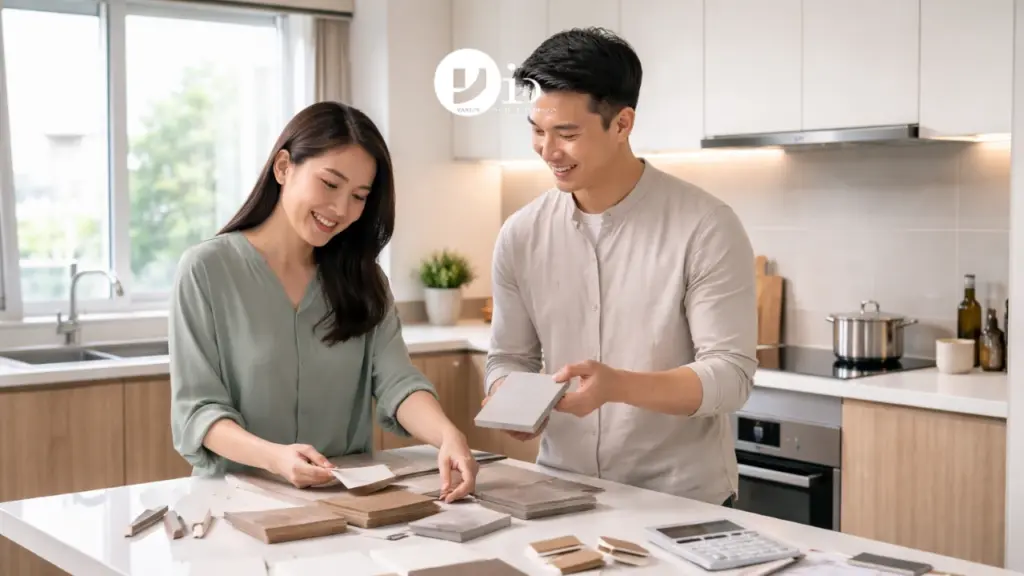
BTO kitchen design in Singapore is rarely just about cabinetry finishes or appliance placement. In a typical HDB BTO flat, the kitchen is spatially compact, structurally constrained, and deeply integrated into daily routines. It must perform efficiently in limited square footage while remaining visually cohesive with the living and dining zones, especially in open-concept layouts.
For new homeowners, the objective is clarity. What are the best kitchen layouts for HDB BTO flats? Which materials justify investment? How should budgeting be prioritised without compromising long-term functionality?
This in-depth review approaches BTO kitchen design from a planning intelligence perspective, examining layout logic, storage engineering, material selection, and cost calibration specifically within Singapore’s residential context.
Layout Strategy, The Structural Foundation of BTO Kitchen Design
In most BTO units, whether 3-room or 4-room, the kitchen footprint is predetermined. Structural walls, service yards, and plumbing stacks restrict major reconfiguration. This means layout optimization is not about creativity alone, but about understanding spatial flow.
Common configurations include:
- Galley layouts (parallel counters)
- L-shaped kitchens
- Open-concept single-wall designs
A structured breakdown of these configurations can be found in the discussion on the six basic kitchen layouts to reference for renovation, which highlights workflow efficiency and appliance zoning within compact footprints.
Why does this matter in Singapore?
Because space inefficiency compounds quickly. A refrigerator door clearance miscalculation can obstruct walkway flow. An oversized island in a 3-room BTO kitchen design can visually shrink the entire living area.
For homeowners exploring broader HDB kitchen design ideas, the critical takeaway is this: layout decisions should be driven by workflow sequencing, prep, cook, clean, rather than aesthetic symmetry.
In smaller units, especially 3-room BTO flats, a simple BTO kitchen design often outperforms elaborate spatial gestures. Compactness, when properly engineered, enhances usability rather than limiting it.
Storage Engineering, Designing for Vertical Efficiency
Singapore kitchens accumulate more functional load than visual imagery suggests. Dry goods, small appliances, cleaning agents, festive cookware, without engineered storage, clutter becomes inevitable.
Effective BTO kitchen ideas in Singapore often incorporate:
- Full-height tall units
- Pull-out pantry systems
- Concealed appliance cabinets
- Deep drawer base units
The logic aligns with principles explored in small kitchen storage strategies, where vertical exploitation reduces countertop congestion without increasing footprint.
Similarly, the concept of hidden compartments and discreet cabinetry, highlighted in creative concealed storage approaches for HDB homes, demonstrates how design can reduce visual noise while improving capacity.
Why is this critical for BTO flats?
Because BTO kitchens frequently open into living spaces. Visual clutter directly affects perceived spaciousness. A modern BTO kitchen design is not defined by handle-less fronts alone, it is defined by disciplined storage planning.
The more compact the flat, the more strategic the cabinetry specification must be.
Material Intelligence, Balancing Durability and Budget
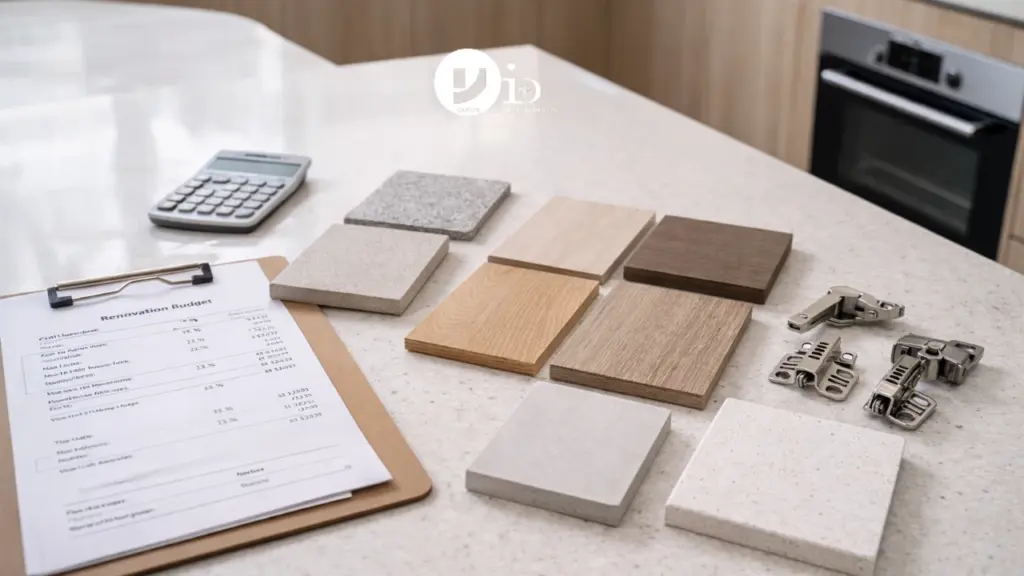
Material selection in BTO kitchen design must reconcile three variables:
- Heat and moisture exposure
- Maintenance tolerance
- Budget allocation
Countertop decisions alone can shift renovation budgets significantly. The performance differences between granite and quartz surfaces are detailed in this comparison of granite countertop vs quartz, outlining heat resistance, porosity, and long-term maintenance implications.
Flooring choices similarly influence both aesthetics and durability. The ceramic vs marble floor comparison clarifies cost implications and suitability for high-traffic wet areas.
In practical terms:
- Quartz offers uniform appearance and low maintenance.
- Granite provides natural variation but requires sealing.
- Laminates offer cost control but vary in heat tolerance.
- Solid surfaces provide seamless joins but scratch more easily.
For homeowners pursuing a simple BTO kitchen design, controlled material contrast often yields better visual longevity than aggressive trend adoption.
Material hierarchy should reflect usage intensity, not visual trend cycles.
Lighting & Spatial Perception in Modern BTO Kitchen Design
Lighting is frequently underestimated in BTO kitchen ideas Singapore homeowners consider.
Task lighting under cabinets ensures food preparation accuracy. Ambient lighting softens spatial transitions into the living area. Accent lighting elevates material textures.
Strategic layering principles discussed in smart interior lighting planning demonstrate how illumination can expand perceived width in compact kitchens.
For homeowners inclined toward industrial or statement aesthetics, references to industrial kitchen lighting approaches illustrate how fixture selection can reinforce design language without overcrowding ceiling planes.
In open-plan BTO units, lighting cohesion between kitchen and living room prevents visual fragmentation. Without this alignment, even well-designed cabinetry can appear disconnected.
Strategic Insight: Budget Allocation Should Follow Spatial Permanence
Many BTO homeowners allocate budget evenly across visible finishes. This approach is structurally inefficient.
Permanent elements, plumbing re-routing, cabinetry carcass quality, electrical points, should receive priority over decorative overlays.
Understanding the renovation sequencing outlined in a comprehensive BTO flat renovation guide reinforces why early-stage planning decisions determine long-term kitchen usability.
Additionally, the distinction between interior designer vs contractor roles clarifies why layout intelligence and material coordination benefit from structured design oversight rather than piecemeal execution.
In BTO kitchen design, the invisible framework determines performance. Finishes can evolve over time. Structural miscalculations cannot.
BTO kitchen design in Singapore is not simply about style selection. It is a spatial engineering exercise shaped by HDB constraints, compact layouts, and evolving lifestyle needs.
The best HDB (BTO & Resale) kitchen design ideas share common characteristics:
- Layout logic prioritised over visual symmetry
- Vertical storage maximisation
- Material decisions aligned with maintenance tolerance
- Lighting layered for both function and perception
- Budget weighted toward permanent infrastructure
For homeowners evaluating modern BTO kitchen design options, clarity in these foundational decisions reduces renovation regret and enhances long-term value.
Singapore’s residential density demands intelligent design discipline. When structure leads, aesthetics follow naturally.
If you are planning your BTO renovation and require structured, space-conscious planning rather than surface-level styling, explore our custom kitchen interior design solutions for HDB homes.
A disciplined approach to layout optimisation, material specification, and budget calibration ensures your BTO kitchen performs as efficiently as it looks.

February 25, 2026
Yang's Inspiration Insight