


Key Takeaways
- Specify materials by exposure, including sheltered interiors, wet areas and open outdoor locations.
- Moisture resistance does not mean waterproof, and stainless steel does not mean maintenance-free.
- Check the complete assembly, including edges, fixings, coatings and drainage.
- Match maintenance requirements to what your household can realistically sustain.
The best materials for Singapore's climate are products suited to the actual moisture, sunlight, heat and salt exposure at their installed location. A board appropriate for a dry bedroom may be unsuitable beside a leaking sink or on an open terrace. For landed homes, assess the substrate, finish and installation detail together rather than choosing by appearance or a broad marketing label.
Start with an exposure map of the house. Identify areas that stay dry, receive occasional splashes, face wind-driven rain or sit near persistent dampness. That simple distinction helps your designer request more relevant product information from suppliers.
What Manufacturer Guidance Reveals About Moisture Claims
The MEDITE MR product FAQ states that its moisture-resistant MDF is suitable for humid interior conditions but is not waterproof. This is a product-specific example of why a resistance claim needs context. It should not be extended into a promise that every similarly labelled board tolerates standing water.
Ask what the selected product is intended to withstand, how exposed edges must be treated and what conditions invalidate its warranty. Obtain the technical information for the exact product, not a brochure describing a different range from the same manufacturer.
Choose Materials for Singapore's Climate by Exposure
Distinguish Humidity From Direct Wetting
A wardrobe in a ventilated bedroom and a vanity beside a shower experience different conditions. Both may face humid air, but the vanity can also encounter splashes, cleaning water and plumbing leaks. A specification should reflect those differences rather than applying one board and finish indiscriminately throughout the house.
Review the less visible areas as carefully as the front surface. Cabinet bases, pipe penetrations and cut edges may be exposed even when the decorative face appears well protected. Ask how the assembly allows inspection and repair if a leak develops behind the fittings.
Separate Sheltered and Open Outdoor Areas
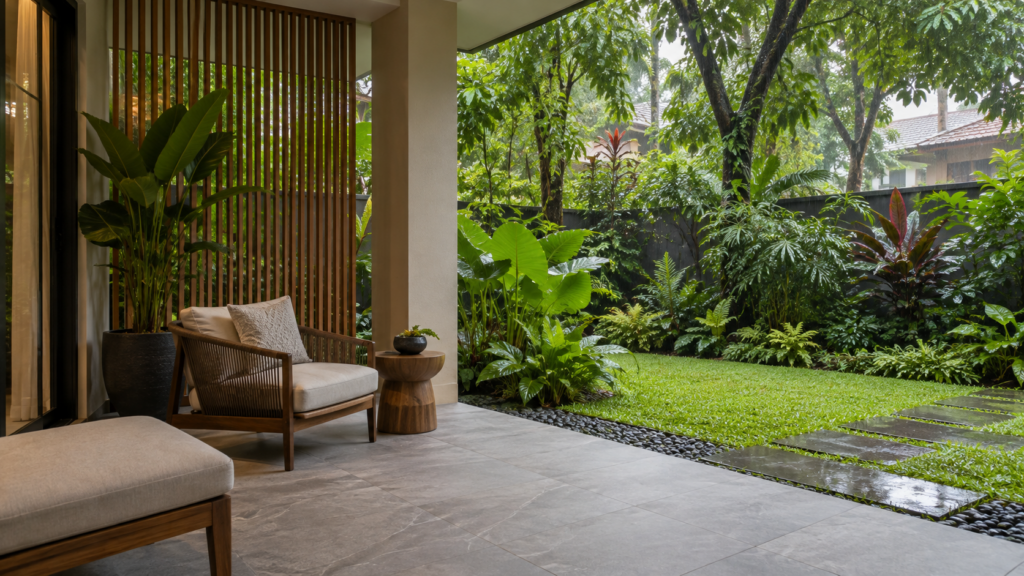
A deep covered veranda is not equivalent to an uncovered deck. Rain direction, afternoon sun and nearby planting can change how quickly a surface dries. Look at the actual location during different weather conditions when possible, and describe that exposure to the supplier.
For outdoor products, obtain confirmation that the specific finish and installation system are intended for exterior use. An attractive indoor sample does not establish resistance to ultraviolet exposure, weathering or repeated wetting. Check the maintenance instructions before approving the material palette.
Use Timber and Timber Alternatives Thoughtfully
Wood responds to moisture in its surroundings. WoodWorks' explanation of wood shrinkage describes the relationship between moisture change and dimensional movement. The practical implication for homeowners is to ask how the chosen timber product will be installed and maintained under the expected conditions.
Engineered timber, timber-look porcelain and composite products provide different alternatives, each with its own limitations. Do not treat engineered or composite as a universal performance guarantee. Confirm the application, substrate requirements and installation instructions for the actual product offered.
If you want the visual warmth of timber outdoors, compare appearance after weathering as well as on a new showroom sample. Ask whether colour variation, refinishing or replacement of individual pieces is expected. A product that suits your maintenance habits may serve you better than one selected solely for its initial finish.
Check Metals, Coatings and Fixings Together
Outokumpu's atmospheric corrosion guidance explains that chloride exposure, surface condition and cleaning affect stainless steel performance. It distinguishes lighter marine influence from more severe coastal environments. A familiar grade number alone is therefore not a complete specification for every seaside application.
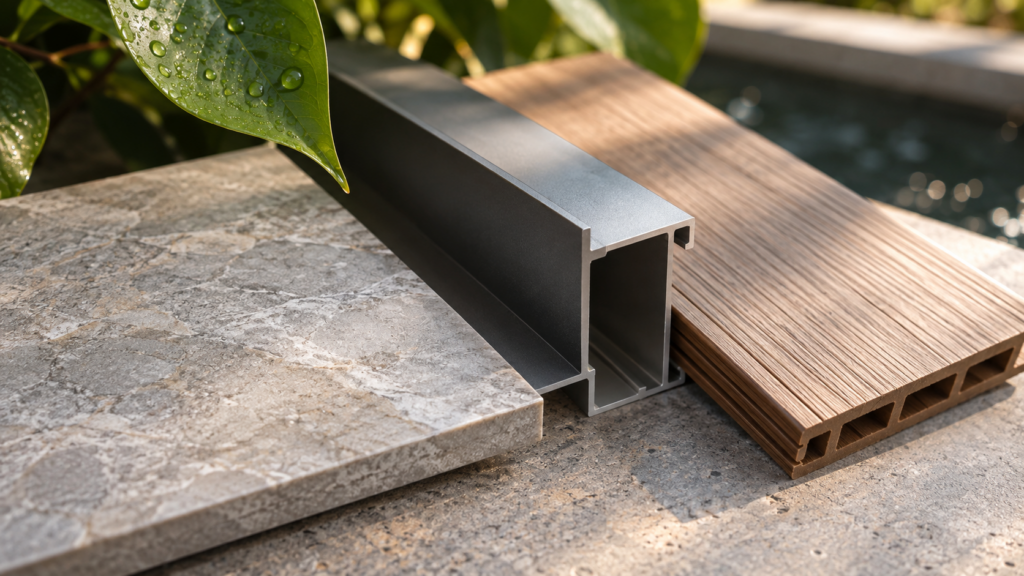
Tell the supplier about the location and intended use, then request an appropriate grade, finish and cleaning regime. Check the fasteners and brackets as well as the visible panel or rail. A well-finished surface can still disappoint if its connections were selected without considering the same exposure.
For coated aluminium or steel, ask about coating suitability, edge treatment and repair of installation damage. Keep the approved colour reference and maintenance instructions. Where components are difficult to access later, discuss how routine inspection and eventual replacement will be managed.
Select Floors for Wet Use and Maintenance
Floor selection needs more than a colour decision. Consider expected wetting, footwear, cleaning methods and transitions between indoor and outdoor areas. Request relevant slip-performance information for the exact finish and intended use, rather than assuming every textured tile behaves identically when wet.
The flooring comparison for landed houses examines material options in more detail. At selection stage, ask how the chosen floor will be installed, how water will be managed and how joints will be maintained. A suitable tile does not compensate for an unsuitable assembly beneath it.
Review cleaning instructions before choosing a strongly textured surface. The household needs a practical way to remove dirt without damaging the finish. Ask for a sample large enough to judge the texture and visual variation, particularly where the same material continues through several connected spaces.
Address Dampness Before Specifying Resistant Finishes
A mould-resistant product is not a repair for a persistent leak or condensation problem. Establish the cause of recurring dampness before enclosing the area with new cabinetry or wall finishes. Ask the relevant professional to assess the source and suitable remedial work where the cause is unclear.
Our guide to termite and mould prevention in landed homes develops the wider specification questions. Keep access to areas that need inspection, and avoid details that make an early warning difficult to see. A durable interior needs both suitable products and a manageable environment.
Where ventilation is part of the solution, consider the room's actual use and air-conditioning pattern. Opening a space to outdoor air and maintaining a cool enclosed interior are different operating conditions. The design should suit the household's routine rather than relying on an idealised maintenance habit.
Read Carpentry as a Complete Assembly
For built-ins, identify the carcass board, decorative finish, edge treatment and hardware separately. Request written references so the installer and owner can check what was agreed. Our carpentry materials guide explains why plywood, laminate and veneer describe different components rather than interchangeable cabinet types.
Discuss access beneath sinks, clearances around appliances and protection during wet works. A material can be appropriate on paper yet suffer from poor handling or an unresolved leak. Ask when the area will be ready for installation and how completed joinery will be protected while other trades finish.
Build a Material Schedule Around Realistic Care
For each major surface, record its location, product reference, intended exposure and care requirements. Add a note explaining who confirmed suitability and which installation instructions apply. This creates a useful handover record as well as a selection tool.
If your aim is resort-style tropical landed interior design, use natural-looking materials selectively and support them with appropriate detailing. Bring your shortlist to the next design meeting and ask one practical question for each product: what needs to happen for this material to perform well in this exact location?
Frequently Asked Questions
Is Moisture-Resistant Board Waterproof?
No. Moisture resistance and waterproofing are different claims, and performance depends on the specific product. Check the manufacturer's intended use, edge-treatment instructions and exposure limits. A board suitable for humid interiors may still be unsuitable for standing water, persistent leaks or an exposed outdoor application at your home.
Is Stainless Steel Maintenance-Free Near the Coast?
No. Grade, surface finish, salt exposure and cleaning all affect performance. Ask the supplier to specify the complete assembly for the actual location, including fixings and brackets. Keep the maintenance guidance, and do not assume that a familiar stainless steel grade is suitable for every coastal condition.
Can I Use the Same Flooring Indoors and Outdoors?
Possibly, if the exact product and finish suit both applications and the installation is designed accordingly. Check wet-use performance, exposure limits, drainage and cleaning requirements. Matching appearance does not mean identical suitability, so confirm the outdoor specification separately before extending an indoor selection onto an open terrace.
Will Mould-Resistant Finishes Solve a Damp Room?
They should not be treated as a substitute for finding and addressing the moisture source. Persistent dampness may require investigation of leaks, condensation or operating conditions. Resolve the underlying issue before installing new finishes, then choose suitable products and provide practical access for inspection and ongoing maintenance afterwards.

October 21, 2026
Yang's Inspiration Insight