



Key Takeaways
|
Yes, you can renovate only the kitchen and bathrooms of your landed house, and it is a common, sensible scope. Because these are wet areas, the work centres on waterproofing and drainage, and because they are non-structural, a partial renovation usually needs little or no authority approval. It is often the highest-impact money you can spend, since kitchens and bathrooms are used every day and date the fastest.
Owners often assume renovation is all-or-nothing, and it is not. What most people miss is that a well-scoped partial renovation can deliver most of the daily quality-of-life improvement of a full one, at a fraction of the cost and disruption. The kitchen and bathrooms are where a house feels new or tired, so targeting them precisely is a smart way to renovate when a full project is not needed or not yet affordable.
Scoping a Partial Renovation
The art of a partial renovation is drawing a clean boundary: what is in, what is out, and where the two meet. A kitchen-and-bathroom scope typically covers new fittings, finishes, cabinetry, waterproofing and any local plumbing and electrical changes, while leaving the rest of the house untouched. The key is deciding whether you are simply replacing within the existing footprint or reconfiguring, since moving a kitchen or bathroom to a new position adds plumbing and waterproofing work.
Wet Works: The Technical Core
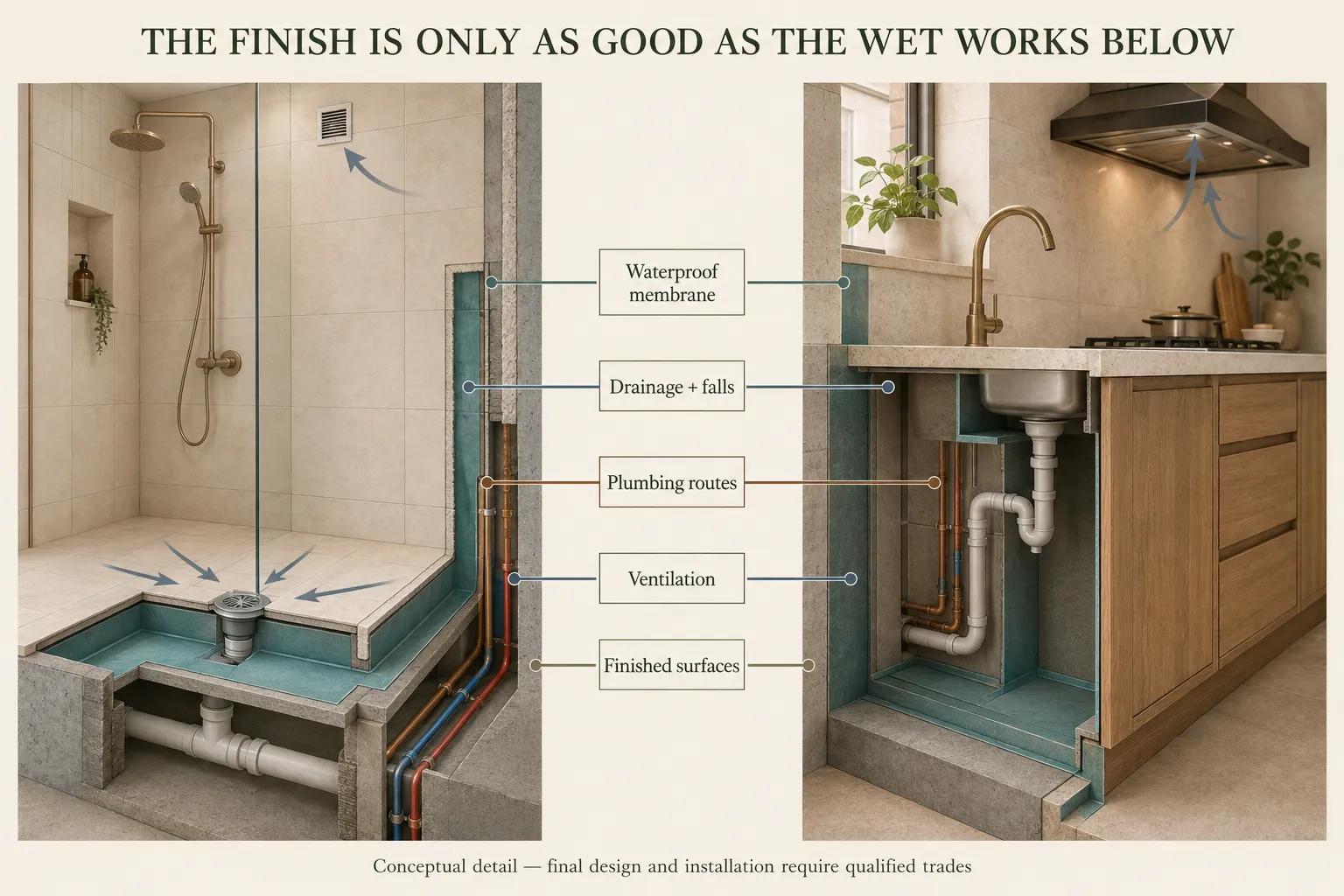
Kitchens and bathrooms are wet areas, and everything technical about them comes back to keeping water where it belongs. The detailed planning of each is covered in our guides to wet and dry kitchen design and bathroom design across multiple storeys, both of which turn on the same waterproofing discipline.
- The membrane under and around wet areas is the single most important element, since a failure leaks into the structure or the rooms below.
- Drainage and falls. Floors must be laid to fall correctly toward drains so water never pools or backs up.
- Supply and waste runs are reworked to suit the new layout, ideally without cutting into structure.
- Bathrooms and kitchens need extraction to manage moisture and prevent mould over time.
Pro tip: never economise on waterproofing to save on finishes. The most expensive bathroom mistake we see is a beautiful renovation over inadequate waterproofing that leaks within a year, forcing the whole room to be torn out.
What a Partial Renovation Typically Includes
It helps to be concrete about what falls inside a well-scoped kitchen-and-bathroom project. On the kitchen side, that usually means new cabinetry, worktops, sink and appliances, fresh finishes to floor and walls, updated lighting and power, and any local plumbing changes to suit the layout. On the bathrooms, it means stripping back to the substrate, laying fresh waterproofing, new sanitaryware, fittings, tiling and extraction.
What sits outside the scope matters just as much: bedrooms, living areas, the facade and structure all stay untouched, which is what keeps the project contained and predictable. The one grey area to watch is the transition where the renovated rooms meet the rest of the house, where a small amount of making-good keeps the boundary from looking abrupt.
Why Kitchens and Bathrooms Give the Best Return
If you only renovate part of a house, these are usually the right parts. Kitchens and bathrooms carry the most fittings, the most wear and the most dated technology, so they age faster and more visibly than any other space. A dated living room is merely unfashionable; a dated bathroom is a daily irritation, which is why this scope delivers such a strong return on both money and disruption.
Living In During the Works
A contained partial renovation is far more compatible with staying in the house than a full one, which is a real practical advantage. The works are confined to specific rooms, so the rest of the home remains liveable, though you will need a plan for the temporary loss of a kitchen or a bathroom. How to live through renovation works in general is covered in our guide to living in during a landed renovation, and a partial scope is one of the easier cases.
Phasing the Rest for Later
A partial renovation is often the first move in a longer plan, and treating it that way pays off. If you intend to renovate more of the house later, design the kitchen and bathroom works so they connect sensibly with future phases, rather than creating finishes or layouts you will have to undo. A designer who understands the whole house, even while working on part of it, keeps your options open. For where the numbers land, our landed renovation cost guide sets out budgets by scope so you can plan the phases against a realistic figure.
Renovate Precisely, Spend Where It Counts
A partial renovation rewards owners who scope it cleanly, invest properly in waterproofing, and target the rooms that shape daily life. Done well, it delivers much of the benefit of a full renovation with less cost and disruption. When you are ready to scope a partial project, our landed interior design service can design a focused kitchen and bathroom renovation that stands on its own and connects to whatever you do next.
Frequently Asked Questions
Can I renovate only the kitchen and bathrooms of my landed house?
Yes. A partial renovation focused on kitchens and bathrooms is a valid, common scope. Because these are non-structural wet areas, it usually needs little or no authority approval. It is often the highest-impact spend, since these rooms are used daily and date the fastest of any in the house.
What is the most important part of a bathroom renovation?
Waterproofing. The membrane under and around wet areas is the single most critical element, because a failure leaks into the structure or the rooms below and forces the whole room to be redone. Never economise on waterproofing to save on finishes; the membrane you never see matters most.
Do I need approval for a partial renovation?
Usually not, provided the work stays non-structural, replacing and reconfiguring kitchens and bathrooms within the existing structure. Approval concerns arise mainly around waterproofing where new wet areas sit over habitable rooms below. As long as no structure is affected, little or no submission is required.
Can I live in my house during a kitchen and bathroom renovation?
Usually yes, since the works are confined to specific rooms while the rest of the home stays liveable. You will need a temporary kitchen and careful sequencing of bathrooms so you are never left without one. A contained partial renovation is among the easier scopes to live through.
Should a partial renovation be part of a bigger plan?
It often is, and designing it that way helps. If you intend to renovate more later, plan the kitchen and bathroom works to connect sensibly with future phases rather than creating finishes you will have to undo. A designer who understands the whole house keeps your later options open.

September 3, 2026
Yang's Inspiration Insight