


Many people use the terms “interior designer” and “interior decorator” interchangeably, but the distinction is crucial. The core difference between interior decorating vs interior design lies in their scope and qualifications: an interior designer is trained to create functional, safe interior spaces by altering the structure itself, while an interior decorator focuses on furnishing and adorning the existing space to enhance its aesthetic appeal. To put it simply, a designer can build the “house,” while a decorator furnishes it.
Choosing the wrong professional for your project can lead to significant frustration, wasted time, and budget overruns. If you need to move walls or plan a new layout, a decorator won’t have the technical skills required. Conversely, if you only need a style refresh, a designer’s structural expertise might be more than you need. This article will definitively break down the differences in scope, skills, education, and cost, empowering you to confidently decide who to hire for your specific needs in Singapore.
At a Glance: Interior Designer vs Interior Decorator Comparison Table
For a quick overview, here’s how the two roles compare side-by-side.
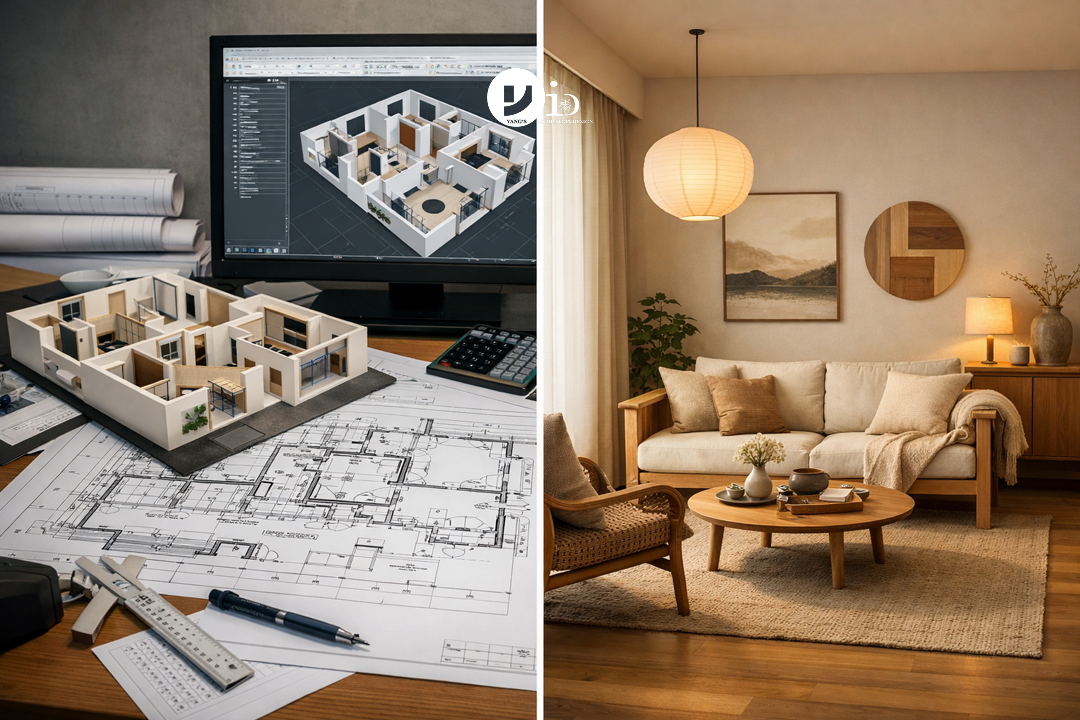
Key Differentiators Chart
| Feature | Interior Designer | Interior Decorator |
|---|---|---|
| Focus | Functionality, Safety & Aesthetics | Aesthetics & Ambiance |
| Structural Changes | Yes (can modify layouts, move walls, plan electrical systems) | No (works within the existing space and its surfaces) |
| Education | Formal degree & licensure often required (e.g., HDB, BCA) | Formal training is not mandatory; certificate programs are common |
| Collaboration | Works with architects, contractors, and builders | Works with furniture makers, painters, and upholsterers |
| Project Start | Can be involved from pre-construction or blueprint stage | Typically begins after construction is complete |
What Is Interior Design? The Art and Science of Space
Interior design is a multifaceted profession that blends art with science to create interior environments that are not only beautiful but also functional and safe. It goes far beyond aesthetics to shape the very experience of being within a space.
More Than Just Aesthetics: A Focus on Functionality & Safety
At its core, what is interior design is about understanding human behaviour. Designers are formally trained in the science of how people interact with their surroundings. This involves several key disciplines:
- Space Planning: Strategically arranging rooms, walls, and openings to optimise flow, circulation, and usability. This is crucial for making a compact 3 room HDB interior design feel spacious.
- Ergonomics: Designing spaces that are comfortable, efficient, and safe for human use, from kitchen counter heights to office chair selection.
- Building Codes: Adhering to Singapore’s regulations, such as those set by the Housing & Development Board (HDB) and Building and Construction Authority (BCA), to ensure all structural, electrical, and plumbing work is compliant and safe.
- Accessibility: Creating spaces that are usable by people with disabilities, following standards like the Americans with Disabilities Act (ADA) where applicable, especially in commercial projects.
The Scope of an Interior Designer’s Work
A designer’s involvement is comprehensive, often starting before any physical work begins. They analyse the client’s needs, create initial concepts and detailed blueprints, and manage the project through to completion. Their role often includes direct collaboration with architects and contractors to execute structural changes, such as removing walls, relocating plumbing, or designing custom cabinetry and lighting systems. As a licensed HDB and BCA contractor, Yang’s Inspiration Design manages this entire process in-house, ensuring seamless coordination.
Education, Training, and Certification
The path to becoming a professional interior designer requires rigorous formal education. This typically includes a Bachelor’s or Master’s degree from an accredited institution. In many regions, designers must also pass a national certification exam, such as the NCIDQ (National Council for Interior Design Qualification), to prove their expertise in health, safety, and welfare standards. In Singapore, credibility is established through accreditations like RCMA CaseTrust and official licensing from HDB and BCA, which our firm proudly holds. These credentials from bodies like the Council for Interior Design Accreditation (CIDA) are what separate a qualified designer from an untrained practitioner.
Core Skills & Tools of the Trade
An interior designer’s toolkit is both technical and creative.
- Technical Skills: Proficiency in industry-standard software is essential. This includes AutoCAD for 2D technical drawings, SketchUp for 3D modelling and visualization, and BIM (Building Information Modeling) for complex project management.
- Soft Skills: Beyond design, they must excel at project management, adhering to the interior design project timeline, budgeting, and clear client communication to translate a vision into a built reality.
What is Interior Decorating? The Art of Furnishing and Adornment
While interior design shapes the space, interior decorating adorns it. A decorator’s role is to apply the finishing touches that bring personality, style, and beauty to a structurally complete room.
The Finishing Touch: A Focus on Aesthetics and Style
Interior decorators are masters of aesthetics. They step in after the structural work is done to beautify the existing space. Their primary goal is to create a specific mood, ambiance, or style—whether it’s a cozy Scandinavian home or a sleek, contemporary apartment. They work with the “surface” elements: the walls, floors, windows, and the objects within them.
The Scope of an Interior Decorator’s Work
A decorator’s responsibilities are centred on sourcing and arranging the visual components of a room. This includes:
- Selecting colour palettes for walls, textiles, and accents.
- Choosing furniture pieces that fit the scale, style, and function of the space.
- Sourcing lighting fixtures like chandeliers, lamps, and sconces.
- Selecting accessories, such as rugs, art, cushions, and décor items.
- Specifying textiles for curtains, upholstery, and bedding.
- Designing window treatments like blinds, shades, and drapes.
Education and Training: A Different Path
Unlike interior design, formal degrees or state licensure are not mandatory for interior decorators. Many successful decorators build their careers through experience, a strong natural eye for style, and a robust portfolio. However, certificate programs are widely available and provide valuable education in the principles of design, such as colour theory and materials. For a decorator, a stunning portfolio is their most important credential.
Core Skills & Tools of the Trade
A decorator’s skills are rooted in visual arts and composition.
- Core Skills: A deep understanding of colour theory, fabric types and textures, furniture interior design styles, spatial arrangement, and visual balance is critical. They must know how to layer elements to create a cohesive and inviting look.
- Tools of the Trade: Their process often involves creating mood boards (physical or digital) to establish a visual direction, gathering material samples and fabric swatches for clients to touch and see, and leveraging a wide network of suppliers for furniture, art, and accessories.
Who Should You Hire? A Project-Based Guide
The decision between hiring an interior designer or decorator comes down to the scope of your project. Use this guide to determine which professional fits your needs.
Scenarios for Hiring an Interior Designer

If your project involves changing the physical structure or core functionality of a space, you need an interior designer.
- If you are renovating your kitchen and moving walls… then you should hire an interior designer. They can create new layouts, manage plumbing and electrical changes, and ensure the new space is compliant with HDB or condo regulations.
- If you are building a new home or gutting an old one… then you should hire an interior designer (or a city builder with in-house design services). They work with architects from the ground up to plan the entire interior flow and function.
- If you need to make your office space ADA compliant… then you should hire an interior designer. They have the technical knowledge of accessibility codes and requirements.
- If you want a highly custom solution… such as built-in storage, a media unit, or a complex lighting plan, then an interior designer is the right choice.
Scenarios for Hiring an Interior Decorator
If you are happy with your space’s layout but want to improve its look and feel, an interior decorator is your best bet.
- If you have just moved into a new apartment and need to furnish it… then you should hire an interior decorator. They will help you select furniture, rugs, and art that fit your style and budget.
- If your living room feels dated and needs a style refresh… then you should hire an interior decorator. They can propose a new colour scheme, rearrange existing furniture, and suggest new accessories to modernise the space.
- If you need help choosing paint colours, wallpaper, and lighting… then you should hire an interior decorator. They have a trained eye for how colours and materials work together to create a desired mood.
- If you are preparing to sell your home… then you could hire an interior decorator (or home stager) to make it more appealing to potential buyers.
Can an Interior Designer Also Decorate?
Yes, absolutely. Most interior design projects include decoration as the final phase. A designer will see the project through from structural changes to placing the final decorative cushion. However, the reverse is not true: an interior decorator does not have the qualifications or training to perform the duties of an interior designer.
Understanding Costs and Pricing Structures
The cost of hiring a professional varies based on their role, experience, and the project’s complexity.
How Interior Designers Typically Charge
Because their work is complex and involves technical planning and project management, interior designers use several pricing models:
- Hourly Rate: A set rate for all time spent on the project, from drafting to site visits.
- Fixed/Flat-Fee: A single, all-inclusive fee for the entire project, agreed upon upfront. This is common for clearly defined scopes.
- Cost-Plus Percentage: The designer charges the client the net cost for all furnishings and materials, plus a pre-agreed percentage (e.g., 20-30%) as their fee.
- Combination: Some designers use a mix, such as a flat fee for the design phase and an hourly rate for procurement and installation.
How Interior Decorators Typically Charge
Decorators’ pricing models are often simpler, reflecting a focus on aesthetics rather than construction management.
- Hourly Rate: A common model for consultations or smaller projects.
- Project-Based/Flat-Fee: A fixed fee is often charged for decorating a single room or a whole house, with a clear scope of what is included.
- Shopping Fee: Some may charge a day rate or hourly rate for sourcing and shopping for items on the client’s behalf.
Key Factors That Influence the Final Price
Regardless of who you hire, several factors will affect the total cost:
- Project Scope: A full HDB renovation will cost significantly more than a living room style refresh.
- Geographic Location: Rates for professionals in prime districts may be higher.
- Experience Level: A renowned, award-winning designer will command higher fees than a newcomer.
Conclusion: Making the Right Choice for Your Home
Understanding the difference in interior decorating vs interior design is the first step toward a successful home transformation. The core distinction is clear: interior designers are qualified to shape the physical space itself—its structure, layout, and function. Interior decorators are specialists in beautifying that space with furniture, colour, and accessories.
By assessing the scope of your project—whether it requires a structural overhaul or an aesthetic facelift—you can now make an informed decision and hire the right professional. This ensures your vision is realised efficiently, safely, and within budget.
For homeowners in Singapore seeking a seamless, end-to-end solution, working with a full-service firm is the most effective approach. At Yang’s Inspiration Design, we are a Trusted Interior Design Firm in Singapore that is also an HDB-licensed and BCA-accredited builder. Our integrated team handles every phase internally, from the initial architectural design and space planning to managing the renovation and executing the final decorative styling. This eliminates the confusion of hiring multiple parties and guarantees your project is cohesive from blueprint to final reveal.
Ready to transform your space with a team that does it all? Contact us for a consultation on WhatsApp at +65 8855 7575 to see how our integrated design-and-build approach is the right fit for your vision.

January 27, 2026
Yang's Inspiration Insight