



If you’re thinking about updating your home, you’ve likely waded into a sea of confusing terms. What is a renovation, really? Is it the same as a remodel? Or a restoration? A renovation is, in its simplest form, the process of improving, repairing, or restoring your home to a good condition. It’s about breathing new life into an existing space without fundamentally changing its purpose. The confusion is common, especially when distinguishing between a “renovation” and a “remodel,” two words often used interchangeably but with very different implications for your budget, timeline, and the final outcome. This guide will provide a clear, straightforward explanation to help you understand the concept, identify the right project for your needs, and plan your next steps with confidence.
Defining Renovation: More Than Just a Makeover
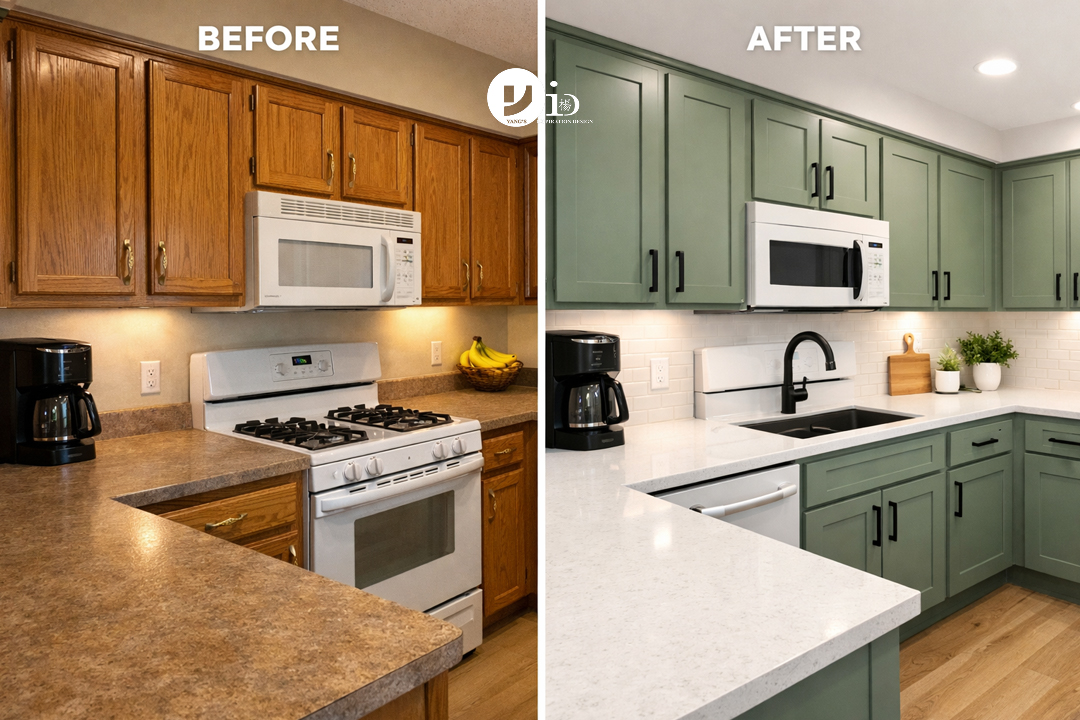
A renovation is the process of restoring something to a good state of repair or bringing it back to life. It focuses on improving, repairing, or updating an existing structure that is broken, damaged, or outdated.
Think of it as “refreshing” or “reviving” a space. You are working with the structure you already have, making it better, safer, or more aesthetically pleasing. The core layout and purpose of the room remain unchanged. A kitchen before renovation is still a kitchen after—it’s just a newer, more updated version of itself.
Key Characteristics of a Renovation
To better understand what a renovation project entails, here are its defining characteristics:
- Focuses on restoration and repair: The primary goal is to fix what’s broken or worn out. A classic example is repairing a leaky roof or fixing cracked tiles.
- Involves cosmetic updates: Much of renovating is about improving the look and feel of a space. This includes tasks like painting walls, refacing cabinets, or installing a new backsplash.
- Replaces old elements with new ones: It often involves swapping outdated components for modern, more efficient ones, such as installing new windows, updating light fixtures, or replacing old appliances.
- Maintains the original structure and layout: This is the most crucial point. During a renovation, walls are not moved, and the fundamental footprint of the room stays the same.
Common Reasons & Goals for Renovating a Property
Homeowners in Singapore decide to renovate for a variety of practical and personal reasons. Understanding the “why” behind a project helps clarify its scope and goals.
To Improve Functionality and Comfort
Over time, a home’s functionality can diminish. A renovation can solve these issues.
- Example: An HDB kitchen with a poor workflow can be greatly improved with smarter storage solutions and better appliances. While the layout might stay the same, new kitchen cabinet design ideas can make the space far more efficient and enjoyable to use.
To Increase Property Value
Strategic renovations are a proven way to boost your home’s market value before selling.
- Example: Modernising a dated bathroom or kitchen is one of the most effective ways to attract buyers and achieve a higher resale price. Even simple bathroom remodel ideas can yield a significant return on investment.
To Enhance Aesthetics
Sometimes, a home just needs a visual refresh to feel new again.
- Example: Repainting walls with a fresh colour palette, refinishing worn-out hardwood floors, or replacing old, dim light fixtures with modern alternatives can completely transform the atmosphere of a room.
For Safety and Code Compliance
Older homes may have components that are no longer safe or up to current building codes.
- Example: A critical renovation could involve updating old, frayed electrical wiring to prevent fire hazards or replacing a deteriorating roof to stop leaks and structural damage. As a licensed HDB and BCA contractor, we see this as a non-negotiable priority.
To Boost Energy Efficiency
With rising utility costs, energy-saving renovations are becoming increasingly popular.
- Example: Adding new insulation, sealing air leaks around windows and doors, or upgrading to an energy-efficient air-conditioning system can lower your monthly bills and create a more comfortable living environment.
Renovation vs Remodeling: Clearing Up the Confusion
This is the most important distinction for any homeowner to understand. While the terms are often used interchangeably in casual conversation, in the design and construction industry, they describe two very different types of projects. Getting this right from the start is crucial because it directly impacts your budget, the need for permits, your project timeline, and the type of professional you should hire. Understanding if you need a renovation or a remodel is the first step in any successful home improvement journey.
What is Remodeling?
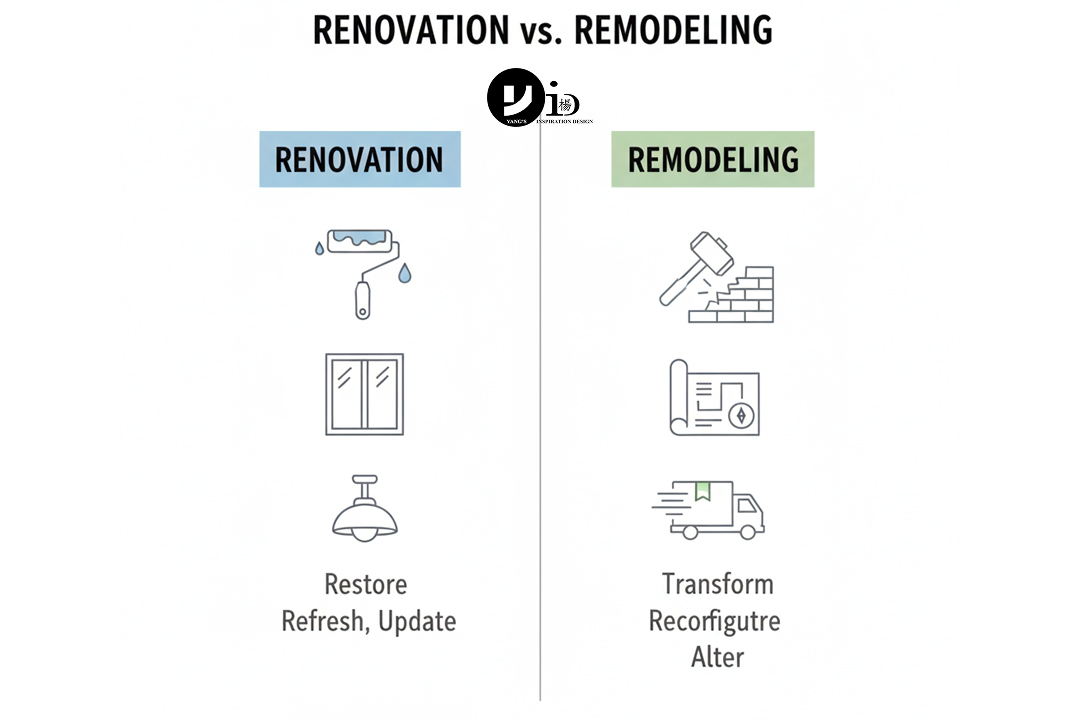
Remodeling means to change the form or structure of a space. It is about transformation, not just updating. The key action in a remodel is altering the layout or purpose of a room.
Key actions: Knocking down walls to create an open-concept living area, moving plumbing and electrical lines for a new kitchen island, converting a spare bedroom into a home office, or adding a bathroom to an existing floor plan.
Side-by-Side Comparison Table
| Feature | Renovation (To Restore) | Remodeling (To Transform) |
|---|---|---|
| Goal | Restore a space to a good condition or update its look. | Change a space’s layout, structure, or purpose. |
| Scope | Cosmetic updates, repairs, and replacement of fixtures. | Structural changes, moving walls, altering floor plans. |
| Cost | Generally lower, as it involves fewer materials and less labour. | Generally higher due to complexity, structural work, and permits. |
| Permits | Sometimes required for major electrical or plumbing work. | Often required, especially for structural changes. |
| Example | Painting your HDB kitchen and replacing the countertop. | Knocking down a kitchen wall to merge it with the living room. |
Practical Scenario: A Kitchen Example
Let’s apply these definitions to a real-world project to make the difference crystal clear.
-
A Kitchen Renovation: You love your kitchen’s layout, but everything feels dated. You decide to repaint the existing cabinets, replace the old laminate countertops with quartz, install a new sink and tap in the exact same location, and update the backsplash with new tiles. The result: Your kitchen looks brand new, but its footprint and workflow are identical. This is a classic renovation.
-
A Kitchen Remodel: Your kitchen feels cramped and closed off from the rest of the house. You decide to hire a contractor to knock down the non-load-bearing wall between the kitchen and dining room. You then add a large island in the middle, which requires moving plumbing for a new sink and running new electrical for outlets and pendant lights. The stove and refrigerator are moved to different walls to create a more ergonomic “work triangle.” The result: You have fundamentally transformed the structure and function of your kitchen. This is a remodel.
Types of Renovation Projects (With Examples)
Renovation projects can be grouped into a few key categories, helping you better define the scope of your own plans.
Cosmetic Renovations
These projects are purely about aesthetics and are often the most affordable way to refresh your home.
- Interior and exterior painting
- Refinishing or re-staining wood floors
- Replacing door handles, cabinet hardware, and light fixtures
- How to Care for Wall Wallpaper to give it a fresh look
“Replace and Repair” Renovations
These are more structural in nature and often address wear-and-tear or system upgrades. They are crucial for maintaining the home’s integrity and safety.
- Installing a new roof
- Replacing old, drafty windows with new, energy-efficient models
- Upgrading an older electrical panel to handle more load
- Replacing an old furnace, air conditioner, or water heater
Restoration vs Renovation
It’s worth briefly touching on restoration. Restoration is a highly specialised type of renovation. Its goal is not just to repair but to return a property to its original historical state. This is common in heritage buildings or conservation houses in Singapore, where preserving historical accuracy is paramount. While all restoration is a form of renovation, not all renovation is restoration.
Key Takeaways: Is a Renovation Right for You?
Now that we’ve broken it all down, let’s summarise the essential points to help you decide on your next home improvement project.
- What is a renovation? It’s about refreshing and restoring your space. The focus is on repairing, updating, and improving the look and feel of your home.
- The Golden Rule: If you are keeping your existing layout, it’s a renovation. If you are changing the layout or structure, it’s a remodel.
- Consider Your Goals: Are you looking to fix a problem, update aesthetics, or improve efficiency? If so, a renovation is likely the right choice. If you need to change how your space functions, you should start planning for a remodel.
At Yang’s Inspiration Design, we believe that making quality design accessible starts with clear communication. We are a Trusted Interior Design Firm in Singapore precisely because we help homeowners navigate these decisions, ensuring the project scope aligns perfectly with their vision and budget. As an RCMA CaseTrust and HDB-licensed firm, our in-house team of designers, carpenters, and electricians is equipped to handle every phase of your project, guaranteeing quality and a seamless experience.
Ready to start your home transformation? Contact our expert team for a no-obligation consultation. WhatsApp us at +65 8855 7575 to bring your vision to life.

January 26, 2026
Yang's Inspiration Insight