


Your living room is now your office, gym, and cinema. Sound familiar? If so, you’re not alone. Creating a multifunctional space at home is a strategic design approach that allows a single room to serve multiple purposes, adapting to your daily needs. It’s about making your home work smarter, not just look better. In cities like Singapore, where HDB and condo floor plans are becoming more compact, and work-from-home is the new norm, the need for adaptable living areas has never been greater.
The challenge is making it feel intentional and stylish, not chaotic and cluttered. This ultimate guide provides a comprehensive, step-by-step plan to help you design a functional and beautiful multifunctional space, no matter the size of your room or your budget.
Define Your Needs and Prioritize Functions
Before you move a single piece of furniture, the most crucial step is to understand exactly what you need your space to do. A successful multifunctional room isn’t about cramming in as much as possible; it’s about thoughtfully supporting your lifestyle.
The “Activity Audit”: Listing Everything Your Space Needs to Do
Grab a pen and paper and brainstorm every single activity you envision for the room. Don’t hold back—think big and small. Your list might include:
- Work: Answering emails, video calls, focused deep work.
- Relaxation: Watching TV, reading a book, listening to music.
- Dining: Daily meals, hosting dinner parties.
- Fitness: Yoga, HIIT workouts, storing weights.
- Hobbies: Painting, playing an instrument, crafting.
- Entertaining: Hosting guests for coffee or game nights.
- Sleeping: A primary bed (studio) or a guest bed.
Prioritizing Your Primary vs. Secondary Functions
Now, review your list and label each activity as either “primary” or “secondary.”
- Primary functions are the non-negotiable, daily activities. For example, your living room’s primary function might be family relaxation every evening.
- Secondary functions are occasional or less critical needs. Hosting an overnight guest once every few months is a secondary function.
This crucial step dictates your design choices. The primary function should be the easiest to perform and should define the room’s main character, while secondary functions should be easily accommodated without disrupting the primary use.
Planning for the Future: How Will Your Needs Evolve?
A truly smart space is one that can adapt over time. Ask yourself a few key questions:
- Will this home office need to become a nursery in a few years?
- Could the kids’ play area evolve into a study space for teenagers?
- Will you be working from home more or less in the future?
Thinking ahead allows you to choose flexible solutions that grow with you, saving you from a complete redesign down the road.
Master the Layout with Strategic Zoning
Once you know what your room needs to do, it’s time to figure out where each activity will happen. This is where zoning comes in—a design technique that creates distinct functional areas within a single open space.
What is Zoning? Creating ‘Invisible Walls’ in Your Room
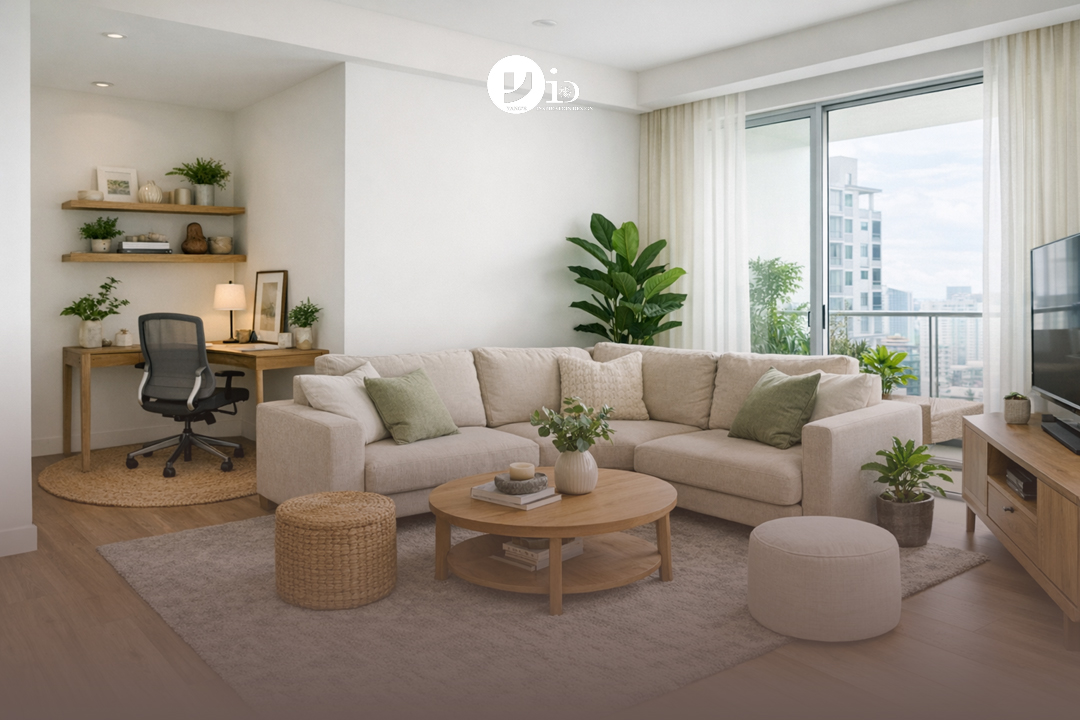
Zoning is the art of dividing a room without building physical walls. It uses visual cues like furniture, rugs, and lighting to signal that one area ends and another begins. This creates a sense of order and purpose, making the space feel larger and more organised, not smaller and more cluttered.
Expert Insight from Yang’s Inspiration Design: “Zoning is fundamental for multifunctional spaces, especially in Singapore’s HDB flats. It’s about psychological separation. When you sit at your desk, you should feel like you’re in an office, not your living room. A simple rug or a well-placed bookshelf can achieve this, creating a clear mental shift that boosts both productivity and relaxation.”
Worried it will look cluttered? The key is using a consistent colour palette and one of the cohesive interior design styles to tie the different zones together into a unified look.
How to Use Rugs and Furniture to Define Zones
Your largest pieces of furniture are your most powerful zoning tools.
- Area Rugs: An area rug is the simplest way to anchor a zone. Place one under your sofa and coffee table to define the “living room,” and perhaps a smaller, durable one under a desk and chair to mark the “office.”
- Furniture Placement: Turn the back of a sofa towards a dining area to create a clear boundary. Use a tall, open-backed bookshelf (like an IKEA KALLAX) to divide a sleeping area from a living area while still allowing light to pass through. These simple tricks provide powerful visual cues for your modern living room design ideas.
Using Lighting to Set the Mood for Each Zone
Lighting is a subtle yet highly effective way to separate zones and set the right mood for each activity.
- Workspace: Use bright, focused task lighting, like an adjustable desk lamp or a pendant light hung directly over your work surface.
- Lounge Area: Opt for warm, ambient lighting from floor lamps or table lamps to create a cozy, relaxing atmosphere.
- Dining Nook: A statement pendant light over the dining table clearly defines it as a separate zone.
Using dimmers for your main overhead lights gives you maximum flexibility to adjust the room’s overall mood instantly.
When to Use Physical Dividers: Screens, Curtains, and Bookshelves
Sometimes, you need a more tangible separation. Non-permanent dividers offer flexibility without the commitment of a renovation.
- Folding Screens: Lightweight and stylish, they can be easily moved to hide a workspace at the end of the day or create a private changing area.
- Curtains: A ceiling-mounted curtain track allows you to draw a fabric “wall” to close off a sleeping area in a studio apartment.
- Bookshelves: An open-sided bookshelf acts as a functional divider that also provides valuable storage space.
Invest in Smart, Multi-Purpose Furniture
In a multifunctional space, every piece of furniture should earn its keep. The goal is to find items that serve two or even three purposes, saving you precious floor space. When deciding between options, consider whether custom vs ready-made furniture will better suit your unique needs.
The Convertible Champions: Sofa Beds and Daybeds
The classic choice for a reason. A modern, high-quality sofa bed is a game-changer for any living room that needs to double as a guest room. Daybeds are a great alternative for smaller spaces, serving as a sofa by day and a twin bed by night.
The Space-Savers: Extendable, Folding, and Wall-Mounted Tables
Bulky dining tables are a luxury many small spaces can’t afford.
- Extendable Tables: Look for dining tables with hidden leaves that allow them to expand to accommodate guests.
- Folding/Drop-Leaf Tables: Perfect for narrow spaces, these can be folded down to act as a slim console table when not in use.
- Wall-Mounted Tables: A fold-down table mounted to the wall takes up zero floor space when closed.
The Hidden Helpers: Storage Ottomans, Benches, and Lift-Top Coffee Tables
This is where you can hide all the clutter that comes with multiple activities. A storage ottoman can hold blankets, work supplies, or kids’ toys while also providing extra seating. A lift-top coffee table transforms into a work or dining surface, often revealing hidden storage underneath.
The Ultimate Transformers: Murphy Beds and Desk Beds
For the ultimate space-saving solution, especially in studio apartments, nothing beats a Murphy bed. These beds fold up into a wall cabinet, freeing up the entire floor for daytime activities. Some modern versions even include an integrated desk that remains level as the bed is folded down, so you don’t have to clear it off.
The Flexible Seating: Modular Sofas and Nesting Tables
Furniture that can be reconfigured is key for entertaining. A modular sofa can be rearranged to suit different social gatherings, while nesting tables can be spread out for guests to place drinks on and then tucked away neatly afterwards.
Maximize Every Inch with Smart Storage Solutions
Clutter is the enemy of a peaceful multifunctional space. With so much happening in one room, smart and accessible storage is non-negotiable. The key is to think beyond the floor.
Go Vertical: The Power of Wall-Mounted and Tall Shelving
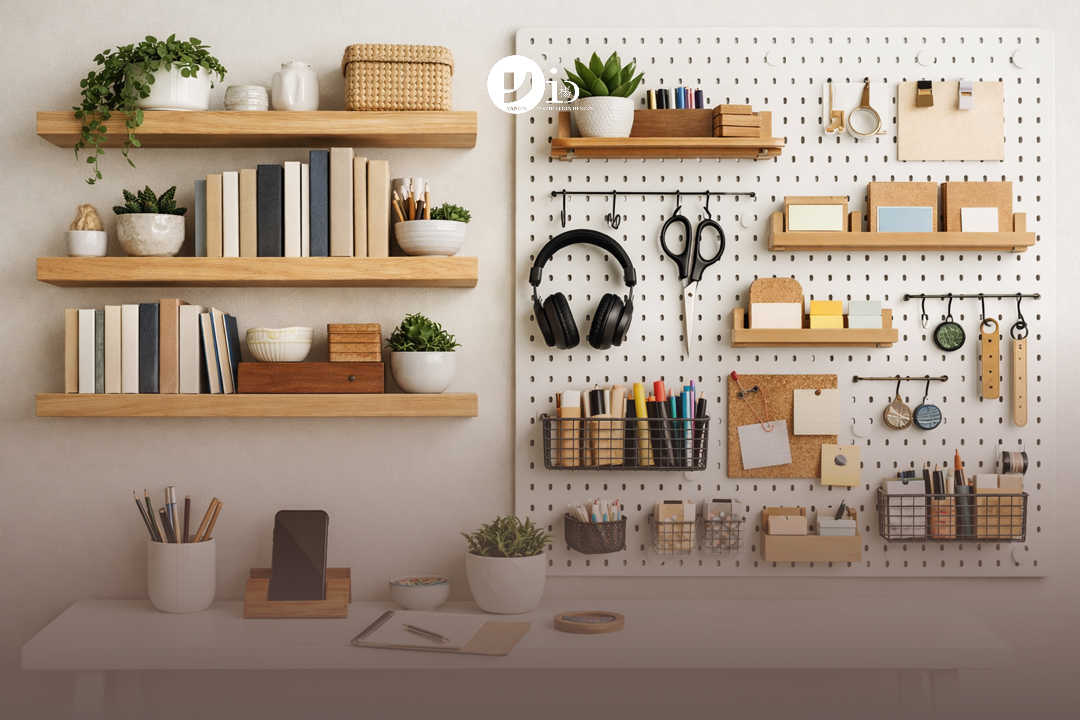
Your walls are your greatest untapped storage resource. Using vertical space draws the eye upward, making the room feel taller and less crowded.
- Floating Shelves: Install them above a desk for books and supplies, or above the TV to display decor.
- Tall, Slim Bookcases: These have a small footprint but offer a huge amount of storage.
- Wall Grids & Pegboards: Perfect for a home office or craft zone, these allow for flexible, customizable storage of small items.
- Built-ins: For a seamless look, consider brilliant built-in storage solutions for the living room that are tailored to your exact space and needs.
Uncover Hidden Opportunities: Under-Bed, Corner, and Over-Door Storage
Look for often-ignored spots to stash your stuff.
- Under-Bed Storage: Use rolling bins or vacuum-sealed bags to store out-of-season clothing or extra bedding.
- Corner Shelving: Turn an awkward empty corner into a functional storage tower.
- Over-the-Door Organizers: These aren’t just for shoes; use them to store cleaning supplies, craft materials, or office essentials.
Choose Furniture with Built-in Storage
This brings us back to Step 3. When shopping for any new item, from a bed frame to a TV console, always ask: “Can I get a version of this with built-in storage?” A bed with drawers underneath or a media unit with deep cabinets will always be a smarter choice for a hardworking room.
Multifunctional Space Ideas by Room (With Examples)
Let’s put these principles into practice with some common scenarios in Singapore homes.
The Living Room + Home Office + Guest Room
This is the most common trifecta. The key is seamless transition.
- Layout: Place a high-quality sofa bed against the main wall. Instead of a traditional coffee table, use a storage ottoman. On the opposite wall, use a slim console table that can double as a desk.
- Function: By day, the console table is a discreet workspace. At night, clear the laptop, and it’s a stylish TV stand. When guests arrive, the sofa unfolds into a bed, and the ottoman holds their bedding.
The Bedroom + Workspace + Relaxation Nook
Your bedroom should be a sanctuary, so it’s vital to “switch off” the work zone.
- Layout: A wall-mounted, fold-down desk is perfect here. When closed, it’s unobtrusive. When open, it’s a dedicated workspace. For your relaxation nook, add a comfortable accent chair and a slim floor lamp in a corner. Maximize storage with a bed frame that has built-in drawers.
- Function: This layout keeps work and sleep physically separate. When the desk is folded up, the room reverts to a peaceful haven, allowing you to fully unwind in your reading corner. It’s one of the most space-savvy layouts for your HDB master bedroom.
The Studio Apartment: The All-in-One Challenge
In a studio, your entire life happens in one room, making smart design essential.
- Layout: A Murphy bed is the ultimate investment for a studio. During the day, it disappears, creating an open living area. Use a tall, open-backed bookshelf as a room divider to create a sense of separation. Opt for a drop-leaf dining table that can sit against a wall for two people or be pulled out to seat four.
- Function: These high-impact solutions allow for true transformation. Your space can go from a functional bedroom at night to a spacious living and dining area during the day, which is one of the most effective studio condo interior design styling tips.
Creating a Multifunctional Space on a Budget
You don’t need a massive budget to create a versatile home. With a little creativity, you can achieve amazing results.
DIY Hacks: Repurpose What You Already Own
Before you buy anything new, look at your existing furniture with fresh eyes.
- An old, low dresser can be painted and repurposed as a stylish TV stand with plenty of storage.
- Place two small, identical bookcases a few feet apart and lay a sturdy, finished plank of wood across them to create a spacious desk with built-in shelving.
- A bar cart can be a mobile office station, a craft cart, or a nightstand.
Thrifty Finds: What to Look for in Second-Hand Stores
Thrift stores are treasure troves for versatile pieces. Keep an eye out for:
- Nesting tables: Often found for a fraction of their retail price.
- Storage trunks: A vintage trunk can serve as a unique coffee table with massive storage inside.
- Drop-leaf carts: These small, wheeled tables are incredibly versatile for serving or as a temporary workspace.
Even if you can’t afford a full renovation, there are many affordable interior design alternatives that can give you a beautiful and functional space.
Affordable Space-Saving Products That Make a Big Impact
A few small purchases can make a huge difference.
- Tension Rods: Use them in alcoves or under desks to hang curtains or S-hooks for extra storage.
- Adhesive Wall Hooks: Command hooks are perfect for hanging everything from headphones to cooking utensils without damaging walls.
- Under-Shelf Baskets: These slide onto existing shelves in your pantry or bookcases, instantly doubling your storage capacity.
5 Common Mistakes to Avoid (And How to Fix Them)
Learning how to create a multifunctional space at home often involves avoiding common pitfalls. Here are the top five mistakes and how to fix them.
Mistake #1: Too Much Bulky Furniture
A room packed with heavy, solid furniture will feel cramped, no matter its size.
- Solution: Choose furniture with a lighter visual profile. Opt for pieces with raised legs (like a mid-century modern sofa or console) which allows you to see the floor underneath, creating an illusion of more space.
Mistake #2: Forgetting About Traffic Flow
You need to be able to move through your space easily without weaving around furniture.
- Solution: Before you finalize your layout, use painter’s tape on the floor to mark out your furniture. Walk the “pathways” between zones to ensure they are clear and comfortable.
Mistake #3: A Cluttered and Inconsistent Look
When different zones have different styles, the room can feel chaotic and disjointed.
- Solution: Stick to a unified color palette and design style across the entire room. Use 2-3 main colors and an accent color to tie everything together. This creates a cohesive backdrop that makes the different zones feel like part of a deliberate, harmonious design.
Mistake #4: Poor or Inflexible Lighting
Relying on a single, harsh overhead light is one of the biggest design mistakes. It creates glare in work areas and fails to create a cozy atmosphere in lounge zones.
- Solution: Use layered lighting. Every room should have three types: Ambient (overall illumination from ceiling fixtures), Task (focused light for activities like reading or working), and Accent (to highlight decor). Choosing the right lighting for a bedroom or living space is key to its success.
Mistake #5: Choosing Gimmicks Over True Functionality
It’s easy to get excited about ultra-niche convertible furniture that looks cool but doesn’t solve your primary needs.
- Solution: Go back to your priority list from Step 1. Invest in pieces that solve your daily, primary functions first. A comfortable, high-quality sofa bed is a better investment than a coffee table that turns into a foosball table if you never actually play.
Conclusion: Your Home Should Work as Hard as You Do
Creating a multifunctional space that truly works is a journey of thoughtful planning. By following these key steps—Define your needs, Zone your layout, Furnish with smart pieces, and maximize Store—you can transform any room from a source of frustration into a hub of productivity, relaxation, and versatility. It’s about empowering your home to support every facet of your life, making it more livable, adaptable, and uniquely yours.
While DIY solutions and careful planning can achieve incredible results, creating a perfectly seamless and professionally finished multifunctional space requires expertise. At Yang’s Inspiration Design, we specialize in crafting bespoke interiors for Singapore homes. As a vertically integrated firm, our in-house team of designers, project managers, and carpenters works together to bring your vision to life, ensuring unparalleled quality from the initial design to the final installation. We create custom joinery and select the perfect furniture to build a space that is not only multifunctional but also a beautiful reflection of your personal style.
Ready to create a multifunctional space that’s perfectly tailored to your lifestyle without the stress and hassle? Let our experts handle everything. Contact us for a no-obligation consultation on WhatsApp at +65 8855 7575 today!

January 23, 2026
Yang's Inspiration Insight