


An empty corner can feel awkward and unfinished, leaving a gap in your home’s design. The best way to solve this is by learning how to arrange indoor plants in a corner of a room, which involves assessing your corner’s light, choosing plants of varying heights and shapes, and using design techniques like layering to create a dynamic display. This simple addition can turn that neglected space into a vibrant, living focal point. This guide will walk you through everything you need to know, from assessing your space to choosing the perfect plants and arranging them like a pro. Get ready to create your own beautiful green oasis.
First, The Foundation: 3 Essential Steps Before You Buy a Single Plant
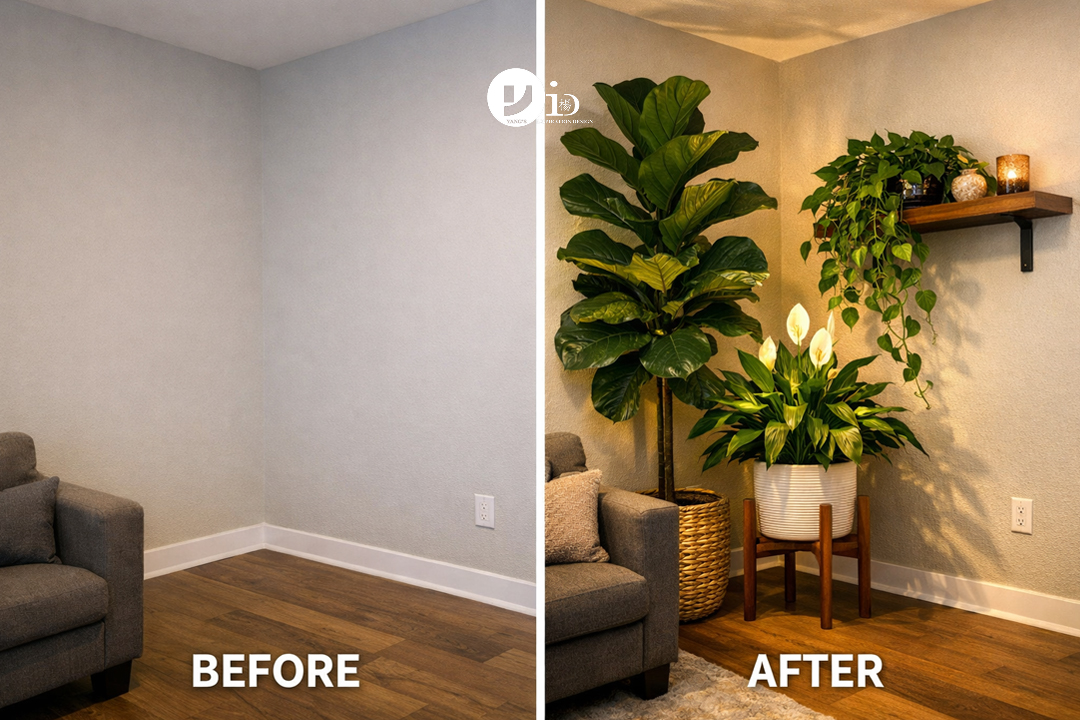
Before you rush to the nursery, a little planning goes a long way. These foundational steps ensure you create a plant corner that not only looks beautiful but also thrives. Taking the time to understand your space is the secret to a successful and sustainable green display.
Step 1: Become a Light Detective (Assess Your Corner’s Light)
Your plants’ health depends almost entirely on getting the right amount of light. To set them up for success, you need to understand the light levels in your specific corner.
- Low Light: This is a corner far from any window where direct sun never reaches. It might feel dim for most of the day.
- Medium Light: The space is bright, but the sun’s rays don’t directly hit the plants. A simple test: “If you can comfortably read a book for more than a few minutes, you likely have at least medium light.”
- High Light: The corner receives several hours of bright, indirect sunlight, often near an east- or west-facing window.
- Very High (Direct) Light: The corner gets at least four hours of direct, unfiltered sun, typically from a south-facing window. This can be too intense for many houseplants.
Window direction is a key indicator: North-facing windows offer low to medium light, East-facing windows provide gentle morning sun (medium light), West-facing windows get intense afternoon sun (high light), and South-facing windows deliver strong, direct light all day. For very dark corners, don’t despair! A stylish grow light can supplement natural light and allow you to grow a wider variety of plants.
Step 2: Measure Your Space and Consider Scale
Next, grab a tape measure. You’ll need to know the floor space (width and depth) and the vertical height of your corner. This is crucial for understanding scale, a key principle in what is interior design.
- Scale: A tiny plant will get lost in a large living room with high ceilings, while a huge Fiddle Leaf Fig might overwhelm a small studio apartment. The goal is to choose plants and stands that are proportional to the room.
- Surrounding Furniture: Consider how your plant arrangement will interact with nearby furniture like sofas, chairs, or side tables. Ensure there’s enough room for people to walk by comfortably and that the plants won’t block access or look cramped.
Step 3: Define Your Corner’s Purpose
Finally, think about what you want your plant corner to do for the space. This will influence the density and style of your arrangement.
- A Decorative Focal Point: Is the goal to create a single, beautiful statement that draws the eye?
- A Cozy Reading Nook: Will the plants frame an accent chair and lamp, creating a relaxing retreat?
- An “Indoor Jungle”: Do you want to create a lush, dense feeling that makes the corner feel like a mini-oasis?
Knowing your corner’s purpose will help you decide whether you need one large statement plant or a dense cluster of many different plants.
Choosing Your Green Team: The Best Plants for Any Corner
With your corner assessed, it’s time for the fun part: selecting your plants. Categorizing them by size and function will help you build a balanced and visually interesting arrangement.
Tall Statement Plants for Vertical Impact
These are the anchors of your corner display. Their purpose is to draw the eye upward, fill vertical space, and create a single, bold focal point. They work wonders in rooms with high ceilings.
- Examples: Fiddle Leaf Fig (Ficus lyrata), Bird of Paradise (Strelitzia nicolai), large Monstera Deliciosa, Rubber Plant (Ficus elastica), Areca Palm (Dypsis lutescens).
- Pro Tip: Be mindful of their needs. For example, Fiddle Leaf Figs require bright, indirect light to thrive and will not do well in a low-light corner.
Medium & Small “Filler” Plants for Lushness
Filler plants are essential for adding depth and creating a full, layered look. Use them to fill gaps between taller plants, on stands, or on lower shelves.
- Examples: Peace Lily (Spathiphyllum), Aglaonema (Chinese Evergreen), Begonia Rex, Boston Fern (Nephrolepis exaltata).
Trailing & Climbing Plants for Softness and Flow
These plants are perfect for adding a dynamic, flowing element. They soften the hard edges of shelves, stands, or furniture and make great use of vertical space by drawing the eye downwards.
- Examples: Golden Pothos (Epipremnum aureum), Neon Pothos, Heartleaf Philodendron, String of Pearls (Senecio rowleyanus), English Ivy (Hedera helix).
Special Consideration: Creating a Pet-Friendly Plant Corner
Many beautiful houseplants, including some of the most popular ones, are toxic to cats and dogs if ingested. If you have furry friends, their safety is the top priority. Thankfully, you don’t have to sacrifice style. As part of designing a purr-fectly pet-friendly HDB flat, choosing non-toxic plants is a must.
- Safe & Stylish Alternatives: There are many beautiful and Pet-Friendly plants that are perfect for a corner arrangement.
- Examples: Parlor Palm (Chamaedorea elegans), Spider Plant (Chlorophytum comosum), Calathea varieties (like the Rattlesnake or Zebra plant), Boston Fern, and most succulents like Haworthia and Echeveria.
- Always Double-Check: Before bringing any new plant home, it’s crucial to verify its toxicity. A quick search on the ASPCA’s plant database is a reliable way to ensure it’s safe for your pets.
5 Pro Design Techniques for Arranging Your Corner Plants
Now that you have your plants, it’s time to arrange them. Applying a few basic interior design principles will elevate your corner from a simple collection of pots to a thoughtfully curated display.
1. Use Layering and Varying Heights for a Dynamic Look
The most important technique is to create visual levels. Avoid placing all your plants on the floor.
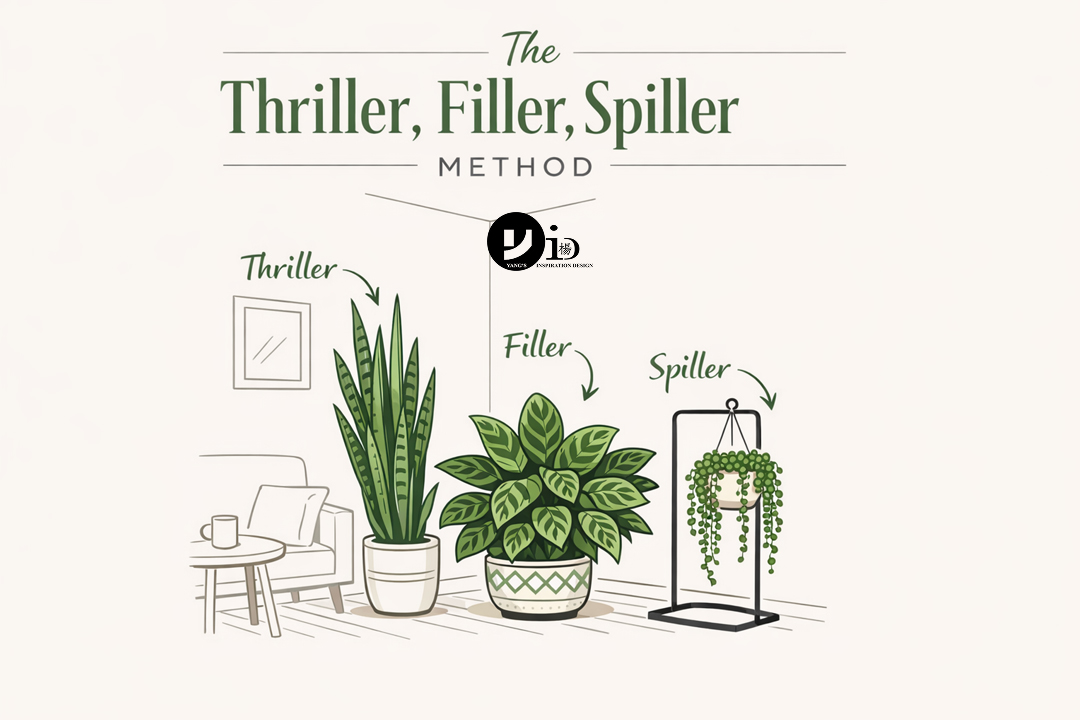
- The “Thriller, Filler, Spiller” Method: This classic container gardening rule works perfectly for corners.
- Thriller: Your tallest statement plant that provides the main vertical element.
- Filler: Mid-sized, bushy plants that add lushness and fill the middle ground.
- Spiller: A trailing plant that cascades down from a stand or shelf, adding softness.
- Create Your Own Height: You don’t always need expensive stands. Use a stack of hardcover books, an overturned pot, or a small wooden stool to elevate smaller plants and create different levels.
2. Group in Odd Numbers (The Rule of Three)
There’s a reason the Rule of Three is a cornerstone of design. Grouping plants in odd numbers—like 3, 5, or 7—creates a more balanced, natural, and visually appealing arrangement than even-numbered groups. An arrangement of two plants can feel static, but a group of three creates a dynamic triangle that is more pleasing to the eye.
Example: A simple but effective group could be one tall Fiddle Leaf Fig (thriller), one medium Peace Lily (filler), and one small Pothos (spiller).
3. Mix Textures, Shapes, and Colors
A truly stunning display has variety. Think beyond just having a collection of green plants and consider their individual characteristics.
- Leaf Shape: Combine the large, split leaves of a Monstera with the delicate, feathery fronds of a Boston Fern or the sharp, architectural lines of a Snake Plant.
- Texture: Contrast the waxy, smooth leaves of a Rubber Plant against the intricately patterned and slightly fuzzy leaves of a Calathea.
- Foliage Color: Don’t limit yourself to one shade of green. Mix deep, forest greens with vibrant lime greens, or add a pop of color with plants that have red, pink, or white variegation, like an Aglaonema ‘Lady Valentine’.
4. Create a Lush Cluster for an “Indoor Jungle”
If your goal is to make a big impact, the clustering technique is for you. This involves grouping several plants closely together to create a dense, jungle-like effect. This works best in medium to large corners where you want to create a major focal point. For the most effective look, use a mix of all sizes—tall statement plants, bushy fillers, small accent plants, and flowing trailers—to create a rich, multi-dimensional display.
5. Combine Different Display Methods
To make the most of your corner, think in three dimensions. The most effective way to learn how to arrange indoor plants in a corner of a room is to utilize the entire vertical space.
Don’t just stick to the floor. Combine a large floor plant, a medium plant on a stand, and a trailing plant hanging from the ceiling or a wall bracket. This creates a full, immersive look that guides the eye through the entire corner.
Creative Display Solutions: The Best Stands, Shelves, and Hangers for Corners
The right hardware can make all the difference, providing the structure for your vertical arrangements and tying the display into your home’s overall decor.
Multi-Level & Tiered Plant Stands
Tiered stands are a fantastic solution for displaying a collection of small-to-medium plants without taking up a large footprint. They are perfect for small condo interior design ideas where floor space is precious. They come in numerous styles, from modern metallic frames to rustic wooden ladders, allowing you to match them to your decor.
Get the Right Fit: Corner-Specific Shelving
To truly maximize your space, look for shelving units specifically designed for corners. These pieces are engineered to fit snugly into the 90-degree angle that would otherwise be wasted.
- Examples: Tiered corner shelf units, ladder-style shelves that lean perfectly into the corner, or minimalist floating corner shelves. These are a brilliant alternative to some of the more permanent built-in storage solutions for the living room.
Go Vertical with Hanging Planters
Hanging planters are essential for drawing the eye upward and are a lifesaver in rooms with limited floor space.
- How to Hang: You can suspend them from a simple hook drilled into the ceiling or use wall-mounted brackets for a different look.
- Styles: Macramé hangers add a wonderful, textured element for a bohemian vibe, while simple metal or ceramic hangers offer a clean, minimalist look.
Integrate Plants with Your Furniture
One of the best living room design ideas is to make your plants a part of the furniture arrangement, not just an afterthought.
- Use a low bench, console, or side table as a stylish base for a group of small and medium plants.
- Create a dedicated reading nook by framing an accent chair with a tall plant on one side and a smaller plant on a table on the other. This makes the corner feel intentional and functional.
Arranging Plants to Match Your Home Decor Style
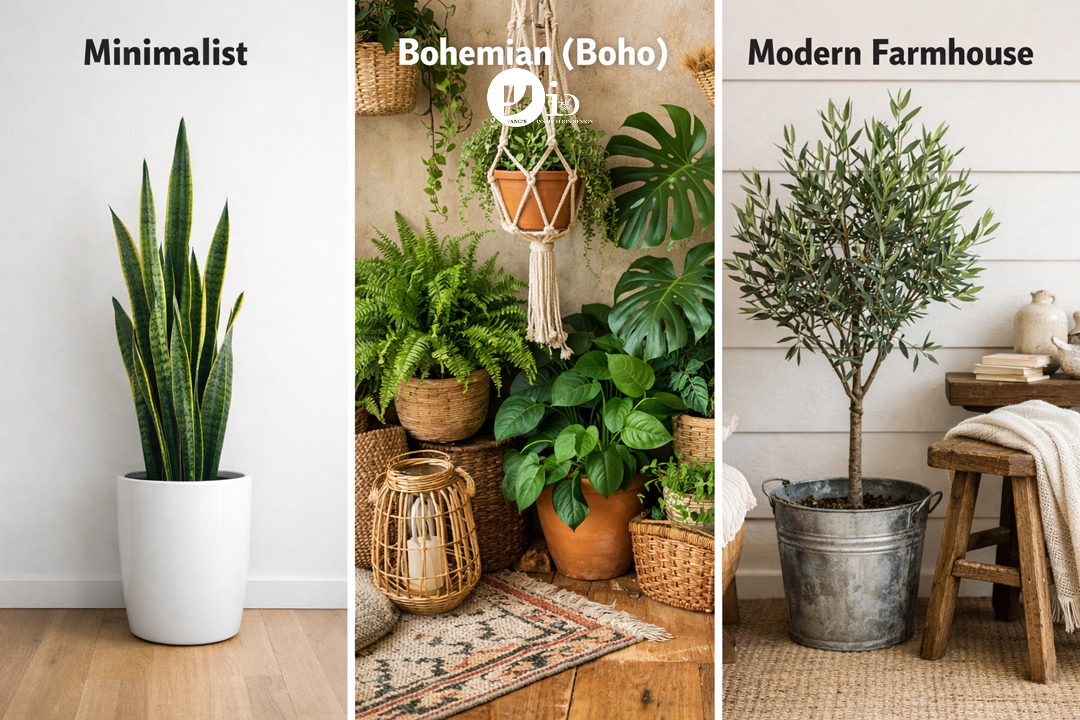
A plant corner shouldn’t feel separate from the rest of your room; it should enhance it. By tailoring your plant and pot choices to your existing decor, you create a cohesive and professionally styled look. This approach moves beyond simply placing plants and into the realm of true interior design.
The Minimalist Corner: Less is More
Minimalism, much like the serene principles of Japanese interior design, is about celebrating simplicity, clean lines, and uncluttered space. For a minimalist corner, the focus is on a single, sculptural statement plant that acts as living art.
- Focus: Quality over quantity. Choose one plant with a strong, interesting shape.
- Good Plant Choices: A tall Snake Plant (Sansevieria trifasciata) for its sharp, vertical lines, or a Fiddle Leaf Fig for its large, architectural leaves.
- Pot Suggestion: The pot is just as important. Opt for a simple, elegant planter in a neutral color like matte white, charcoal grey, or black. The shape should be clean and geometric—a simple cylinder or a tapered square works perfectly.
The Bohemian (Boho) Corner: An Eclectic Jungle
The bohemian style is the opposite of minimalism. It’s warm, eclectic, relaxed, and embraces a “more is more” philosophy. A boho plant corner is a lush, layered collection that feels personal and well-traveled.
- Focus: Create a lush, relaxed, and layered look by mixing many different plants.
- Plant Choices: Combine a variety of types, textures, and sizes. Think a large Bird of Paradise, feathery ferns, patterned Marantas, and lots of trailing Pothos or Philodendrons.
- Pot/Display Suggestions: This style is all about natural textures. Use terracotta pots, patterned ceramics, and woven baskets. Display your plants using macramé hangers, simple wooden stands, or even by placing them on stacks of vintage books.
The Modern Farmhouse Corner: Rustic & Refined
Modern farmhouse blends the cozy, rustic charm of traditional farmhouse style with clean, contemporary lines. It’s comfortable, practical, and effortlessly chic. The plant corner should feel both natural and functional.
- Focus: Combine hardy, classic green plants with rustic and functional containers.
- Good Plant Choices: An Olive Tree (real or high-quality faux) is perfect for this style. A dark-leafed Rubber Plant or a simple, trailing Golden Pothos also fit in beautifully.
- Pot/Stand Suggestions: Think functional and unpretentious. Use containers like galvanized metal buckets, weathered terracotta pots, or simple ceramic planters. Display them on simple wooden benches, three-legged stools, or directly on the floor.
4 Common Corner Plant Arrangement Mistakes to Avoid
Knowing what not to do is just as important as knowing what to do. Avoiding these common pitfalls will save you time, money, and the disappointment of unhealthy plants.
Mistake 1: The Wrong Plant for the Light
This is the most common mistake of all. No matter how beautiful a plant is, if it’s not suited for the light in your corner, it will not survive. This goes back to the foundational Step 1. Placing a sun-loving plant like a cactus in a dark, Low Light corner is a recipe for failure. Always buy the plant for the spot you have, don’t buy the plant and hope for the best.
Mistake 2: Overcrowding the Space
There is a fine line between a lush, intentional cluster and a cramped, messy jumble. While grouping plants is a great technique, they still need adequate room for air to circulate. Overcrowding can block light from reaching lower leaves and create a humid environment that invites pests and fungal diseases. Give each plant a little breathing room.
Mistake 3: The “Soldier” Line-Up
This mistake happens when you arrange multiple plants of the exact same height in a straight line against the wall. This looks unnatural, static, and visually boring. Interior styling is about creating dynamic, engaging compositions. Always remember to vary the heights and depths of your plants to create a more organic and interesting display.
Mistake 4: Forgetting Practicalities
A beautiful corner is useless if you can’t maintain it.
- Watering Access: Can you easily reach all your plants to water them? Pushing a heavy sofa against a plant makes it nearly impossible to care for.
- Floor Protection: Always use saucers or cachepots (a decorative outer pot without drainage) to catch excess water. Make sure your pots have drainage holes to prevent root rot, but never let them drain directly onto your hardwood floors or carpet.
Finishing Touches and Long-Term Care
Once your plants are arranged, a few finishing touches can elevate the look. Proper long-term care will ensure your green corner continues to bring you joy for years to come.
Elevate with Pots and Accessories
The container is a key part of the overall aesthetic.
- Pot Selection: For a cohesive, clean look, use pots of similar colors (e.g., all white or all terracotta) or materials. For a more eclectic, bohemian vibe, feel free to mix and match different patterns, textures, and colors.
- Accessories: Add a layer of decorative pebbles or moss on top of the soil for a polished look. You can also place small personal items like a favorite book, a small piece of art, or a candle among the plants to integrate them further into your home.
Use Lighting to Highlight Your Display
Don’t let your beautiful corner disappear when the sun goes down.
- Spotlight: Use a small, adjustable spotlight or uplight on the floor to aim at a tall statement plant. This creates dramatic shadows and turns the plant into a sculptural feature at night.
- Fairy Lights: For a cozy and magical atmosphere, weave a string of warm, micro-LED fairy lights through the foliage of a larger plant or around the shelves.
How to Care for a Dense Plant Corner
A cluster of plants creates a micro-environment that requires a bit of special attention.
- Watering: Check each plant individually. Just because they are grouped together doesn’t mean they all need water at the same time. A watering can with a long, thin spout is a great tool for reaching plants at the back of the arrangement without disturbing others.
- Pest Control: Pests love to hide in dense foliage and can spread quickly from one plant to another in close quarters. Make it a weekly habit to inspect the leaves, stems, and especially the undersides of leaves for any signs of pests like spider mites or mealybugs.
- Cleaning: Leaves covered in dust can’t photosynthesize efficiently. Gently wipe down the leaves of your plants with a damp cloth every few weeks to keep them clean, glossy, and healthy.
Bring Your Vision to Life with Professional Guidance
Learning how to arrange indoor plants in a corner of a room is a rewarding first step in transforming your space. But what if that corner is part of a bigger vision for your home? Creating a truly cohesive, stylish, and functional space requires an expert eye for scale, flow, and detail. At Yang’s Inspiration Design, our team of experienced interior designers specializes in turning design challenges into stunning features. Whether you’re renovating an HDB flat or styling a new condo, we can help you integrate natural elements seamlessly into a design that reflects your personality and lifestyle.
Don’t let an awkward corner or an unfinished room hold you back. Let’s create a space you love. For a no-obligation, complimentary consultation with our design experts, WhatsApp us today at +65 8855 7575!
Conclusion
Transforming an empty corner with indoor plants is easier than you might think and is one of the most impactful design changes you can make. By starting with the right foundation—assessing your light and measuring your space—you can confidently choose a beautiful mix of plants that will thrive. Remember the key design principles: play with varying heights and layers, group in odd numbers, and select pots and display methods that complement your home’s style. Don’t be afraid to start small with just one or two plants and build your beautiful corner oasis over time. Happy decorating.

January 26, 2026
Yang's Inspiration Insight