



Feeling the pinch of rising utility bills? You’re not alone. Many homeowners are searching for practical energy saving tips at home to lower costs and embrace a more sustainable lifestyle. The good news is that reducing your energy consumption is achievable, and it doesn’t have to be overwhelming or expensive. Many of the most effective changes are simple, low-cost habits you can start today.
This guide is designed to be your definitive action plan. We will provide a comprehensive, prioritized list of over 50 tips, breaking them down by cost, impact, and season. You’ll know exactly where to begin to see the biggest savings on your energy bills, transforming your home into a model of efficiency.
Start Here: How to Prioritize Your Energy-Saving Efforts
Before diving into a long list, it’s crucial to have a strategy. Focusing your efforts on the right areas first will yield the best results with the least amount of effort. This framework helps you decide what to tackle today, this weekend, and for the long term.
The 80/20 of Energy Savings: High-Impact, Low-Cost Wins to Do Today

The Pareto principle applies perfectly to home energy: roughly 80% of your savings will come from 20% of your efforts. By focusing on a few key areas that consume the most power—namely heating, cooling, and water heating—you can make a significant dent in your bills immediately.
Here are the top quick wins you can implement today for maximum impact:
- Adjust Your Thermostat: Simply lowering your thermostat in the winter and raising it in the summer, especially while you’re asleep or away, is the single most effective free action you can take.
- Wash Laundry in Cold Water: About 90% of the energy a washing machine uses is for heating water. Switching to the cold cycle slashes energy use for every load.
- Seal Major Drafts: A quick check around doors and windows for obvious air leaks can reveal major sources of energy loss. A rolled-up towel at the base of a drafty door is a temporary but effective fix.
- Unplug Electronics: Tackle “vampire power” by unplugging chargers and electronics when they aren’t in use.
Behavioral vs. Technical: Free Habits vs. Smart Investments
Energy-saving actions fall into two main categories:
- Behavioral Changes: These are the free habits and routines you can adopt. Think turning off lights, taking shorter showers, or air-drying clothes. They cost nothing but require conscious effort to maintain.
- Technical Upgrades: These are investments in your home’s infrastructure. Examples include installing new energy-efficient appliances, adding insulation, or upgrading to a smart thermostat. These have an upfront cost but provide passive, long-term savings.
This guide will cover both, clearly labeling each tip so you can build a balanced strategy of immediate habits and smart, long-term investments. For homeowners considering a major renovation, integrating these technical upgrades is a key part of modern HDB interior design.
Foundation First: Why a Home Energy Audit is Your Best Long-Term Investment
If you’re serious about maximizing your home’s efficiency, a professional energy audit is the gold standard. Instead of guessing where your home is losing energy, an audit gives you a precise, data-driven roadmap.
An auditor uses specialized tools like a blower door test (which depressurizes your home to find air leaks) and thermal imaging cameras (which reveal gaps in insulation). The benefits are clear: you get a prioritized list of exactly where your energy dollars are escaping. This allows you to invest your money in upgrades that will deliver the greatest return, whether it’s sealing a hidden leak in the attic or replacing a specific inefficient appliance. To find a certified professional, check with local utility providers or energy efficiency organizations.
Heating and Cooling: Taming Your Biggest Energy Bill Contributor
For most homes, heating and cooling account for nearly half of all energy use. Even small adjustments in this category can lead to substantial savings.
Master Your Thermostat (High-Impact, Low-Cost)
Your thermostat is command central for your biggest energy expense. Using it wisely is a critical energy-saving habit.
- Summer Setting: Aim for 78°F (26°C) when you are home.
- Winter Setting: Set it to 68°F (20°C) during the day.
- Quantify Your Savings: According to the U.S. Department of Energy, you can save up to 10% a year on heating and cooling costs by adjusting your thermostat 7°-10°F from its normal setting for 8 hours a day.
- Upgrade to a Smart Thermostat: A programmable thermostat allows you to “set it and forget it.” Even better, a modern smart thermostat learns your household’s patterns and can even use geofencing to adjust the temperature automatically when you leave and return home, maximizing savings without sacrificing comfort.
Seal the Deal: A Weekend Guide to Eliminating Air Leaks (Low-Cost)
Air leaks are like leaving a window open all year round. Sealing them is one of the most cost-effective energy saving tips at home.
- The Incense Stick Test: On a cool, breezy day, close all windows and doors and turn off your fans. Light an incense stick and hold it near common leak points. If the smoke blows horizontally, you’ve found a draft.
- Common Leaky Areas Checklist:
- Around window and door frames
- Electrical outlets and switch plates on exterior walls
- Where plumbing and wiring enter the house from outside
- Mail slots
- Baseboards
- The Right Tools: Use caulk for cracks and gaps in stationary components like window frames. Use weatherstripping for moving parts like doors and window sashes. These simple materials pay for themselves in energy savings within a year.
Maintain Your HVAC System for Peak Efficiency (Low-Cost)
Your Heating, Ventilation, and Air Conditioning (HVAC) system is like a car—it needs regular maintenance to run efficiently.
- Change Air Filters: A clogged filter makes your system work harder, consuming more energy. Check your filter monthly and change it at least every 3 months.
- Get an Annual Tune-Up: A professional tune-up ensures all parts are clean, lubricated, and working correctly, which can improve efficiency by up to 15%. This is a crucial step before the peak of summer or winter.
- Keep Vents Clear: Make sure furniture, rugs, and drapes are not blocking your supply and return vents. Free airflow is essential for your system to operate efficiently.
Seasonal Strategies: Smart Tips for Winter and Summer
Use your home’s natural features to your advantage.
- Winter: During the day, open curtains on your south-facing windows to let in warming sunlight. At night, close them to act as a layer of insulation and trap heat inside.
- Summer: Do the opposite. Close curtains and blinds during the day to block solar heat gain, especially on east- and west-facing windows. Use ceiling fans to create a wind-chill effect, which allows you to set your thermostat a few degrees higher. Ensure your fan is rotating counter-clockwise in the summer to push cool air down.
Water Heating: Reducing the Cost of Comfort
Water heating is typically the second-largest energy expense in a home. These tips can help you reduce consumption without resorting to cold showers.
Turn Down the Temperature (High-Impact, Free)
Most water heaters are set to 140°F (60°C) by default, which is hotter than necessary for most households.
- Recommended Setting: Adjust the thermostat on your water heater to 120°F (49°C).
- Quantify Your Savings: For every 10°F reduction in temperature, you can save up to 5% on water heating costs. Lowering from 140°F to 120°F can save you up to 10%.
- Safety First: This lower temperature also reduces the risk of scalding, a particularly important benefit for homes with children or elderly residents.
Insulate Your Water Heater and Pipes (Low-Cost Investment)
If your water heater tank is warm to the touch, it’s losing heat to the surrounding air.
- Water Heater Blanket: For older electric tank models, an insulating blanket is an inexpensive and easy-to-install upgrade that can reduce standby heat loss by 25%-45%.
- Pipe Insulation: Use pre-slit foam pipe sleeves to insulate the first few feet of the hot and cold water pipes connected to your water heater. This reduces heat loss as water travels from the tank.
Use Less Hot Water: Simple Daily Habits (Free)
The cheapest way to save on water heating is simply to use less hot water.
- Take Shorter Showers: A 10-minute shower can use over 20 gallons of hot water. Cutting that time in half makes a huge difference.
- Wash Laundry in Cold Water: As mentioned earlier, this is a top-tier energy saver. Modern detergents are designed to be effective in cold water.
- Fix Leaks Immediately: A single faucet dripping hot water at one drip per second can waste over 3,000 gallons per year—enough for 180 showers! This is a simple fix that is often part of a standard toilet & bathroom renovation.
- Install Low-Flow Fixtures: When you do renovate, choose WaterSense-labeled faucets and showerheads, which can reduce hot water use by 30% or more without sacrificing performance.
Appliances & Electronics: Conquering “Vampire Power” and Inefficiency
Many devices continue to draw power even when they’re turned off. This “vampire power” can account for up to 10% of your electricity bill.
Slay Vampire Power Loads (High-Impact, Free/Low-Cost)
“Vampire” or “phantom” power is the energy drawn by electronics in standby mode.
- Common Culprits: TVs, game consoles, computers, cable boxes, and device chargers are notorious offenders.
- Solution 1 (Free): Unplug them. Get in the habit of unplugging devices or entire entertainment centers when not in use.
- Solution 2 (Low-Cost): Use smart power strips. These can be set to automatically turn off power to devices when they are in standby mode or on a schedule.
Optimize Your Kitchen and Laundry Routines (Free)
Simple changes in how you use your large appliances can add up.
- Laundry: Always wash full loads to make the most of the energy and water used. Whenever possible, air-dry your clothes on a line or rack. Always clean the lint trap in your dryer after every use to improve air circulation and efficiency.
- Dishwasher: Only run the dishwasher when it’s completely full. Use the air-dry setting instead of the heat-dry cycle to save significant energy.
- Refrigerator/Freezer: The ideal temperatures are 37°F (3°C) for the fridge and 0°F (-18°C) for the freezer. Check your door seals by closing the door on a piece of paper; if you can pull it out easily, the seal needs replacing. A full fridge runs more efficiently than an empty one, so keep it well-stocked (but not so overstuffed that it blocks airflow). A thoughtful hdb kitchen design can help optimize the placement and efficiency of these appliances.
Smart Cooking Habits
Your oven is a major energy user. Cook smarter to save.
- Use Smaller Appliances: A microwave, slow cooker, or air fryer uses significantly less energy than a full-sized oven for cooking or reheating smaller meals.
- Stovetop Efficiency: Match the size of the pot to the size of the burner. A small pot on a large burner wastes a lot of heat. Always use lids to trap heat and cook food faster.
Upgrade Wisely: The Value of an ENERGY STAR® Label (Investment)
When it’s time to replace an appliance, make energy efficiency a top priority.
- What it Means: The ENERGY STAR® label is a government-backed symbol for energy efficiency. Products with this label have been independently certified to save energy without sacrificing features or performance.
- Compelling Stat: An ENERGY STAR certified refrigerator is about 9% more energy-efficient than a model that only meets the minimum federal standard. If you replace an old fridge from the 1990s, you could save over $100 per year.
Lighting: Bright Ideas for Big Savings
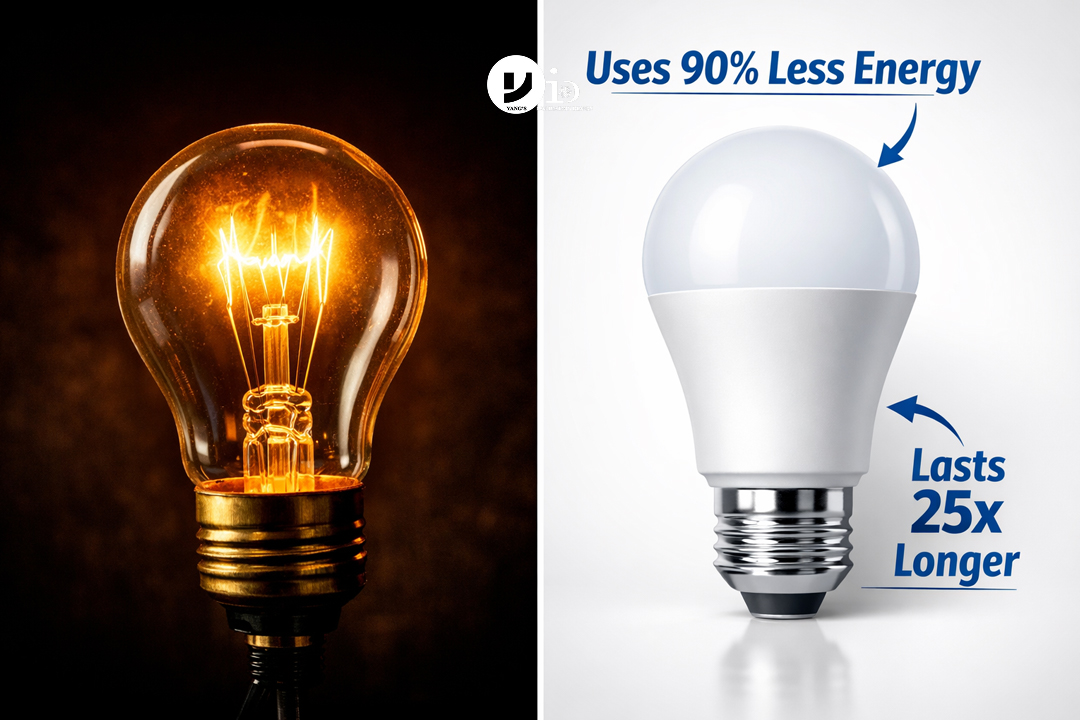
Lighting accounts for about 15% of an average home’s electricity use. Fortunately, this is one of the easiest areas to achieve quick savings.
The #1 Tip: Switch to LED Bulbs (Low-Cost Investment)
If you do only one thing to save on lighting, make it this.
- Quantify Your Savings: Light-Emitting Diodes (LEDs) use up to 90% less energy and last 25 times longer than traditional incandescent bulbs. Replacing your five most-used bulbs with LEDs can save you around $75 a year.
- Lumens, Not Watts: When choosing bulbs, look at lumens to determine brightness, not watts. Watts measure energy use. A 60-watt equivalent LED bulb might use only 8-10 watts while producing the same amount of light (around 800 lumens). This is a key part of any modern smart interior lighting plan.
Automate and Dim Your Lights (Low-Cost Investment)
Control is key to saving lighting energy.
- Dimmer Switches: Installing dimmer switches allows you to adjust lighting to the perfect level, which saves energy and extends the life of your bulbs. It’s a great way to improve the ambiance in your living room design.
- Timers and Sensors: Use timers for outdoor lighting so it’s only on when needed. Install motion sensors in high-traffic areas like hallways, laundry rooms, and garages to ensure lights are never left on by mistake.
Maximize Natural Light (Free)
The best light is free. Make the most of it.
- Clean Windows: It’s simple, but clean windows can let in significantly more light than dirty ones.
- Light-Colored Walls: Lighter paint colors reflect more ambient light, making a room feel brighter and reducing the need for artificial lighting.
- Strategic Mirrors: Placing mirrors opposite windows is a classic interior design trick to bounce natural light deeper into a room.
The Future is Now: Automating Savings with Smart Home Technology
Smart home technology has moved from a novelty to a powerful tool for home energy management. These devices offer convenience and automate many of the best energy-saving habits, ensuring you save money without even thinking about it. Integrating these features from the start is becoming a core component of modern interior design.
Smart Thermostats: Beyond the Schedule
While programmable thermostats were a great first step, smart thermostats are in a different league. They go far beyond a simple schedule by actively learning your preferences and routines to optimize your heating and cooling.
- Learning Algorithms: Devices like the Nest Learning Thermostat track when you make manual adjustments and build a profile of your comfort preferences, creating a schedule that perfectly matches your lifestyle.
- Geofencing: Smart thermostats connect to your smartphone and use its location to know when you’re home or away. It can automatically set the temperature to an energy-saving level when the last person leaves and begin returning to your preferred comfort setting as you head home.
- Utility Demand-Response: Many utility companies offer programs that connect to your smart thermostat. During peak energy demand (like a hot summer afternoon), the utility can make tiny, brief adjustments to your temperature setting to reduce strain on the grid, often rewarding you with a credit on your bill.
Smart Plugs and Power Strips: The Ultimate Vampire Slayers
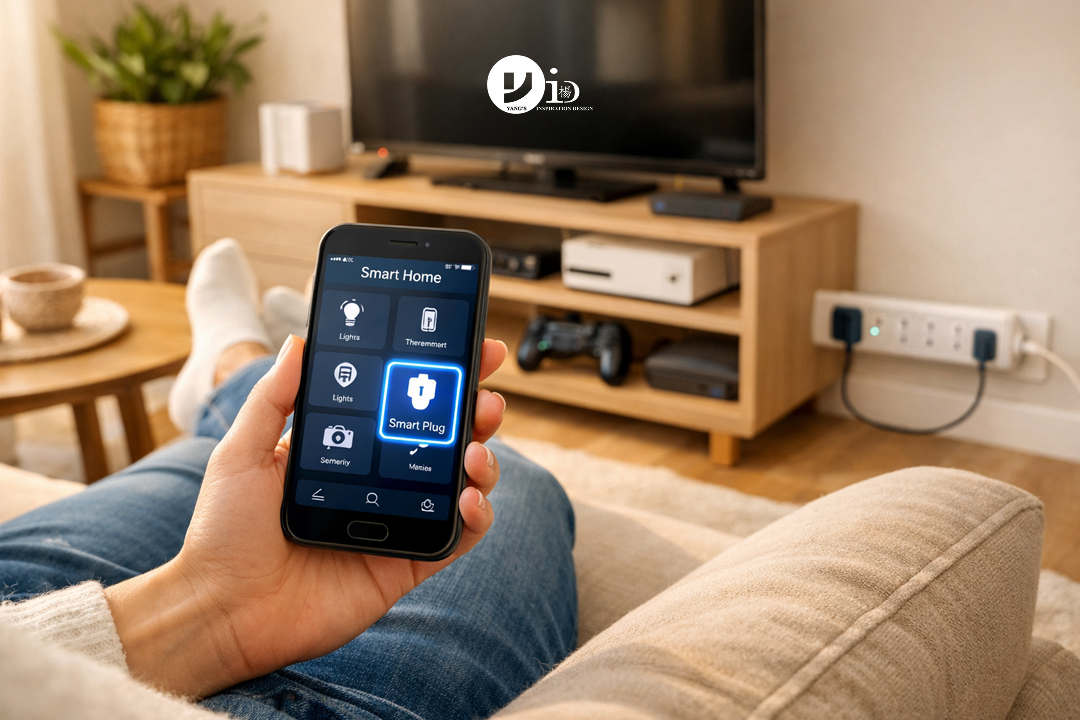
Smart plugs and power strips are the most effective weapons against phantom power loads. They give you remote and automated control over any device you plug into them.
- Scheduled Shutdowns: You can create schedules to automatically cut power to entire entertainment centers overnight, ensuring your TV, game console, and speakers aren’t drawing standby power while you sleep.
- Remote Control: Did you leave a fan or a lamp on after leaving the house? A quick tap in an app can turn it off from anywhere.
- Grouped Appliances: You can group several smart plugs to control multiple devices at once. For instance, create a “Kitchen Off” scene that turns off the coffee maker, toaster, and air fryer with a single command or on a set schedule.
Smart Lighting: Efficiency Meets Convenience
Smart lighting, typically using smart LED bulbs or smart switches, combines the ultimate efficiency of LEDs with powerful automation.
- Advanced Scheduling: You can schedule lights to turn on and off based on the time of day, sunrise/sunset, or whether you are home. This is perfect for security and ensuring lights are never left on unnecessarily.
- Effortless Dimming: Most smart bulbs are dimmable through an app, allowing you to set the perfect brightness for any activity—from bright light for reading to a warm, low light for watching a movie—all of which saves energy.
- Scene Setting: Create lighting “scenes” that adjust multiple lights to pre-set levels of brightness and even color temperature with a single tap. For instance, a “Movie Night” scene could dim the main lights and turn on a soft accent lamp.
Conclusion: Your Action Plan for a More Energy-Efficient Home
Adopting these energy saving tips at home is a powerful way to take control of your monthly bills and reduce your environmental footprint. As we’ve seen, the journey starts with simple, high-impact changes. The most effective strategies focus on the biggest consumers first: heating and cooling, followed by water heating. Easy first steps like adjusting your thermostat, switching to LED bulbs, and unplugging unused electronics can yield immediate results with little to no cost.
From there, you can layer in low-cost weekend projects like sealing air leaks and performing routine appliance maintenance. For those planning a renovation, integrating technical upgrades like high-efficiency appliances, better insulation, and smart home technology is the key to unlocking maximum long-term savings. This is where partnering with a professional team becomes invaluable.
At Yang’s Inspiration Design, we believe that great design is both beautiful and intelligent. As a trusted interior design firm in Singapore, we integrate the latest in energy-efficient solutions and smart home technology into our renovation projects. We can help you choose the right materials, appliances, and layouts to create a home that is not only stylish but also exceptionally efficient. Our comprehensive, in-house approach—from design to carpentry and electrical work—ensures these energy-saving features are implemented flawlessly.
Ready to transform your home into a beacon of modern, sustainable living? Contact our expert design team for a free consultation via WhatsApp at +65 8855 7575 and let’s build a smarter, more efficient home together.

January 21, 2026
Yang's Inspiration Insight