



A 3 room HDB renovation in Singapore sits at a unique intersection of constraint and opportunity. With limited square footage, tighter budgets compared to larger flats, and increasing expectations for modern living, homeowners are often balancing practicality with lifestyle aspirations.
Unlike larger units where space can compensate for planning inefficiencies, a 3 room BTO or resale flat demands deliberate design decisions. Every built-in, partition, and material choice carries both spatial and financial implications.
This is why renovation cost alone is not the most useful starting point. The real clarity comes from understanding what drives the cost, how scope evolves, and where strategic planning can optimise both functionality and long-term value.
Understanding the True Scope of a 3 Room HDB Renovation
Before discussing numbers, it is critical to define what “renovation scope” actually means in a 3 room HDB context.
A standard renovation typically spans four core areas: spatial layout adjustments, carpentry works, wet works (kitchen and bathrooms), and finishes such as flooring, lighting, and painting.
However, in Singapore, layout decisions often determine whether a renovation remains straightforward or becomes structurally complex. For example, hacking walls to create an open-concept living area may seem minor, but it triggers regulatory compliance, reinstatement considerations, and additional finishing work.
This is where having a clear grasp of understanding 3 room HDB interior design fundamentals becomes essential. It allows homeowners to distinguish between cosmetic upgrades and structural interventions that significantly affect cost and timeline.
In practice, most 3 room HDB renovations fall into three tiers:
- Basic refresh: Surface finishes, minimal carpentry
- Functional upgrade: Kitchen overhaul, built-in storage, lighting redesign
- Full transformation: Layout reconfiguration, custom carpentry, integrated systems
The key insight here is that scope is not linear. A small design decision, such as converting a bedroom into a study, can cascade into electrical, carpentry, and lighting adjustments.
Cost Drivers, Where Budget Is Actually Allocated
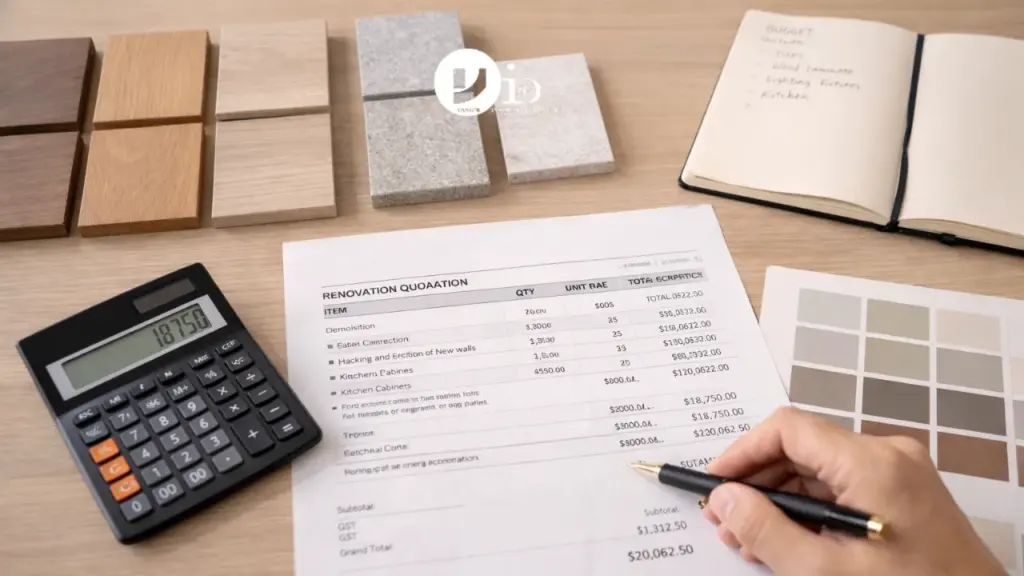
In Singapore’s renovation landscape, cost is less about square footage and more about complexity and customisation.
For 3 room HDB units, the largest cost components typically include:
Carpentry and Storage Integration
Built-in wardrobes, TV consoles, and kitchen cabinets often take up a significant portion of the budget. The decision between modular and bespoke solutions plays a crucial role.
Homeowners exploring choosing between custom and ready made furniture will quickly realise that while custom carpentry offers seamless integration, it increases both cost and lead time.
Space Optimisation Strategy
Smaller homes demand smarter layouts. This is where thoughtful planning outweighs excessive spending.
Approaches such as designing a multifunctional space for compact homes, for example, combining a study with a guest room, can reduce the need for additional built-ins while improving usability.
Material and Finish Selection
Flooring, laminates, and countertops vary widely in cost. In many cases, visual impact can be achieved through selective material upgrades rather than full-home premium finishes.
Electrical and Lighting Systems
Modern homeowners increasingly invest in layered lighting. While often underestimated, this component contributes meaningfully to both cost and overall spatial perception.
The broader takeaway is this:
A “budget” renovation is not defined by how little you spend, but by how efficiently each dollar contributes to functionality and longevity.
Balancing Aesthetics and Practicality in 3 Room Design
Design direction is where many homeowners either overspend or under-plan.
There is a growing demand for cosy 3 room BTO designed for sleek functionality, often influenced by minimalist, Scandinavian, or Japandi aesthetics. While visually appealing, these styles require disciplined execution to avoid clutter and maintain usability.
Exploring practical 3 room BTO interior design ideas reveals a consistent pattern: successful homes prioritise spatial clarity over decorative layering.
In Singapore’s context, this means:
- Avoiding excessive feature walls that reduce usable space
- Using light colour palettes to enhance perceived openness
- Integrating storage within architectural elements
Aesthetic decisions also directly influence cost. For instance, curved carpentry, fluted panels, or concealed doors introduce craftsmanship complexity, which increases both material and labour costs.
The most effective designs are not necessarily the most visually complex. Instead, they are the ones where design language aligns with lifestyle needs and maintenance expectations.
Kitchen and Bathroom, The Core Investment Zones
In almost every 3 room HDB renovation, the kitchen and bathrooms account for a substantial portion of the total budget.
Kitchen Renovation Scope
Compact kitchens require precision planning. Layout efficiency, workflow, and storage capacity must be resolved within limited space.
Applying optimising small kitchen renovation strategies helps ensure that every cabinet and countertop serves a functional purpose. Choices such as L-shaped versus galley layouts are not just aesthetic, they determine usability.
Cost considerations typically include:
- Cabinetry and internal fittings
- Countertop material
- Backsplash and tiling
- Appliances integration
Bathroom Renovation Scope
Bathrooms involve waterproofing, tiling, sanitary fittings, and plumbing, making them inherently cost-sensitive.
A structured approach, such as structuring a bathroom renovation budget, helps homeowners anticipate hidden costs like waterproofing reinstatement or fixture upgrades.
In Singapore, compliance with HDB guidelines further adds constraints, particularly for older resale units where existing conditions may require additional rectification work.
The key insight:
Kitchen and bathroom upgrades should be prioritised not just for aesthetics, but for durability and long-term maintenance efficiency.
Why Planning Sequence Matters More Than Budget Size
One of the most overlooked aspects of a 3 room HDB renovation is sequencing.
Many homeowners approach renovation by allocating a budget first, then fitting design decisions within it. However, this often leads to reactive compromises.
A more effective approach is:
- Define lifestyle priorities (storage, openness, flexibility)
- Establish spatial strategy (layout, multifunctionality)
- Align design language (minimalist, contemporary, etc.)
- Then allocate budget accordingly
This sequence ensures that spending is aligned with actual needs rather than surface-level inspiration.
In smaller homes, especially, poor sequencing can result in underutilised spaces, excessive carpentry, or conflicting design elements that reduce long-term usability.
A 3 room HDB renovation in Singapore is not simply a scaled-down version of larger home projects. It requires a fundamentally different planning mindset, one that prioritises efficiency, integration, and clarity.
Cost is an important consideration, but it is ultimately shaped by decisions around layout, carpentry, and material selection. More importantly, the success of the renovation depends on how well these elements are aligned with the homeowner’s lifestyle.
When approached strategically, even a compact 3 room flat can achieve a balance of functionality, comfort, and refined aesthetics.
For homeowners seeking clarity in structuring their renovation scope and cost expectations, a more guided approach often leads to better long-term outcomes. Exploring how a tailored residential design strategy can align layout, budget, and lifestyle priorities offers a more grounded starting point for decision-making.
You may consider reviewing how a thoughtfully planned residential interior design approach in Singapore can support this process from concept to execution.

March 20, 2026
Yang's Inspiration Insight