


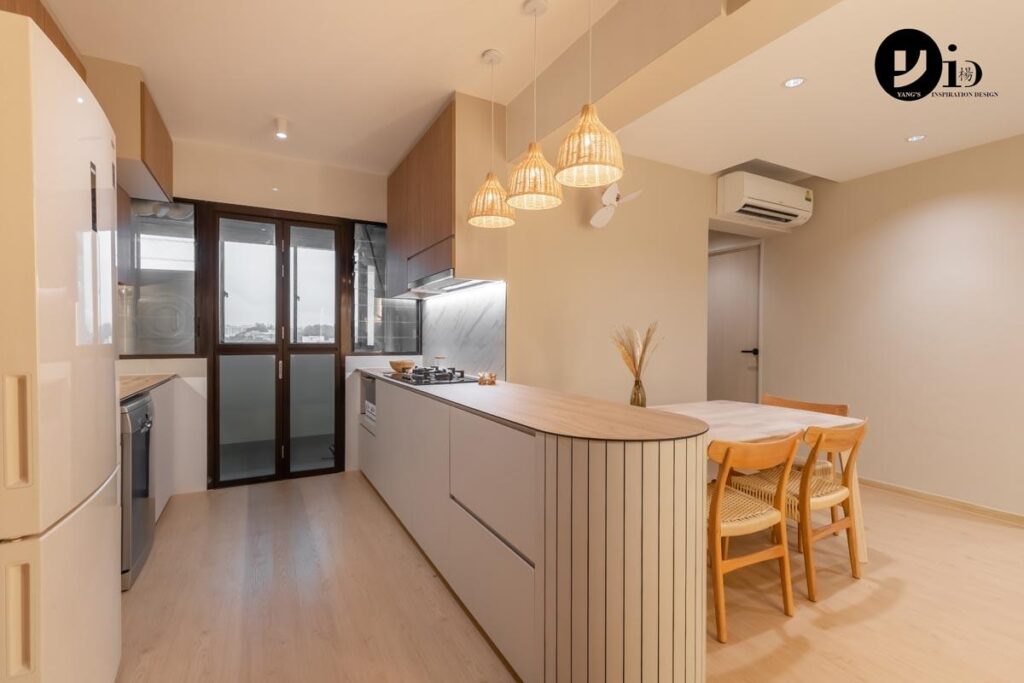
Planning a small kitchen renovation? Discover 12 expert interior design tips to maximize storage, reduce visual clutter, and create an illusion of space. Get the most from your reno. Don’t let a tiny kitchen stop you. Our 12 small kitchen renovation strategies cover smart storage, lighting, and layout hacks to make your space feel open, airy, and functional.
Small Kitchen Renovation: 12 Expert Tricks to Make Your Space Feel Bigger
A small kitchen can feel like a daily frustration. Limited counter space, a lack of storage, and a cramped workflow can make cooking feel more like a chore than a pleasure. You might feel stuck, thinking your kitchen’s small footprint is a problem without a solution.
But it doesn’t have to be that way. A strategic small kitchen renovation isn’t about finding more square footage—it’s about making every single inch work smarter. With the right design principles, you can transform a compact area into a space that is functional, beautiful, and feels surprisingly open.
We’ve compiled our 12 best interior design tips for maximizing storage, reducing visual clutter, and creating powerful illusions of space.
1. Stick to a Minimal, Low-Contrast Palette

The first rule of small kitchen design is to control visual clutter. This starts with streamlining your colour, pattern, and material palette so they aren’t competing for attention.
We recommend sticking to a single colour for your cabinetry. A powerful technique is to match your backsplash material to your countertop. This continuity reduces “visual breaks,” tricking the eye into seeing a larger, more seamless area. To further this illusion, opt for a low-contrast colour scheme, ensuring all the surfaces in your kitchen have very little colour difference.
2. Make Every Cabinet Work Harder

Your cabinets are your primary weapon in the fight for space. Planning their layout and organization before the renovation is key to maximizing kitchen storage. You’ll want a smart mix of drawers (great for flatware and pots) and standard cupboards (for bulky appliances).
The true secret, however, lies in inner cabinet organizers. We’re talking about:
- Pull-down racks for upper cabinets, bringing high-up items down to you.
- Pull-out pantry drawers so you can see everything at a glance.
- Blind corner units that reclaim the “dead space” in corner cabinets.
Smaller additions like spice racks on cabinet doors, drawer dividers, and internal shelving also help you utilize every last bit of space.
3. Soften Exposed Edges with Curves

This is a subtle but highly effective interior design tip for kitchens with exposed countertop edges, especially in high-traffic areas. Instead of a standard sharp edge, consider a curved one.
Beyond adding a unique element of interest, it dramatically eases the traffic flow. This makes moving in and out of the kitchen safer and feel less restrictive, which is crucial if two or more people are often using the space at once.
4. Design Solutions to Keep Counters Clutter-Free
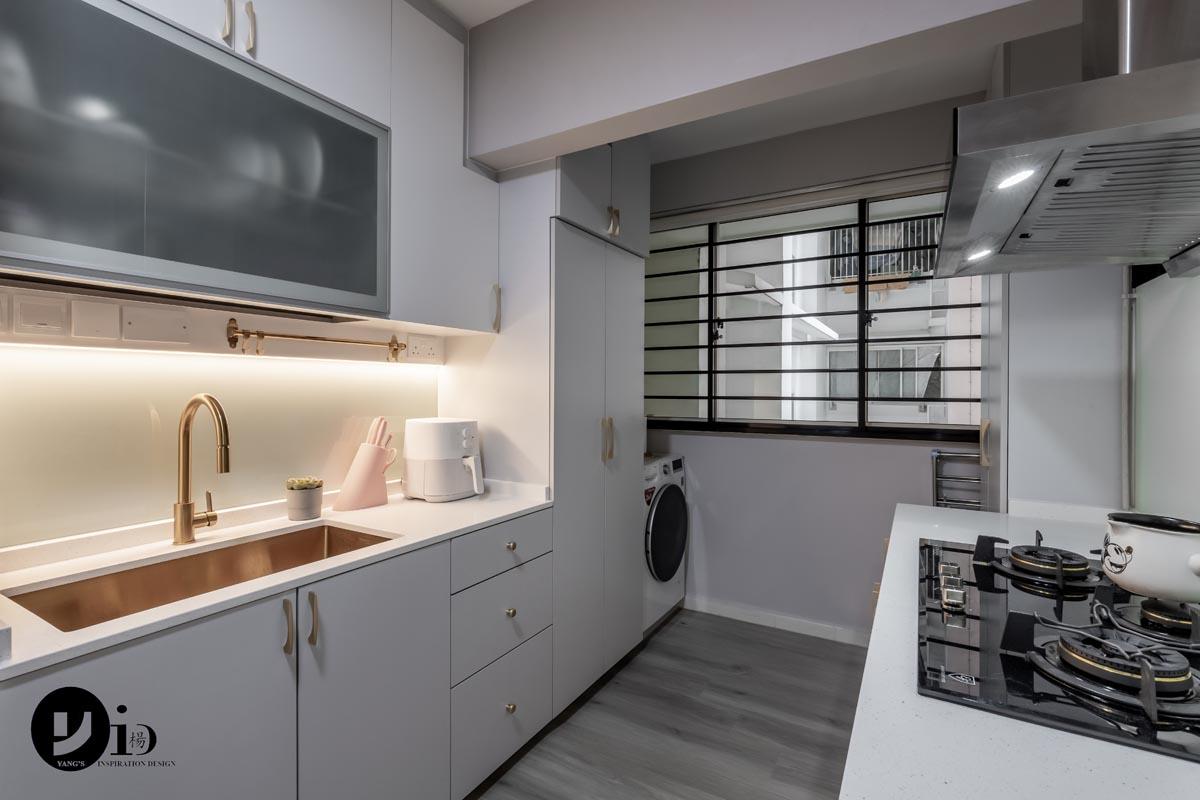
As we’ve established, clutter is the number one enemy of a small kitchen. The most common culprit? The countertop. While the goal is to squirrel everything away, some items need to be accessible. Use vertical space with solutions like hanging rails for frequently used utensils.
Appliances are trickier. Lugging a heavy mixer in and out of a cupboard is impractical. The solution? An appliance garage. This is a dedicated nook on the countertop (or built into a cabinet) where small appliances live. Conceal them behind pocket doors or bi-fold doors that don’t eat up clearance space when opened. Pro tip: install electrical outlets inside so you can use the appliances in place.
5. Open Up the View with Glass Panels

While an open-concept kitchen is a great option for small spaces, it’s not for everyone—especially those who do a lot of heavy, Asian-style cooking. If you prefer a closed kitchen, enclose it with glass panels instead of solid walls.
This decision floods the kitchen with light (more light = illusion of more space) and allows visual access, making the kitchen feel like an extension of the home rather than a tiny, separate box.
6. Use Layered Lighting to Create Depth

In interior design, lighting is a powerful tool for making a small space look bigger. Proper, layered lighting can visually “stretch” your kitchen.
- Main Lighting: Use recessed or concealed lights that don’t take up visual space (unlike bulky pendants).
- Task Lighting: Under-cabinet lighting is non-negotiable in a small kitchen. It illuminates your prep zones and eliminates shadows, which expands the perception of space.
- Accent Lighting: Installing hidden LED strips at the toe-kick (the base of your lower cabinets) makes them appear to “float,” lending the kitchen a lighter, airier feel.
7. Think Beyond the Conventional Kitchen Confines

Who says your kitchen has to stop at the designated lines on your floor plan? If your home’s layout permits, expand your kitchen’s function beyond its standard boundaries.
You don’t always have to re-run plumbing. Consider creating a “dry kitchen” or baking corner just outside the main kitchen area. Or, go open-concept and install a seating-in island or peninsula that bleeds into the dining or living space, effectively doubling your kitchen’s functional footprint.
8. Swap Some Upper Cabinets for Open Shelving

Reducing visual bulk is key. Replacing a few heavy upper cabinets with sleek wall shelves can make a small kitchen feel instantly more open and airy.
There are caveats, of course: shelves store less and can look messy if not properly curated. In a kitchen with heavy cooking, grime can also be an issue. We suggest using them in a small section away from the cooking zone. A bonus tip? Store your everyday items (glasses, bowls) on them, so they get used and washed before they have time to collect dust.
9. Opt for Built-in Appliances for a Seamless Look

Built-in appliances (like an integrated oven or refrigerator) are a hallmark of high-end design. They also make a kitchen look sleeker and more streamlined. A neater, more integrated kitchen tricks the eye into thinking it’s bigger.
If a full suite of built-in appliances breaks the budget, get the “built-in look” for less: have your interior designer custom-build cabinetry to fit the exact dimensions of your freestanding appliances. The result is a seamless finish without the premium price tag.
10. Minimize Hardware (or Go Handle-less)
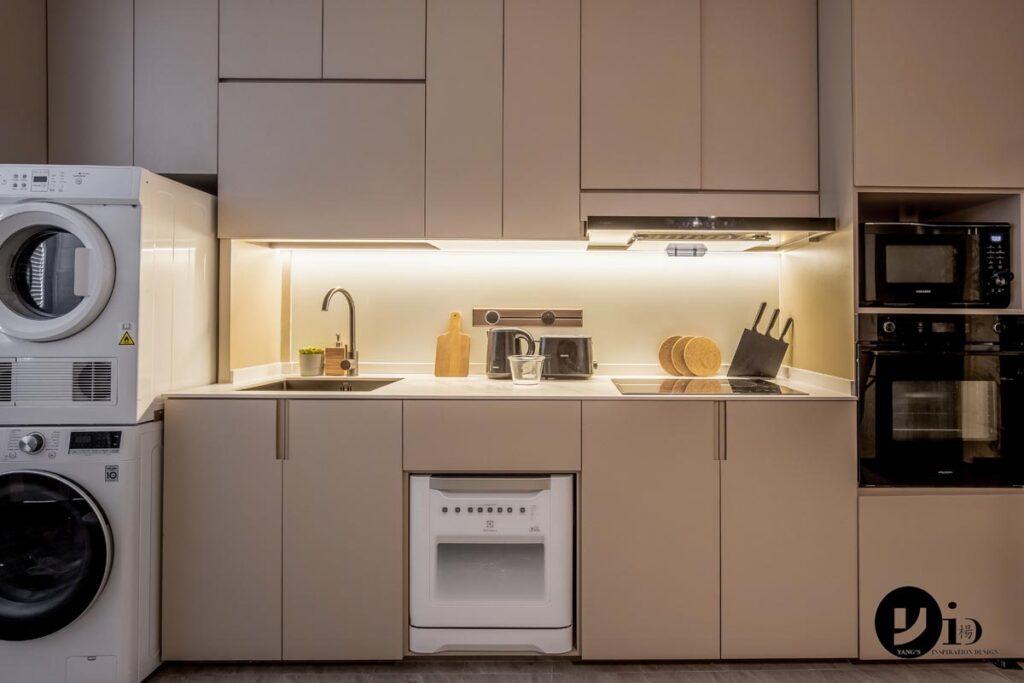
Hardware—knobs and pulls—are often called the “jewelry” of the kitchen. But in a small, tight space, they can get in the way, snag clothing, and add to the visual clutter.
For a small kitchen renovation, we love sleek, flat-front cabinets with no handles at all. If you live with elderly folks who need a firmer grip, opt for integrated cabinet pulls, which are grooved into the door itself for a clean, minimalist profile.
11. Incorporate Mirrored or Polished Surfaces

This is an old-school trick for a reason: it works. Mirrors bounce light around, increase the perception of depth, and are undeniably stylish. Use them for a backsplash, on upper cabinet doors, or on a pantry door.
If a full mirror isn’t your style, use glossy or polished surfaces to achieve a similar, light-reflecting effect. Choose large surface areas like high-gloss cabinets, a polished stone countertop, or a shiny backsplash to get the most impact.
12. Choose a One-Piece Backsplash

Our final tip? Get a one-piece backsplash. This trend is fantastic for small kitchens not only because it’s easy to clean, but because it eliminates grout lines.
Remember the principle: no grout lines = less visual clutter = a more seamless look. This creates a clean, unbroken visual plane that helps the kitchen feel larger. You can achieve this with large-format tiles, or engineered materials like quartz or sintered stone.
Conclusion: Your Small Kitchen Has Big Potential
A small kitchen renovation isn’t about compromise; it’s about smart, strategic design. As these 12 tips show, any space, regardless of its size, can be transformed into one that is both highly functional and aesthetically beautiful. The key lies in a holistic approach that combines clever storage, the right materials, and the power of light and illusion.
These tips provide a powerful framework for your renovation. However, integrating them perfectly to fit your unique layout, lifestyle, and budget is where true expertise makes all the difference. The team at Yang’s Inspiration Design specializes in turning compact, challenging kitchens into stunning, functional masterpieces. If you’re ready to unlock the full potential of your space, let our design experts show you what’s possible.
If you are keen to get more personalised insights for your home renovation or kitchen renovation, you can always reach out to us through Facebook/Instagram, send us an enquiry here or WhatsApp us at 8855 7575.


February 10, 2023
Yang's Inspiration Insight