


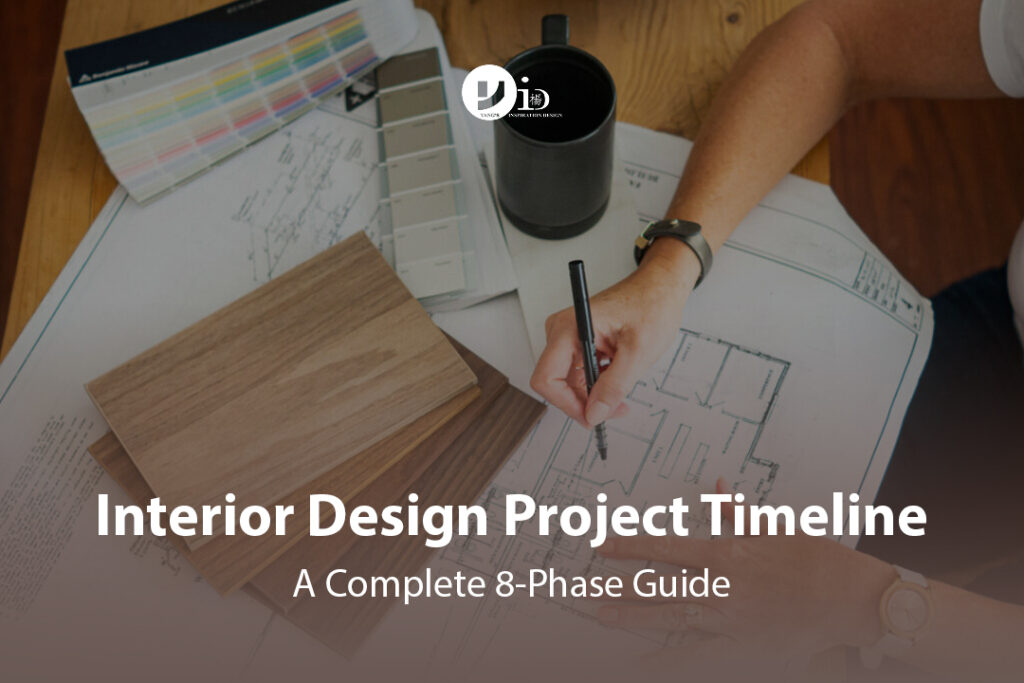
One of the very first questions on any homeowner’s mind is, “How long will my interior design project take?” An interior design project timeline is the structured, phase-by-phase roadmap that guides your renovation from the first idea to the final handover. If you’re feeling overwhelmed by the complexity, you’re not alone. Timelines can seem confusing and vary dramatically depending on the project’s scale and scope of work.
This definitive guide is here to bring clarity. We will break down the entire design and renovation process into 8 clear, manageable phases. Whether you’re planning a simple HDB room refresh, a major condominium overhaul, or a full landed property new build in Singapore, this article provides the realistic time estimates you need to plan with confidence.
At a Glance: Typical Interior Design Project Timelines
Before we dive into the details, here is a quick overview of what you can expect. Keep in mind these are estimates, and the specific duration of your project will depend on its unique requirements.
- Single Room Refresh (No Construction): 2 – 4 months
- Single Room Renovation (e.g., Kitchen/Bath): 6 – 9 months
- Full Home Furnishing (No Renovation): 6 – 12 months
- Large-Scale Renovation / Full Home Remodel: 1 – 2 years
- New Home Construction: 1.5 – 3 years
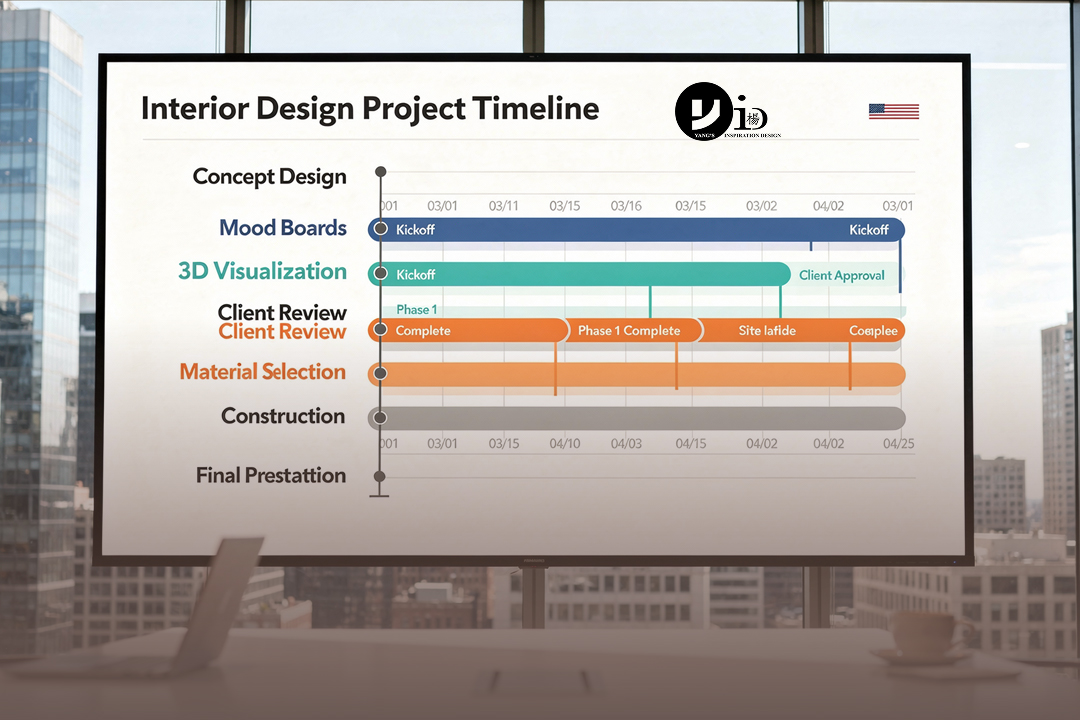
The 8 Essential Phases of an Interior Design Project Timeline
Every successful renovation follows a structured path. While it may seem like a lot of steps, this process ensures that every detail is accounted for, from the big picture down to the final screw. Understanding this workflow is the key to demystifying your renovation journey and setting realistic expectations from the start.
Phase 1: Initial Consultation & Defining the Scope (1-4 Weeks)
This is the foundational step where your vision begins to take shape. It’s all about alignment and ensuring both you and your design team are on the same page.
- Key Activities: The process kicks off with a first meeting, either virtually or in person, followed by a site visit. Here, your designer will seek to deeply understand your lifestyle, aesthetic preferences, and functional needs. You’ll discuss your goals, budget, and priorities. The designer will take detailed measurements and photographs of the space to use for planning.
- Deliverable: A comprehensive design brief and a detailed scope of work document.
- Why it’s crucial: This step is the bedrock of your entire project. It aligns expectations, defines the project’s boundaries, and prevents costly misunderstandings down the line.
Phase 2: Concept Development & Space Planning (2-8 Weeks)
With the design brief as a guide, the creative work begins. This is where your designer translates your ideas into a tangible design direction.
- Key Activities: Your designer will create mood boards with inspirational images, colour palettes, and material ideas to establish the overall look and feel. They will also develop preliminary floor plans and 2D layouts to optimize the flow and functionality of the space.
- Deliverable: A visual concept presentation, mood boards, and basic 2D layouts.
- Client’s Role: Your feedback is vital here. This is your opportunity to confirm that the overall aesthetic direction and spatial arrangement match your vision before the team dives into the finer details.

Phase 3: Detailed Design & Material Selection (4-8 Weeks)
Once the concept is approved, the team refines every element. This phase involves making all the specific decisions that will bring the design to life.
- Key Activities: This is where you finalize the exact materials, finishes, furniture, lighting fixtures, custom carpentry, and fittings. Your designer will create detailed technical drawings, elevations, and often 3D renderings to help you visualize the final outcome with photorealistic accuracy.
- Deliverable: Finalized design plans, material samples for your approval, detailed specifications, and 3D visuals.
- Note on revisions: This phase can be extended if multiple rounds of revisions are needed. Clear and decisive feedback helps keep the project on track.
Phase 4: Permitting & Contractor Bidding (4-8+ Weeks)
This is a crucial administrative phase, especially for projects involving structural or significant layout changes.
- Key Activities: Your design firm prepares all necessary construction documents for contractors. If required by Singapore’s regulations (e.g., for HDB or properties requiring BCA approval), these plans are submitted to the local authorities for permits.
- Deliverable: Approved building permits and a selected and confirmed contractor or builder.
- Why this varies: Permit approval times are entirely controlled by the municipality and can be unpredictable. Working with an experienced, licensed firm like Yang’s Inspiration Design, which holds both HDB and BCA licenses, can help streamline this process significantly.
Phase 5: Procurement & Ordering (4 Weeks – 4+ Months)
This phase runs concurrently with others but is often the source of the longest waits in the entire interior design project timeline.
- Key Activities: Once the design is finalized, your designer will place orders for all specified items: furniture, lighting, tiles, flooring, fabrics, and any custom-built pieces.
- Deliverable: Order confirmations and a system for tracking delivery timelines.
- Lead Times Alert: This phase can cause the biggest delays due to manufacturing and shipping. Be realistic: custom cabinetry and carpentry can take 6-12 weeks, while high-end imported furniture from Europe or North America can have lead times of 16-20+ weeks.
Phase 6: Construction & Renovation (Several Weeks – 6+ Months)
This is where the physical transformation happens. The space is stripped down and rebuilt according to the finalized design plans.
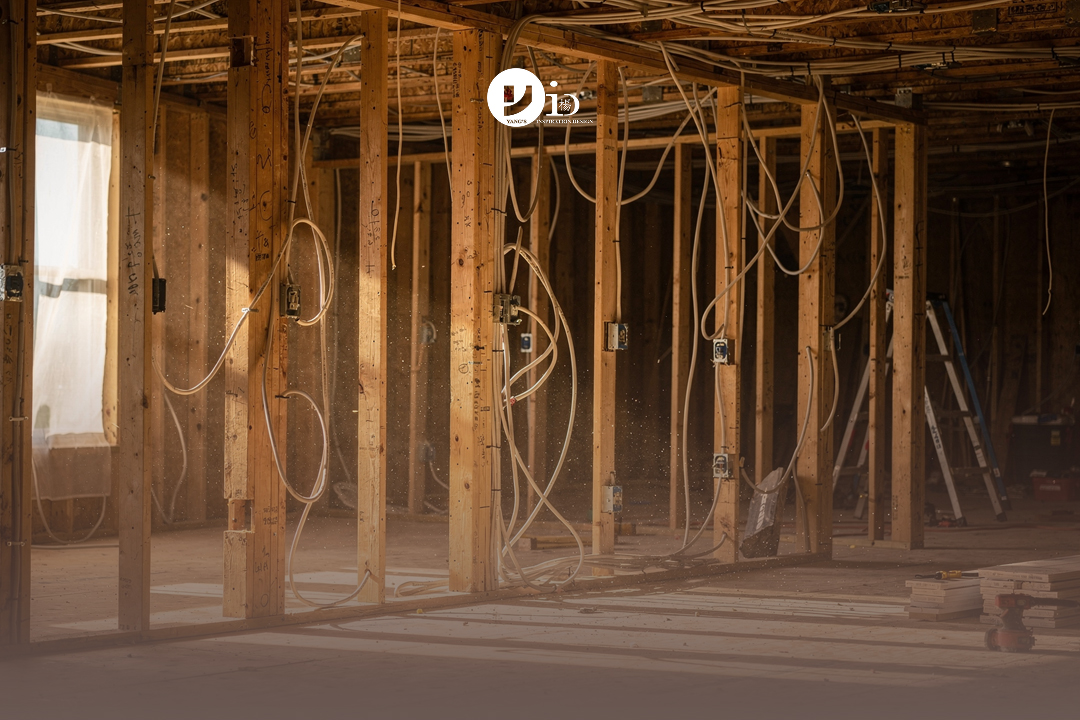
- Key Activities: This includes demolition (hacking), framing, plumbing and electrical rough-ins, drywall installation, tiling, flooring, painting, and installation of fixed joinery and fixtures.
- Deliverable: The physically transformed space, ready for the final furnishings.
- Designer’s Role: Your designer will conduct regular site visits to coordinate with the construction team, ensuring the design is being executed precisely as planned and troubleshooting any issues that arise. An integrated firm with in-house tradespeople offers a huge advantage here, ensuring seamless communication and quality control.
Phase 7: Installation & Styling (1-2 Weeks)
The exciting culmination of months of planning and work! This is when the empty, renovated space is transformed into your home.
- Key Activities: All the furniture you ordered is delivered and carefully placed. The team hangs window treatments, lays down rugs, installs artwork, and meticulously arranges all the decorative accessories and styling items.
- Deliverable: The fully-designed space brought to life, just like in the 3D renderings.
- The “Big Reveal”: This is the magical moment when you walk into your completely transformed home for the first time.
Phase 8: Final Walk-Through & Project Closure (1-2 Weeks)
The last step is to ensure every detail is perfect before officially handing the project over.
- Key Activities: You and your designer will walk through the entire space together to identify any minor defects or adjustments needed. This list of final touch-ups is often called a “punch list” or “defects list.”
- Deliverable: A completed project and a happy client.
- What’s next: The design firm will hand over any warranties, care instructions for new materials and furniture, and officially close out the project. This is also where a lifetime workmanship warranty, like the one offered by Yang’s Inspiration Design, provides ultimate peace of mind.
6 Key Factors That Can Delay Your Project Timeline
Understanding potential roadblocks is the first step to avoiding them. Being aware of these common delay factors empowers you to be a proactive partner in your renovation journey and helps manage expectations for a smoother process.
1. Scope of Work
This is the single biggest factor influencing your timeline. A cosmetic refresh involving new paint, furniture, and lighting is vastly different from a full-gut renovation that involves hacking walls, re-routing plumbing, and custom carpentry. A 3-room HDB BTO renovation will have a much shorter timeline than a multi-story landed home extension. Be clear about your scope from the outset, and understand that adding more work mid-project (known as “scope creep”) will almost certainly extend the final completion date.
2. Client Decision-Making
Your role in the project is crucial. The design and renovation process is filled with decision points, from the overall layout to the specific handle on a cabinet. While a good designer will guide you and make the process easier, delays in providing feedback or indecisiveness can create a significant bottleneck. A decision that seems small, like choosing a tile, can hold up the entire sequence of work that follows. Trusting your designer and providing timely, clear feedback is one of the best ways to keep your project moving forward.
3. Custom vs Stock Items
The allure of bespoke, custom-made pieces is undeniable—they make a home truly unique. However, they come with significantly longer lead times. A ready-made sofa might be delivered in a few weeks, but a custom-upholstered one can take 3-4 months. Intricate, built-in carpentry is a hallmark of Singaporean interior design, but it requires time for precise measurement, fabrication in a workshop, and on-site installation, easily adding 6-12 weeks to the schedule. Weigh the importance of customization against your desired move-in date.
4. Material & Supply Chain Issues
In today’s global economy, supply chains are complex and can be unpredictable. A specific tile from Italy, a piece of marble from Turkey, or a light fixture from the United States can be subject to manufacturing delays, shipping congestion, or customs hold-ups. While these factors are often out of anyone’s control, working with an established firm that has strong, long-standing relationships with reliable suppliers can help mitigate these risks. They often have better visibility into lead times and can suggest beautiful, readily available alternatives if needed.
5. Contractor & Tradespeople Availability
The best carpenters, tilers, and electricians are in high demand and are often booked months in advance. Scheduling a whole team of independent tradespeople to work in the correct sequence without gaps in the schedule is a complex logistical challenge. This is a key area where an integrated design-and-build firm provides immense value. Because firms like Yang’s Inspiration Design have their own in-house teams of tradespeople, they have direct control over scheduling, ensuring a more efficient and coordinated construction phase with fewer delays.
6. Unforeseen Setbacks
Especially in older HDB flats or landed properties, you never truly know what’s behind a wall until you open it up. During demolition, workers might uncover hidden issues like deteriorating plumbing, outdated and unsafe electrical wiring, or unexpected structural elements that need to be addressed. While these discoveries can be frustrating, they are a normal part of renovation. A good project plan always includes a contingency buffer in both the budget and timeline to handle these surprises without derailing the entire project.
How to Proactively Manage Your Timeline & Expectations
A successful renovation is a partnership. By taking a few proactive steps, you can help ensure your project stays on track and aligns with your vision.
Communicate Clearly and Often
Establish an open line of communication with your designer from day one. Trust their expertise and the process they’ve laid out. When they present you with options or ask for feedback, be as clear and prompt as you can. The more they understand your needs and preferences, the better they can anticipate them and keep the project flowing smoothly.
Build a Contingency Buffer
Professionals do this, and you should too. It is wise to add a 15-20% buffer to both your expected timeline and your total budget. This isn’t a sign of poor planning; it’s smart planning. This buffer provides a safety net for those unforeseen setbacks, supply chain delays, or small changes you decide to make along the way. It reduces stress and allows for flexibility.
Understand the Order of Operations
It can be tempting to want to see finished surfaces early on, but there is a strict and logical sequence to construction. You cannot install beautiful new hardwood floors before the messy work of rewiring the ceiling or plastering the walls is complete. You must complete hacking and demolition before you can begin tiling. Understanding this sequence helps you appreciate why certain things are happening at certain times and manages the expectation of seeing visible progress every single day.
Your Pre-Project Checklist
Set yourself up for success before you even hire a designer. Doing your homework makes the initial phases of the project far more efficient.
- Define your vision: Start a Pinterest board or collect images from magazines. This visual library is the most effective way to communicate your desired style to a designer.
- Set a realistic, all-in budget: Be honest about what you are comfortable spending, including the cost of furnishings, professional fees, and your contingency fund.
- Determine your must-haves vs. nice-to-haves: Create a priority list. What is non-negotiable (e.g., a kitchen island)? What would be great but could be sacrificed if the budget gets tight (e.g., smart home features)?
- Research and hire your designer well in advance: The best design firms are booked months ahead. Start your search early to ensure you can work with a team that you trust and that understands your vision.
A Marathon, Not a Sprint
Ultimately, a successful interior design project is a marathon, not a sprint. It is a journey built on a structured, professional process designed to transform your space thoughtfully and correctly. By understanding the 8 essential phases of the interior design project timeline, you can set realistic expectations, plan effectively, and partner with your designer to create a home you will love for years to come.
Ready to start planning your transformation with a team that manages everything under one roof? Get a transparent, personalized timeline for your unique project.
Contact Yang’s Inspiration Design for a complimentary consultation—WhatsApp us at 8855 7575 today!


December 16, 2025
Yang's Inspiration Insight